Dharavi's story is not just a description of a slum; it's a profound narrative of urban resilience, incredible entrepreneurial spirit, and the relentless pressure of a rapidly expanding city. It stands as a vibrant, complicated township within the metropolis of Mumbai, a true testament to the survival instincts of its hundreds of thousands of residents.
Dharavi is a complex paradox: a place of intense poverty and dire living conditions (such as low sanitation standards) that simultaneously functions as a powerful, resilient, and indispensable economic contributor to one of the world's richest cities. Its growth is a continuous story of people carving out a life and an economy despite the challenges of an unplanned, dense urban landscape.
Growth into a Central Economic Powerhouse
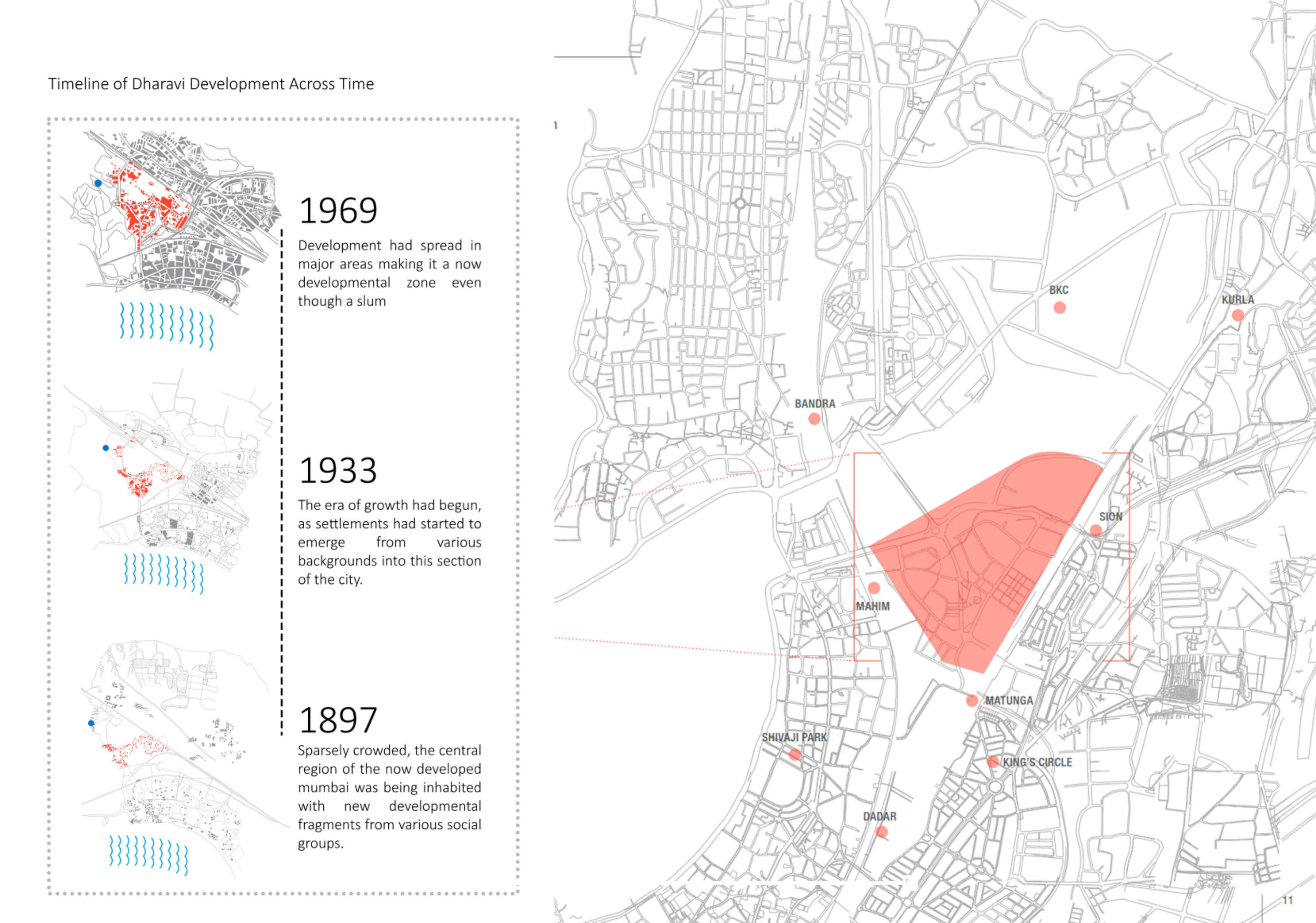
For centuries, Dharavi was viewed as being on the periphery, but as Bombay’s population exploded and the city grew northwards, Dharavi was absorbed into the new center. By the 1970s, it was no longer on the edge but nestled near prime real estate like the Bandra-Kurla Complex (BKC), making its land exceptionally valuable.
Informal Economy: Despite the lack of government oversight, Dharavi evolved into a colossal economic engine. It is famous for a vast, informal economy encompassing over 20,000 small and micro-scale industries.
The Hub of Enterprise: These businesses include pottery, leather goods, textiles, and, most famously, a sophisticated recycling industry that processes an estimated 80% of Mumbai's waste. The collective annual turnover is estimated to be over a billion dollars, leading many to call it a "self-created special economic zone for the poor".
Resilience and Density: This growth was organic, with tiny shacks built close together over reclaimed marshland, resulting in one of the highest population densities in the world.
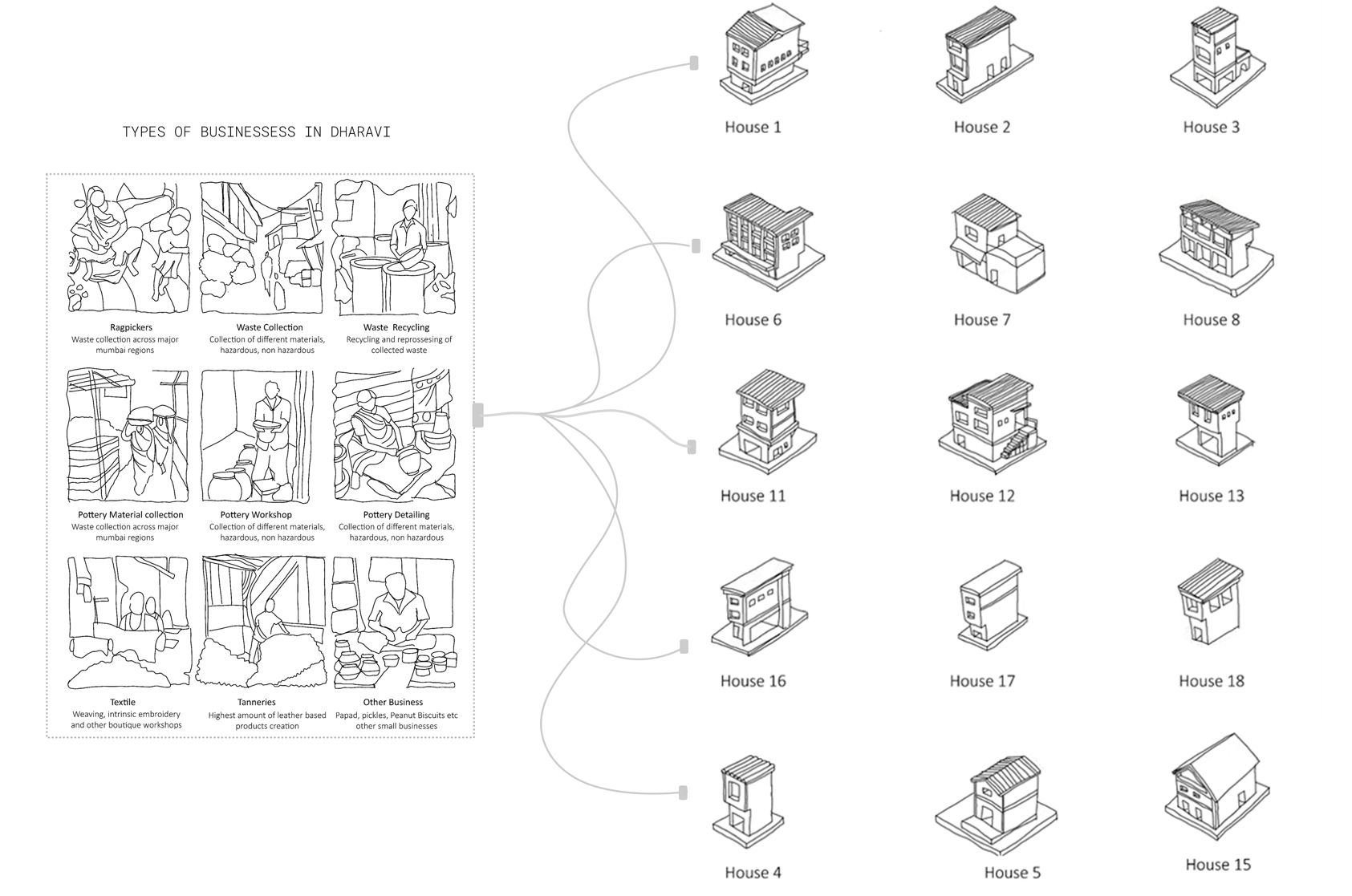
Hacking growth
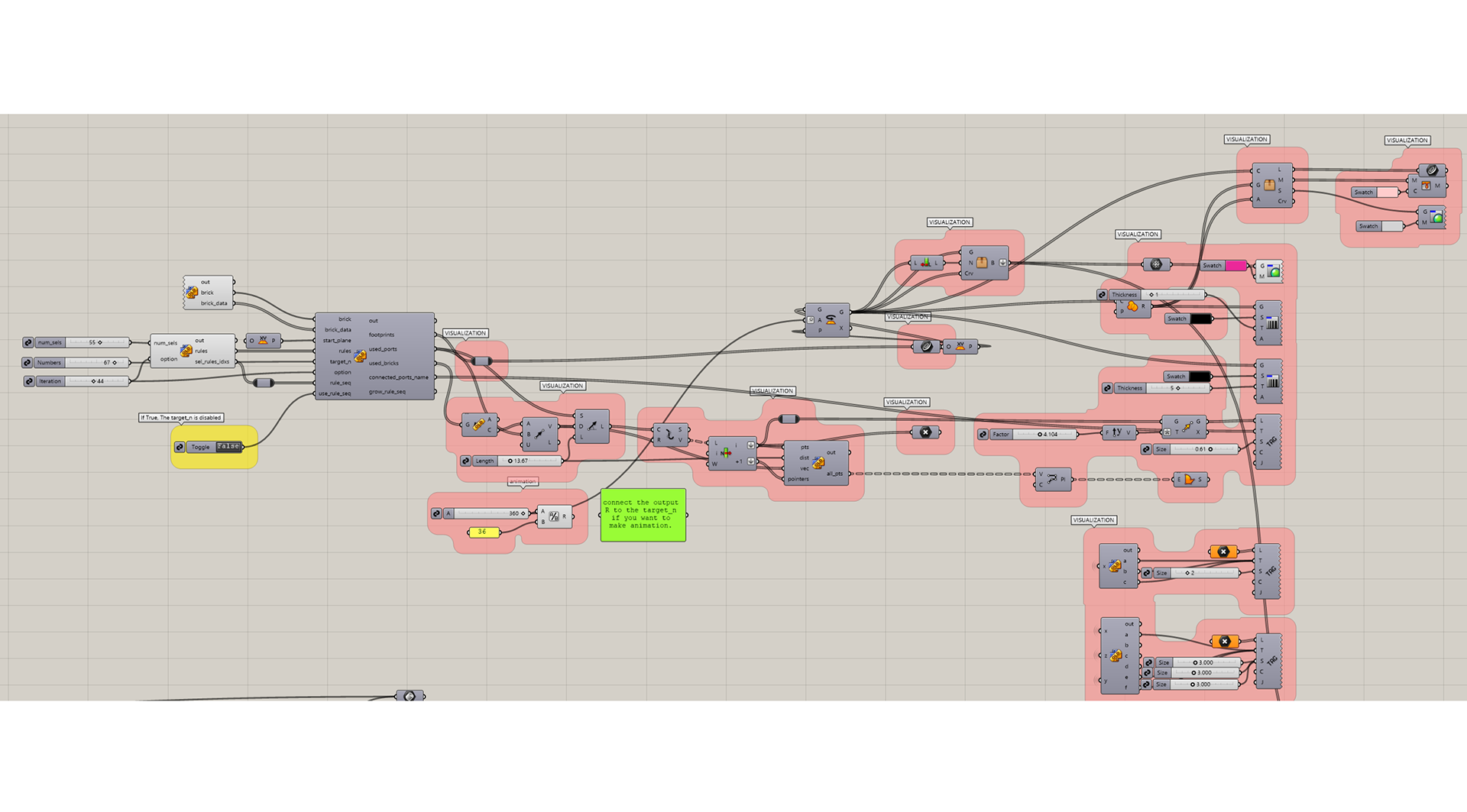
There is a growth pattern observed across different business/household typologies. Where each of the development is having a specific trigger which causes a common scheme of development. This can be observed through this script below.

THE MYTH OF UNPREDICTABILITY
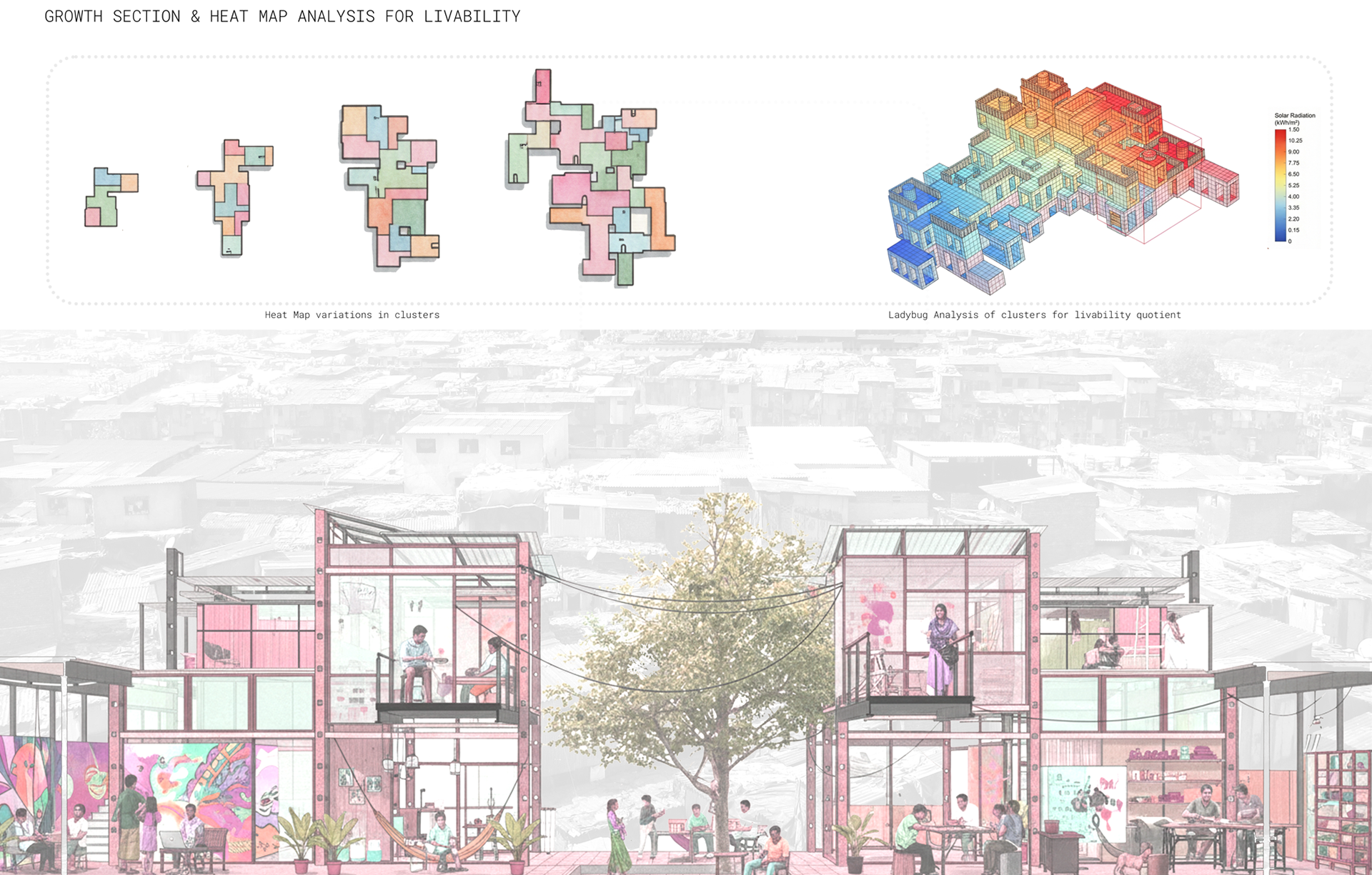
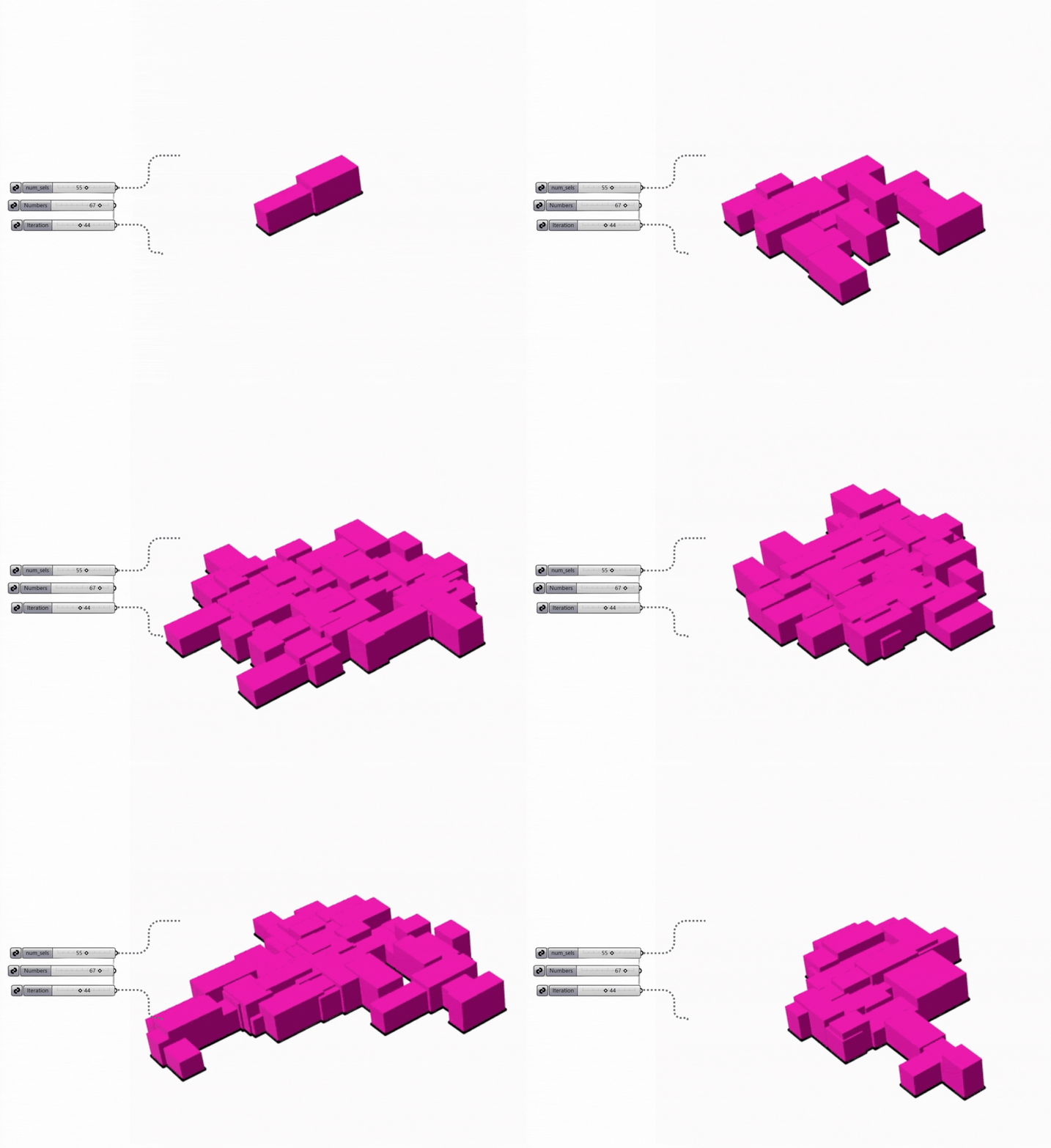
Its often assumed that growth is unpredictable in slums, but it can be understood that its not random. Everything follows a pattern. This pattern is decoded by scripting its design growth in details; for three specific business typologies: Textile-Pottery-Weaving.
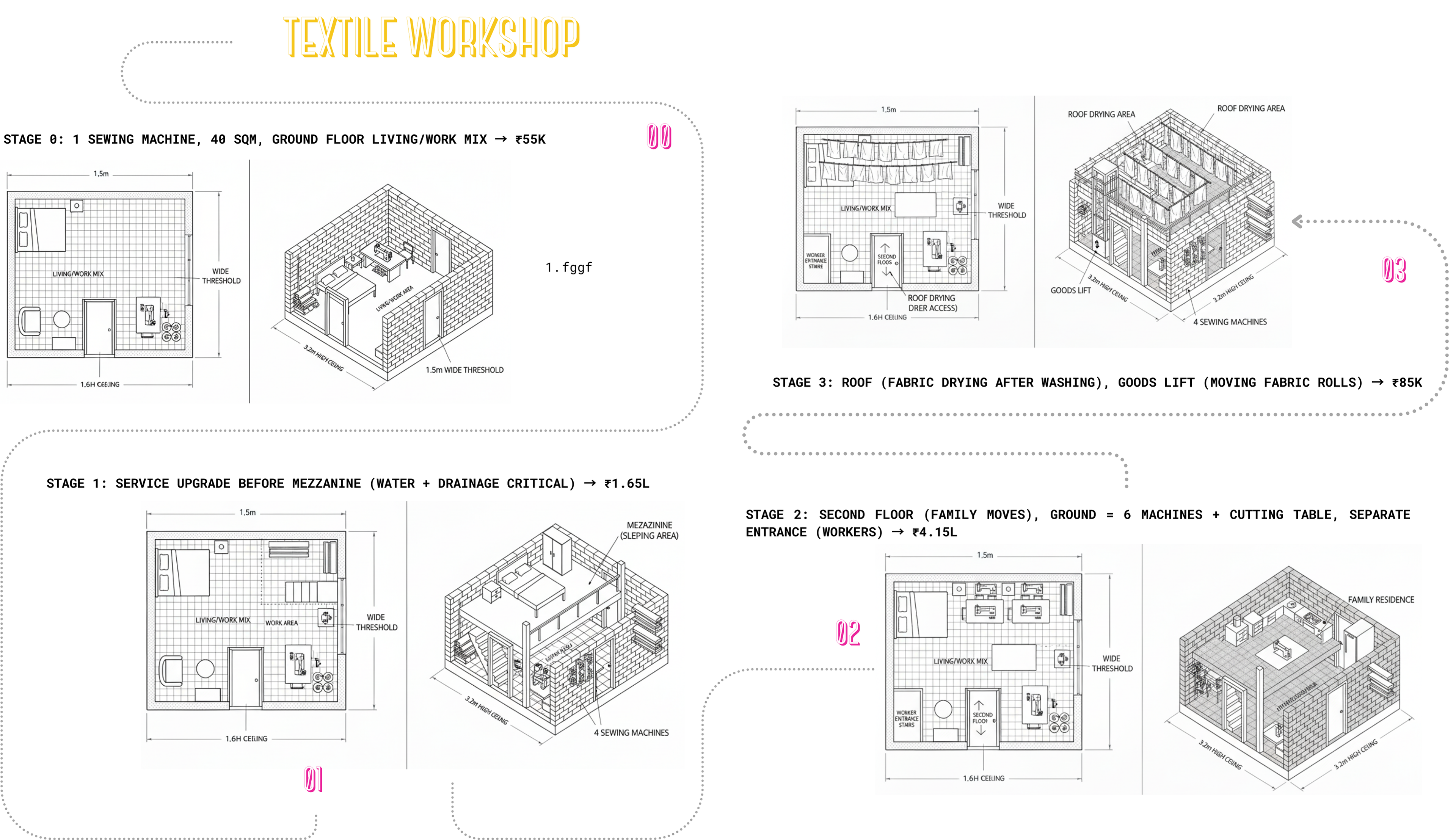
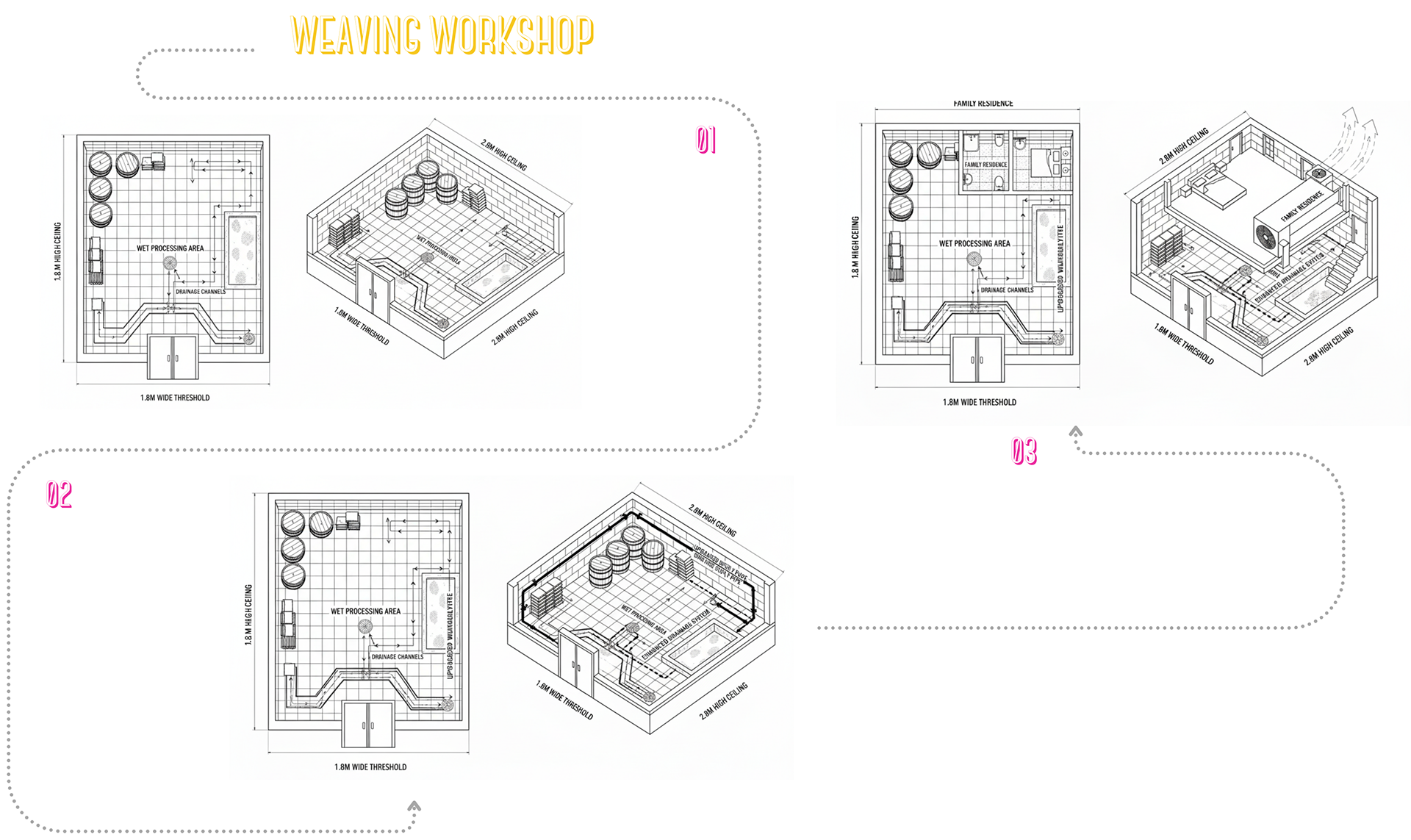
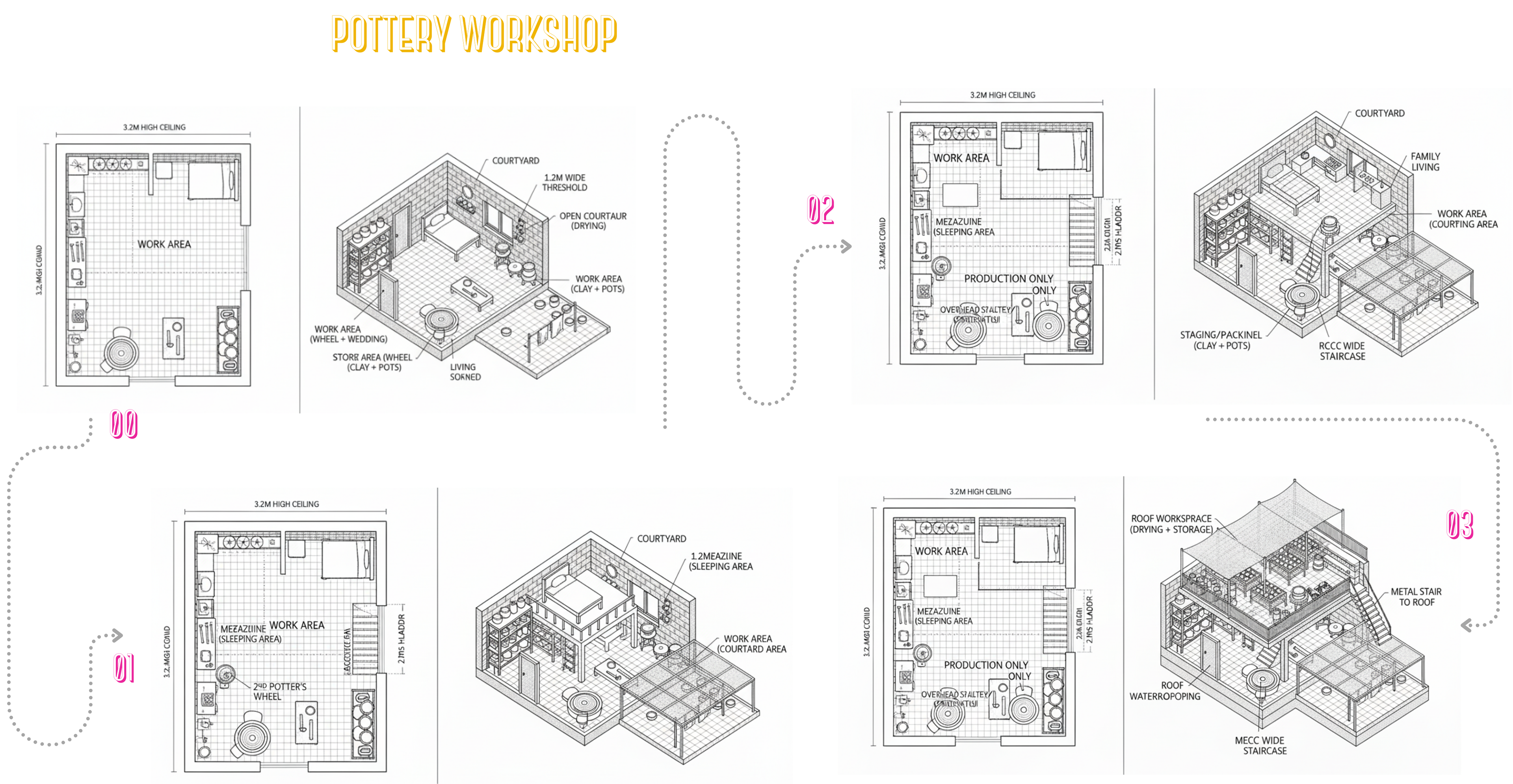
Horizontal Growth Predictor
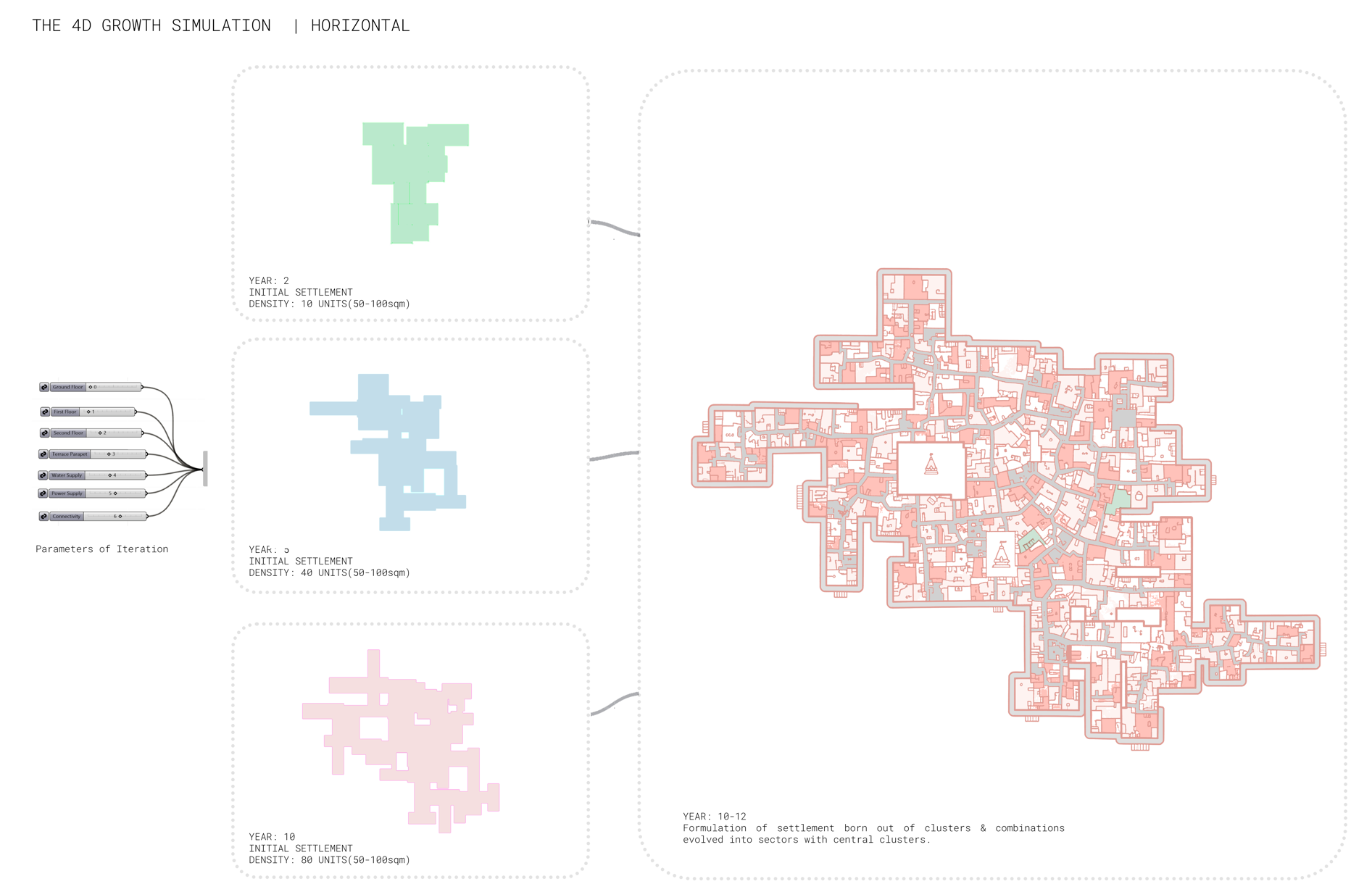

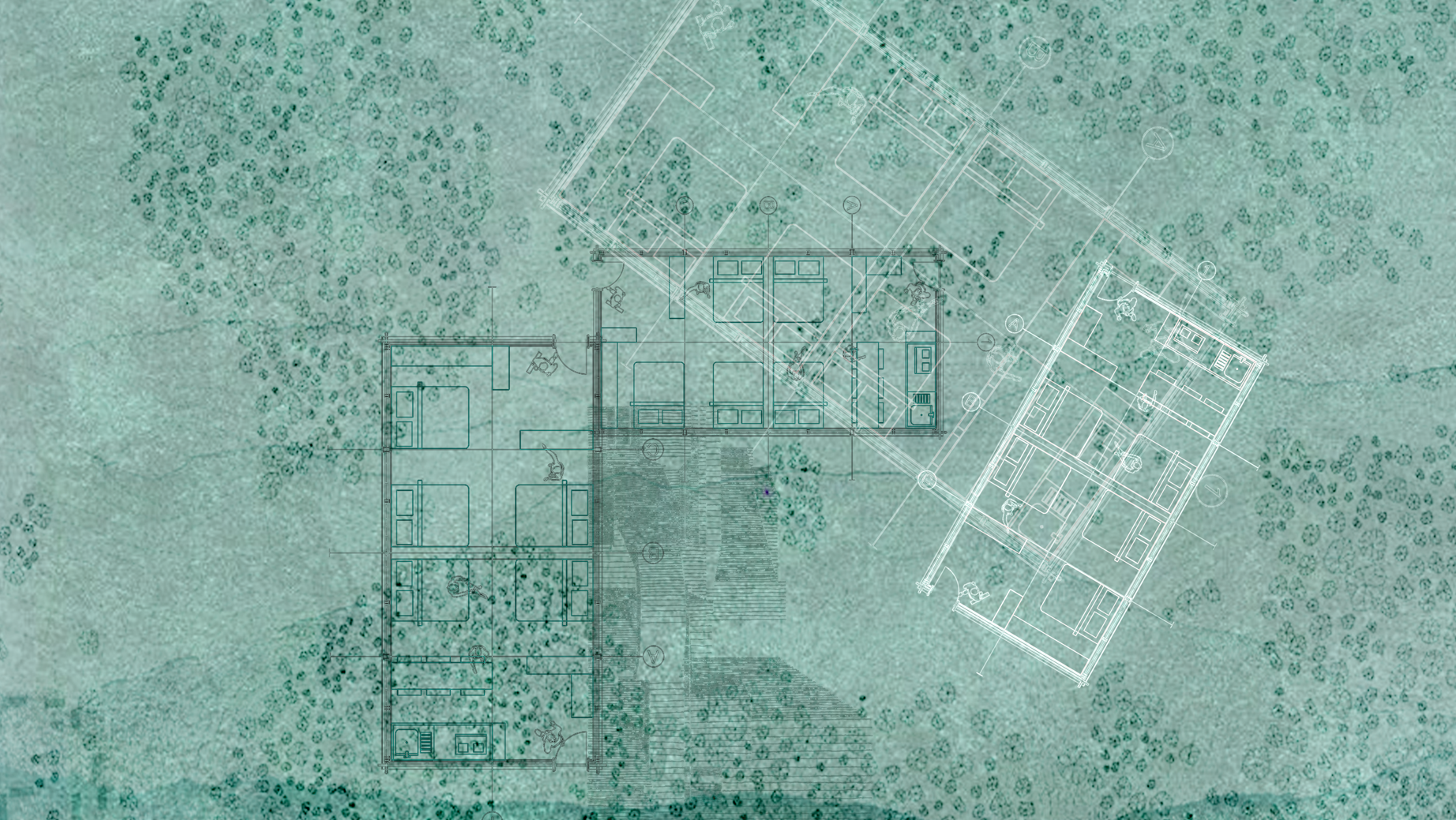
Randomized growth prediction which showcases how the growth is observed and multiplicativity is predicted.
Vertical Growth Predictor
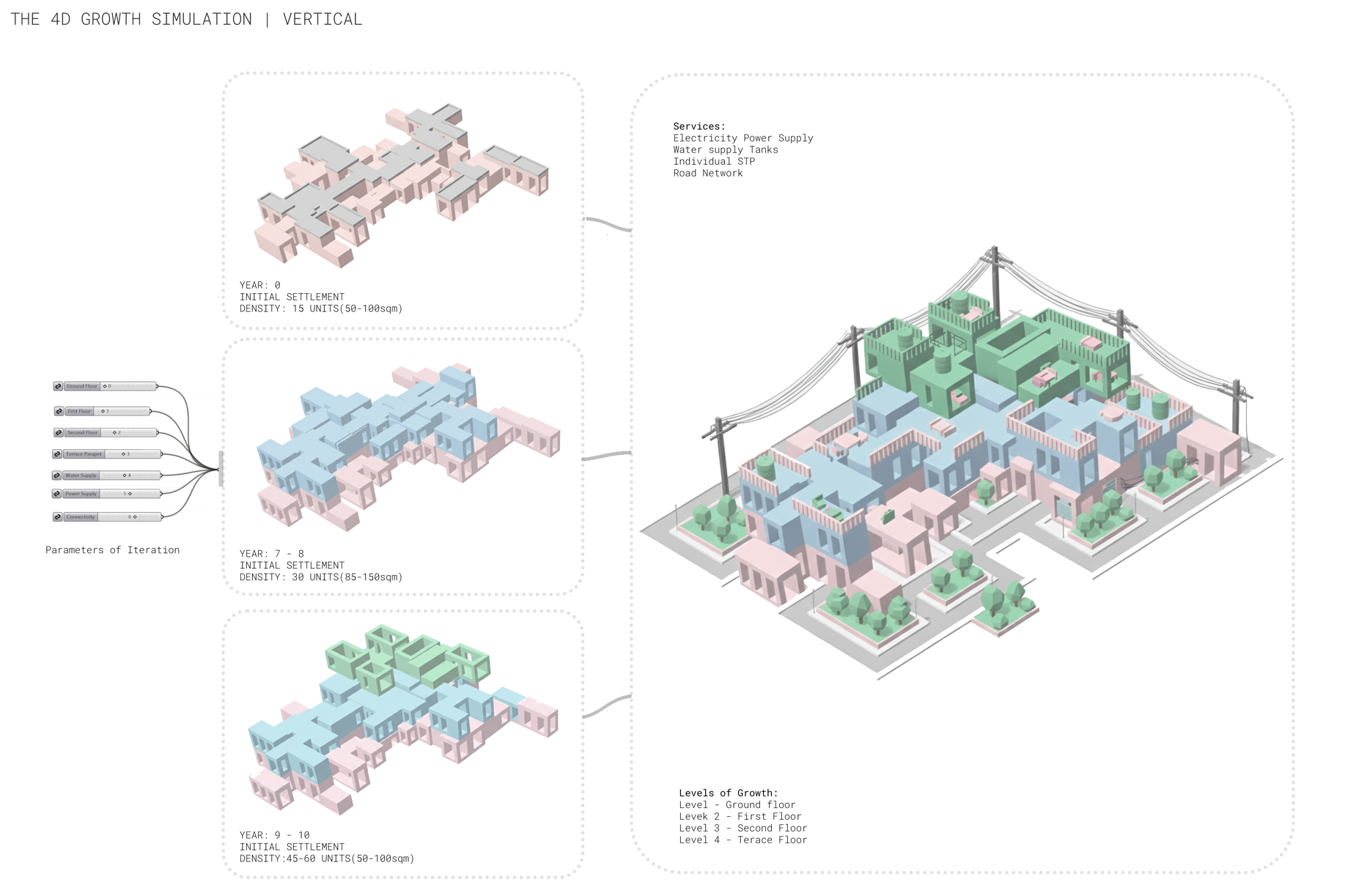
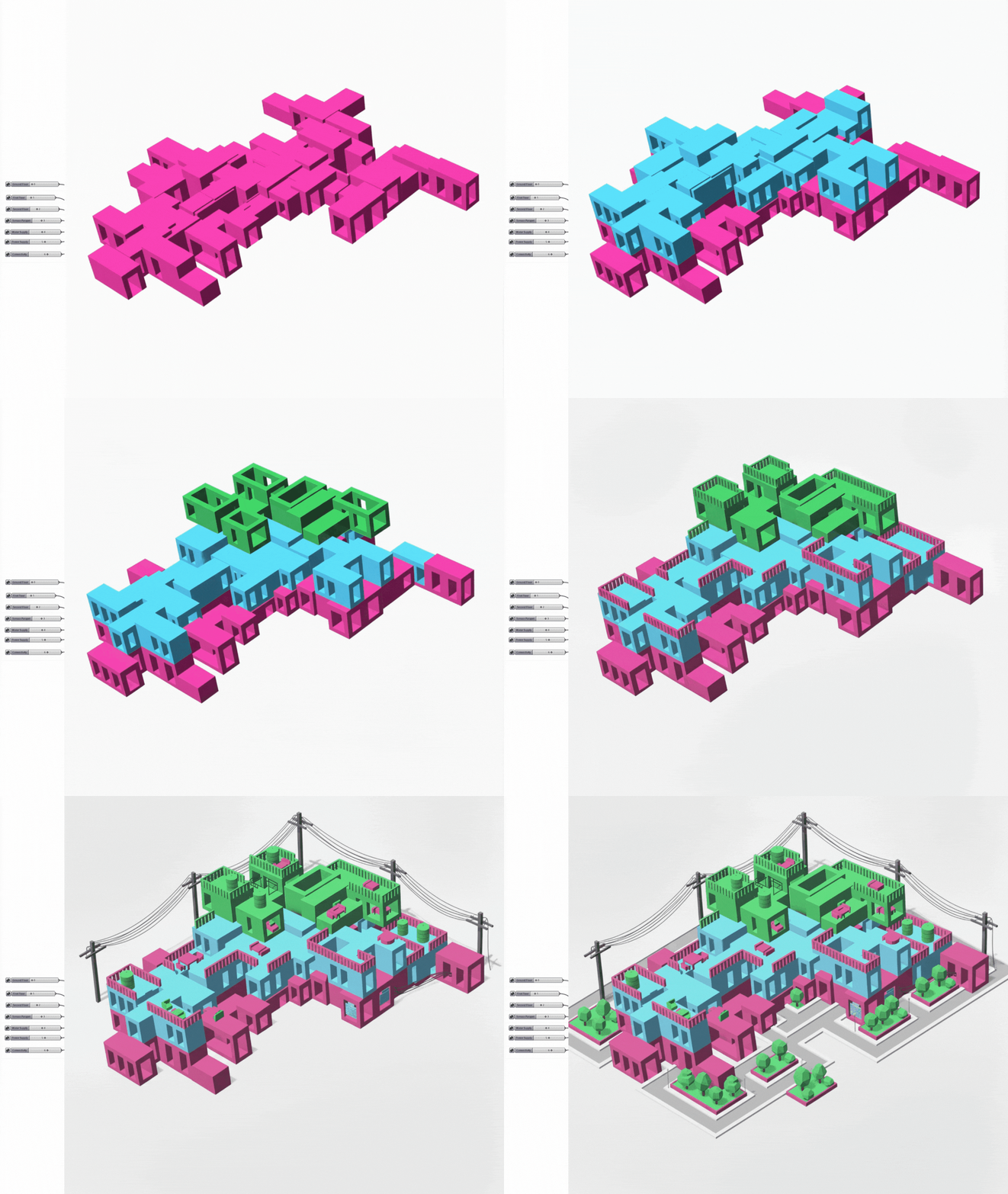
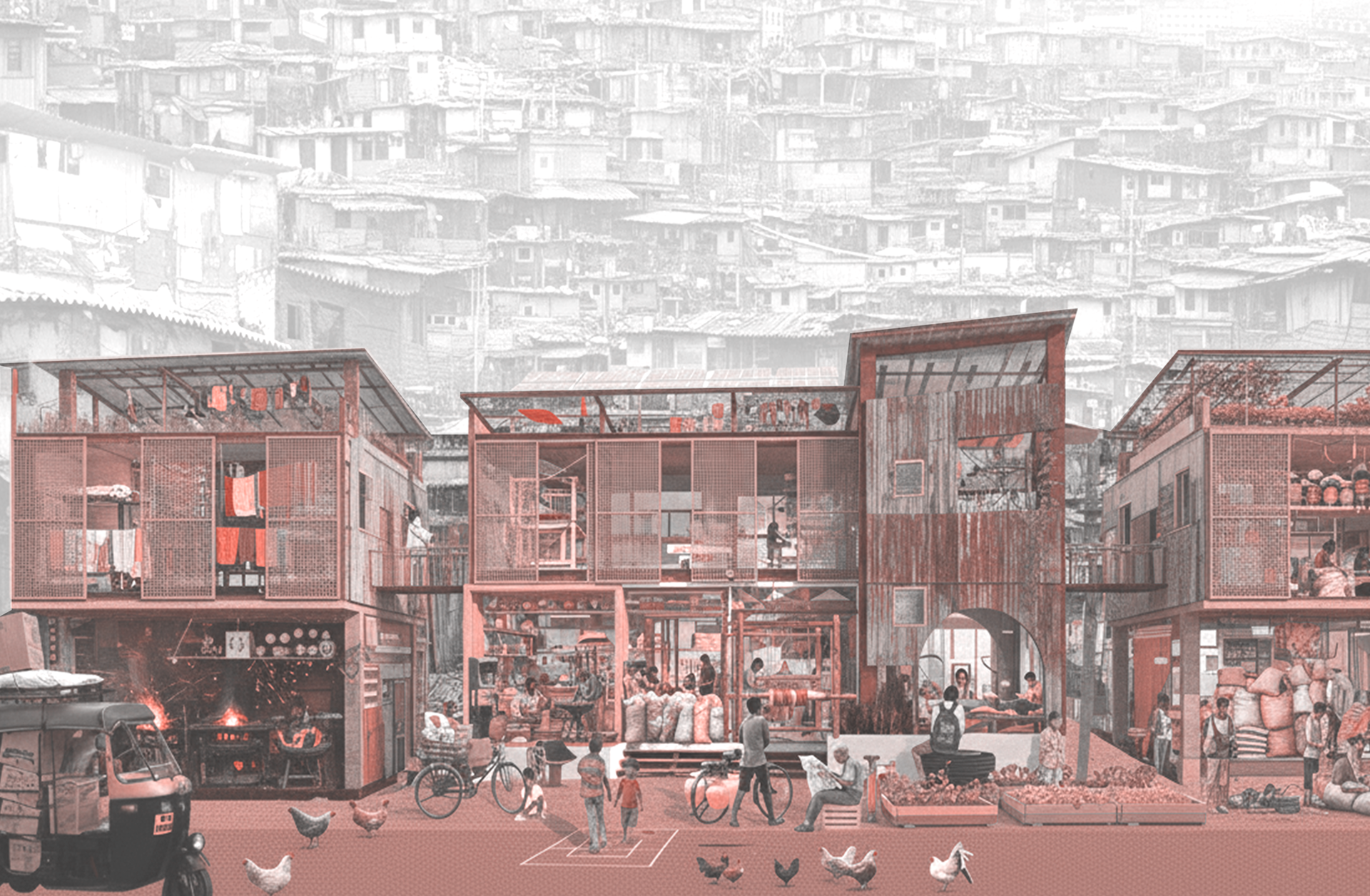
Application of growth code in real scenario