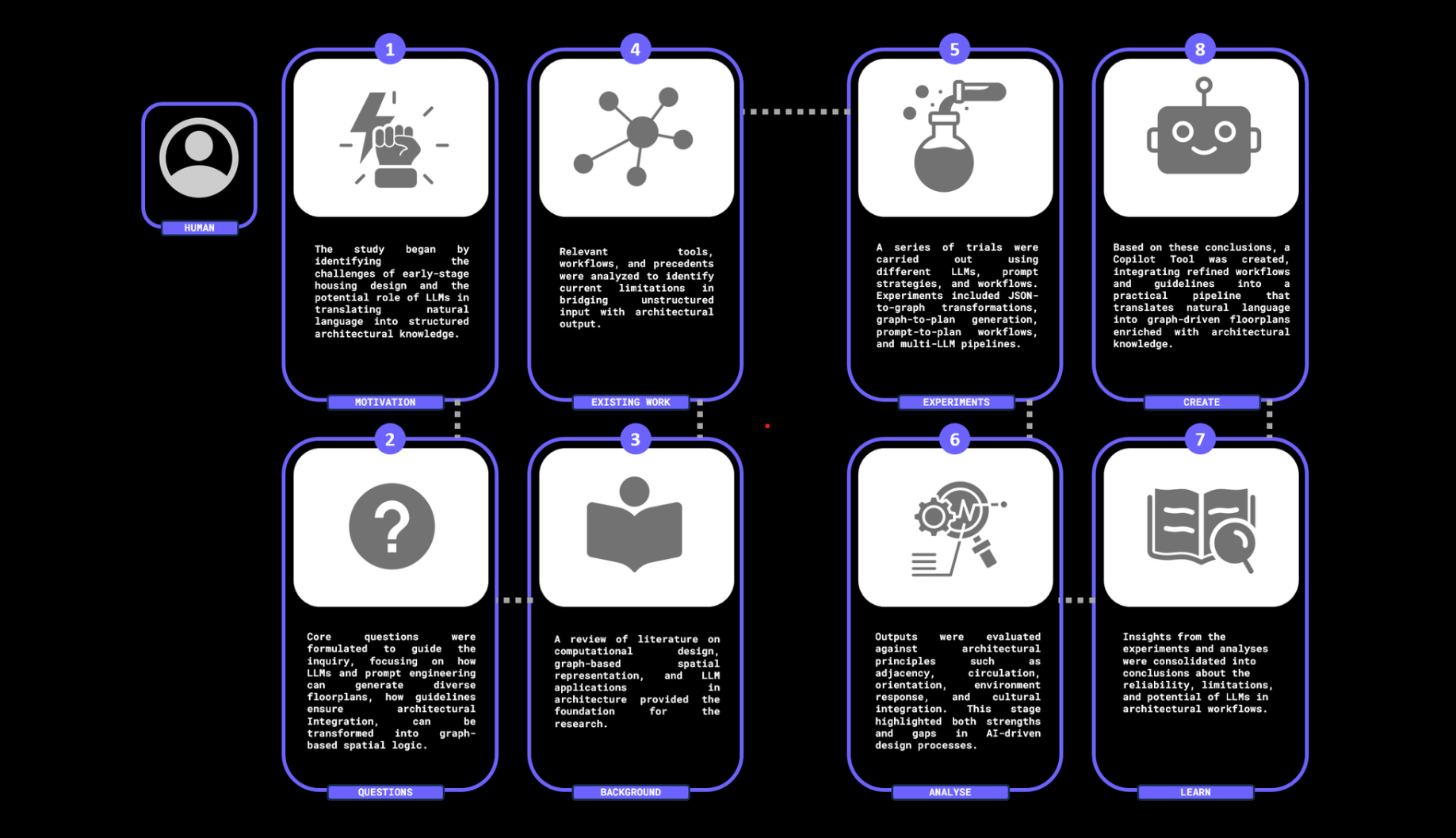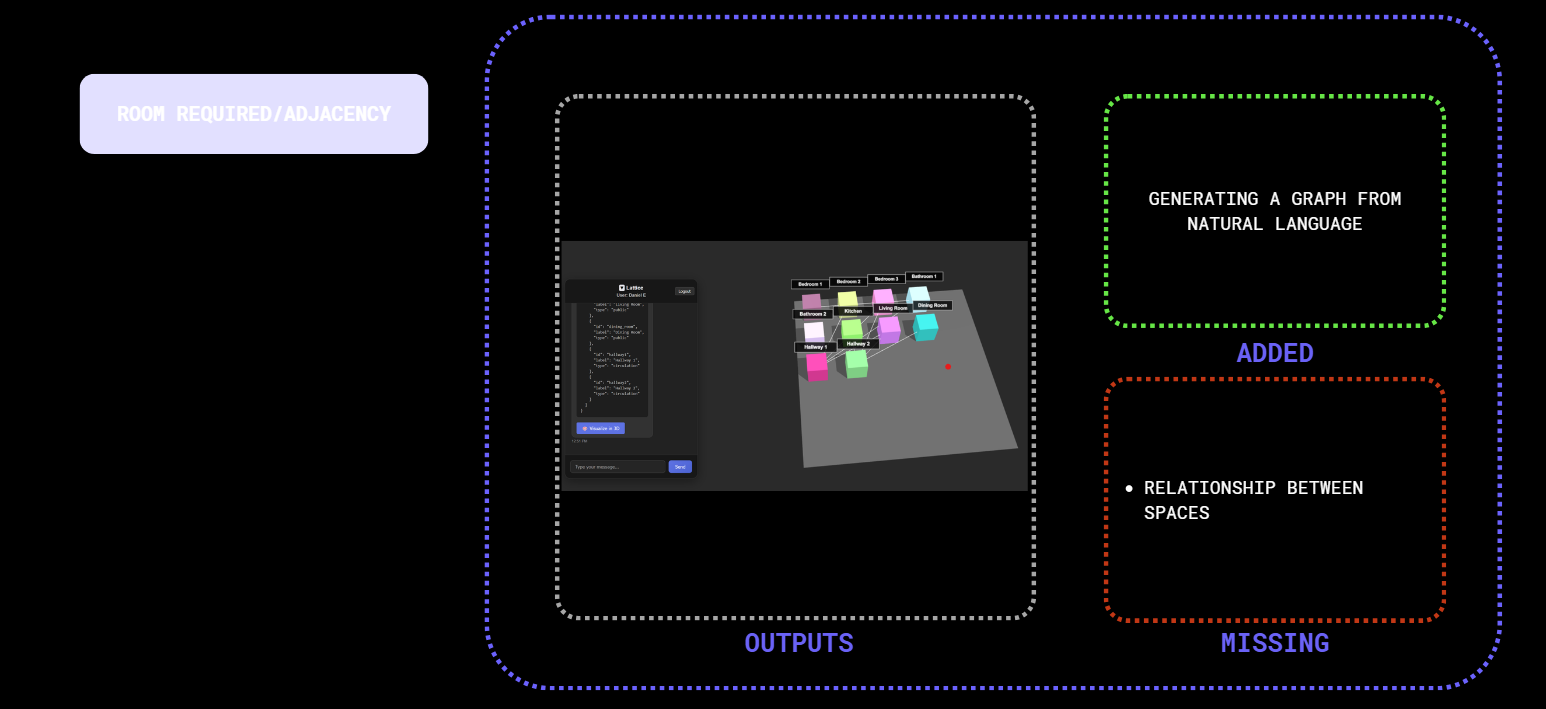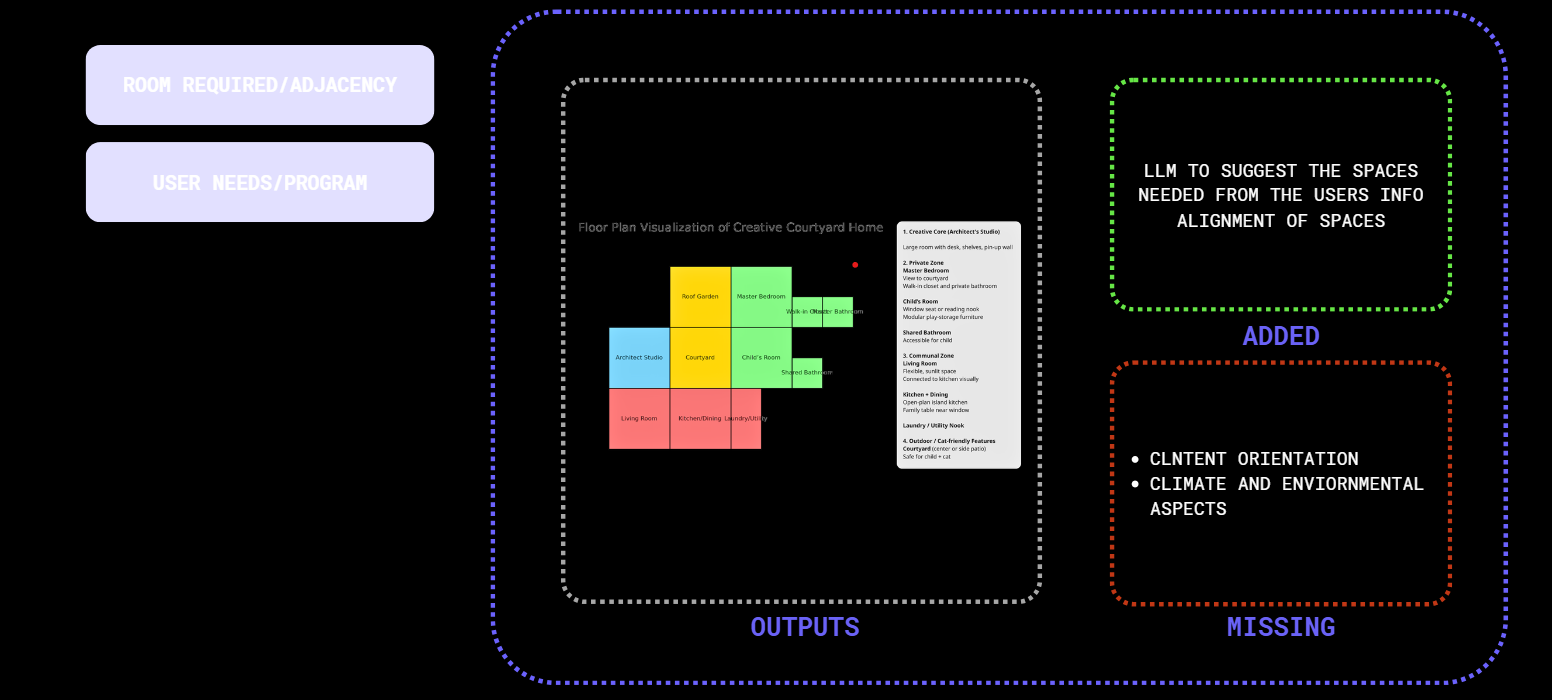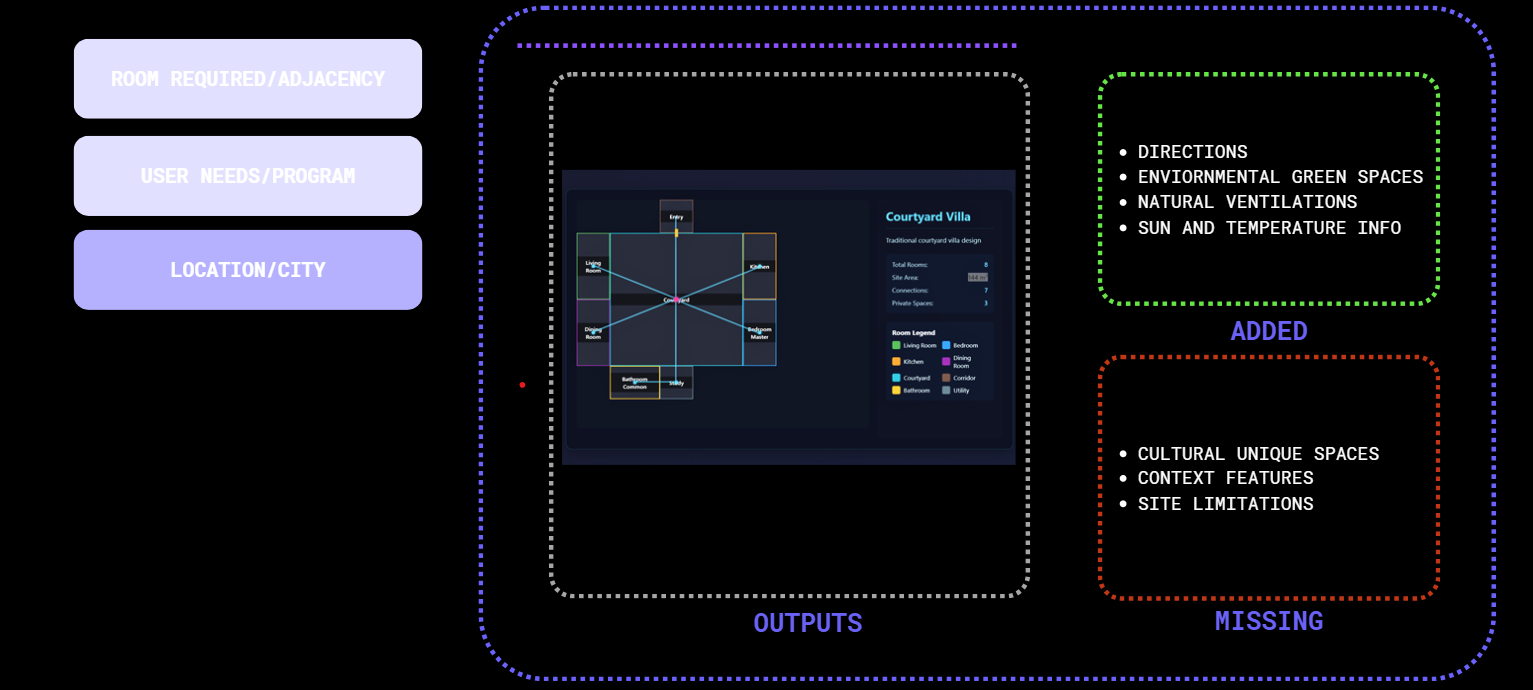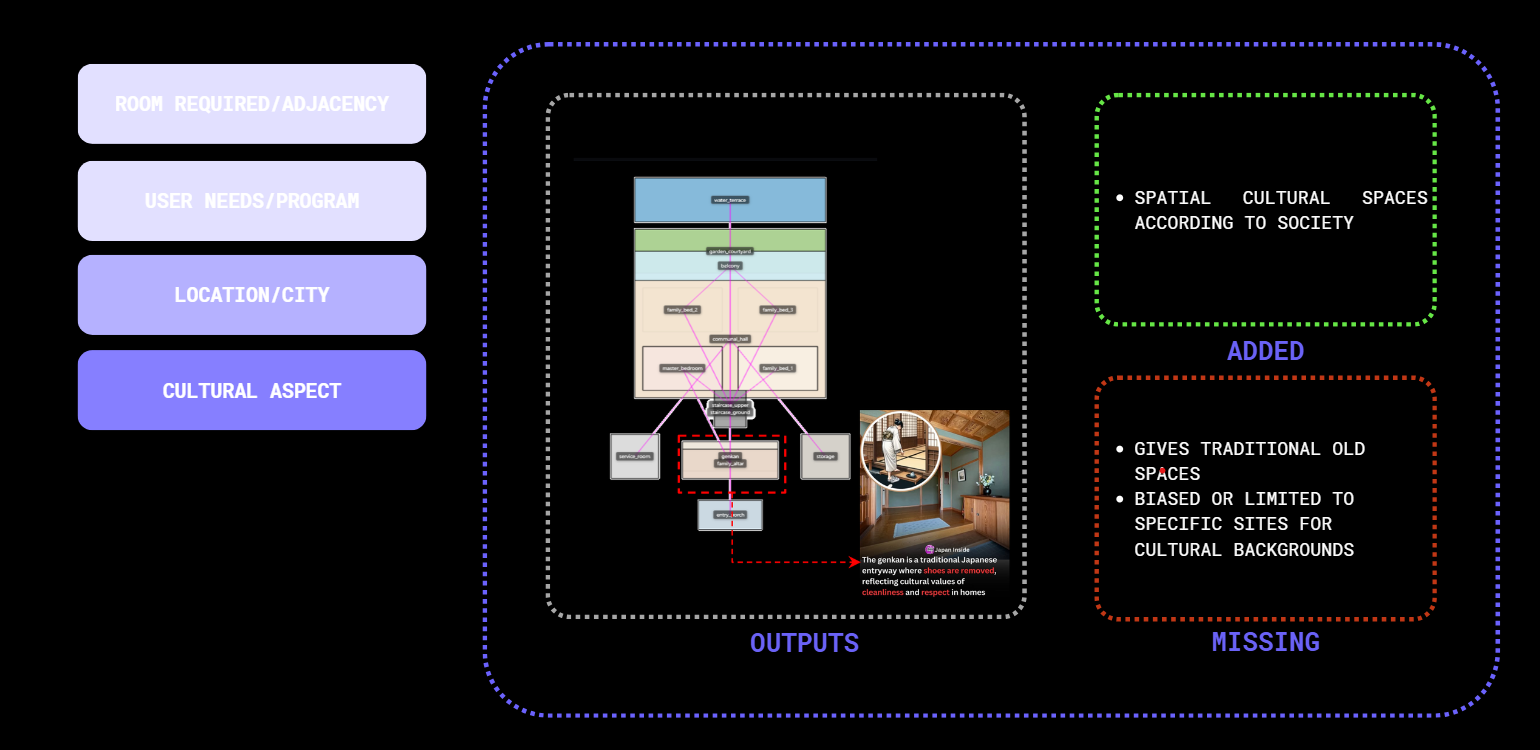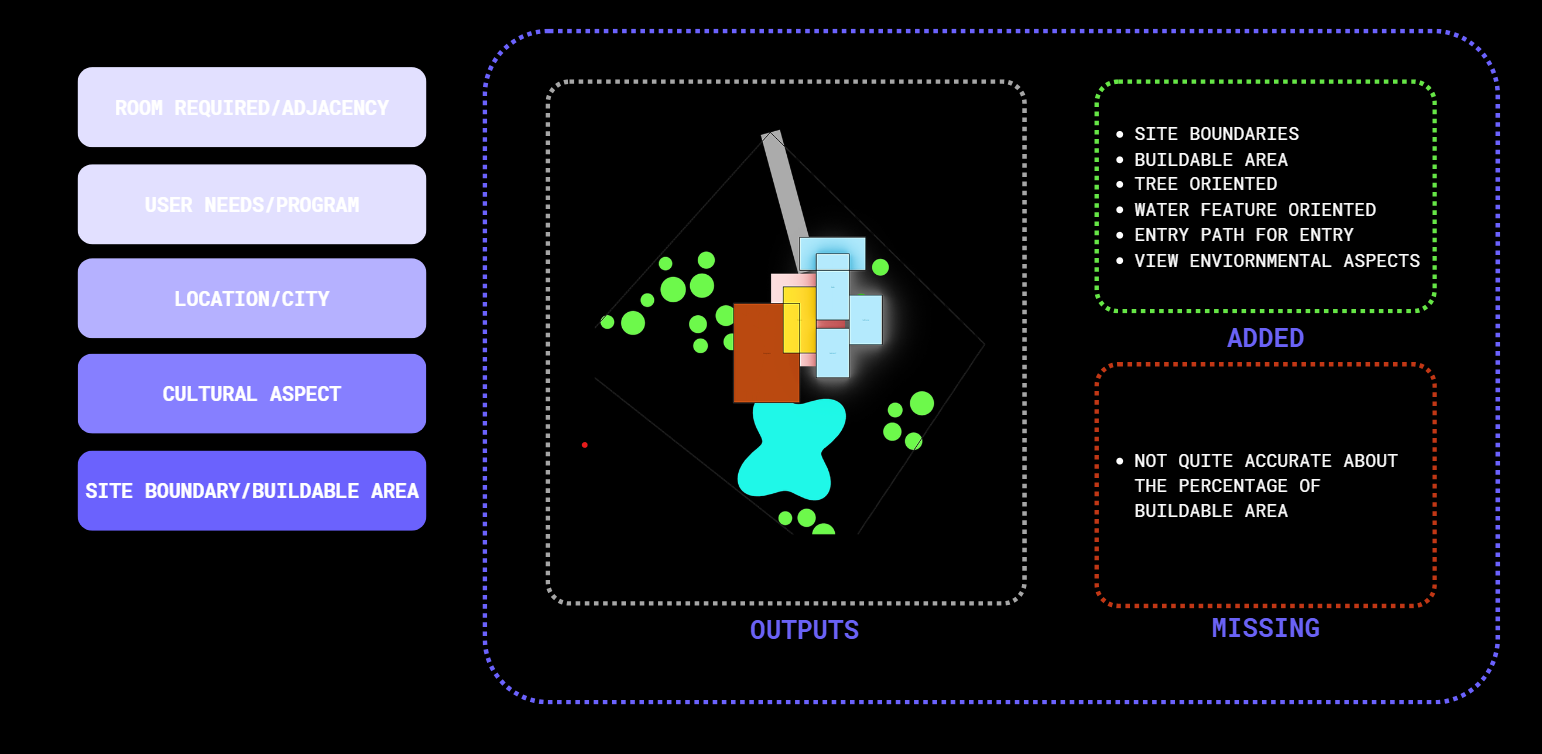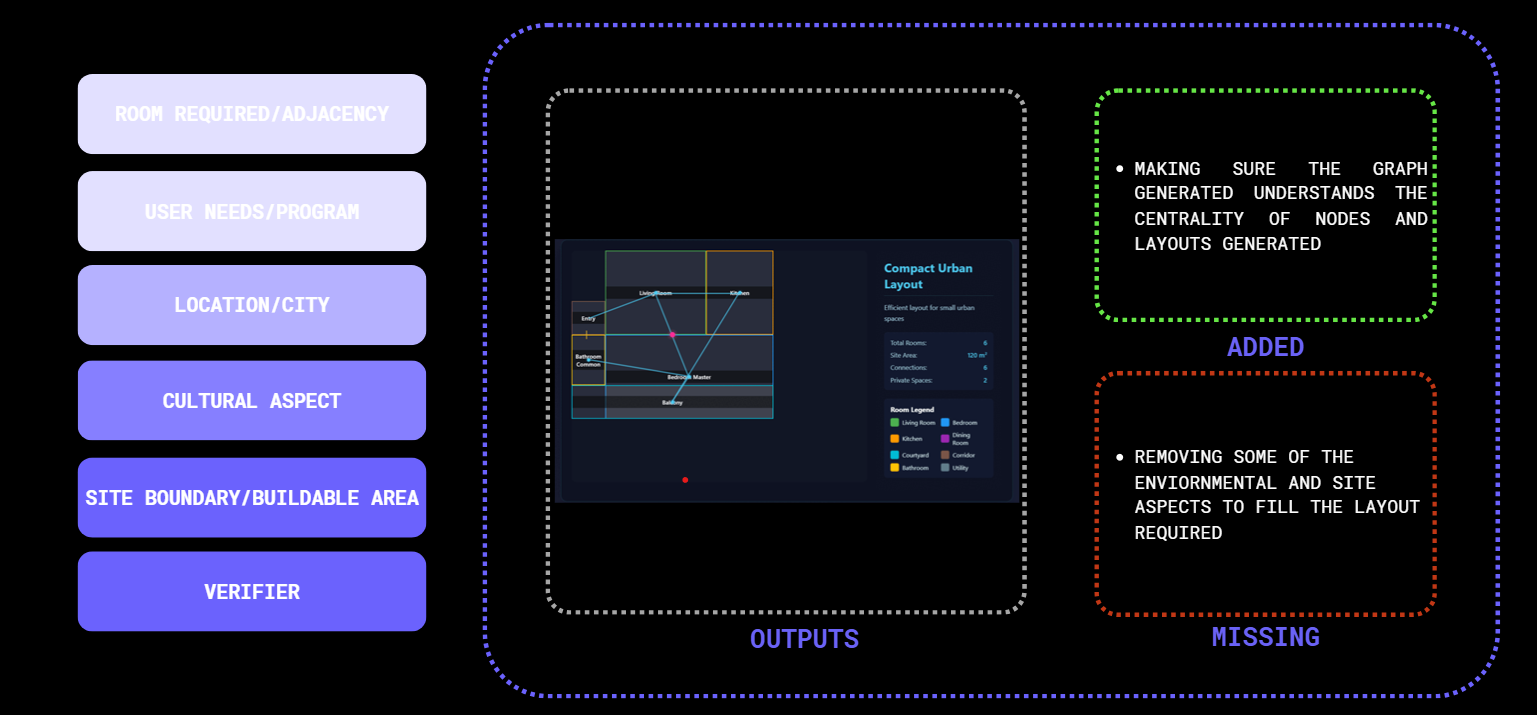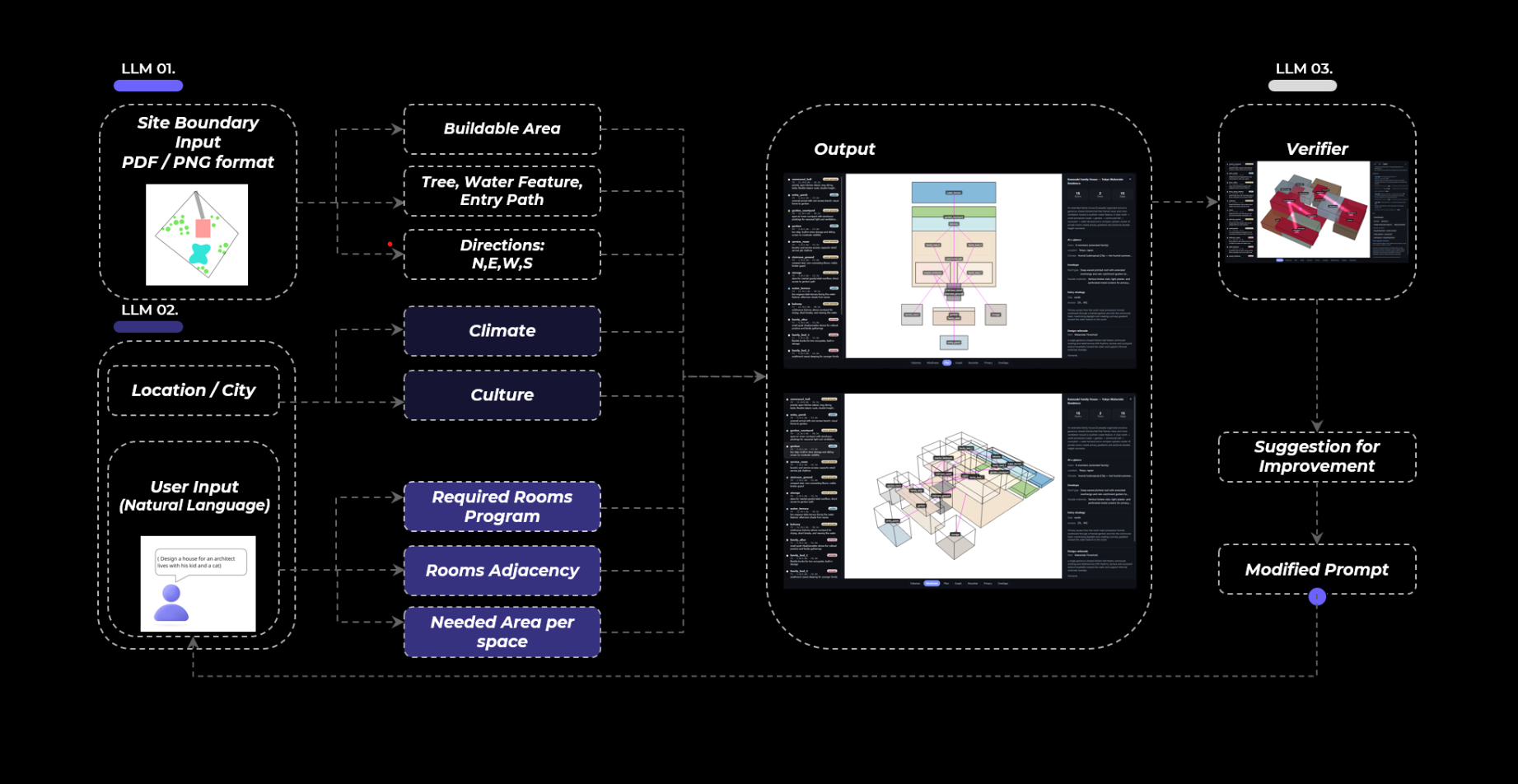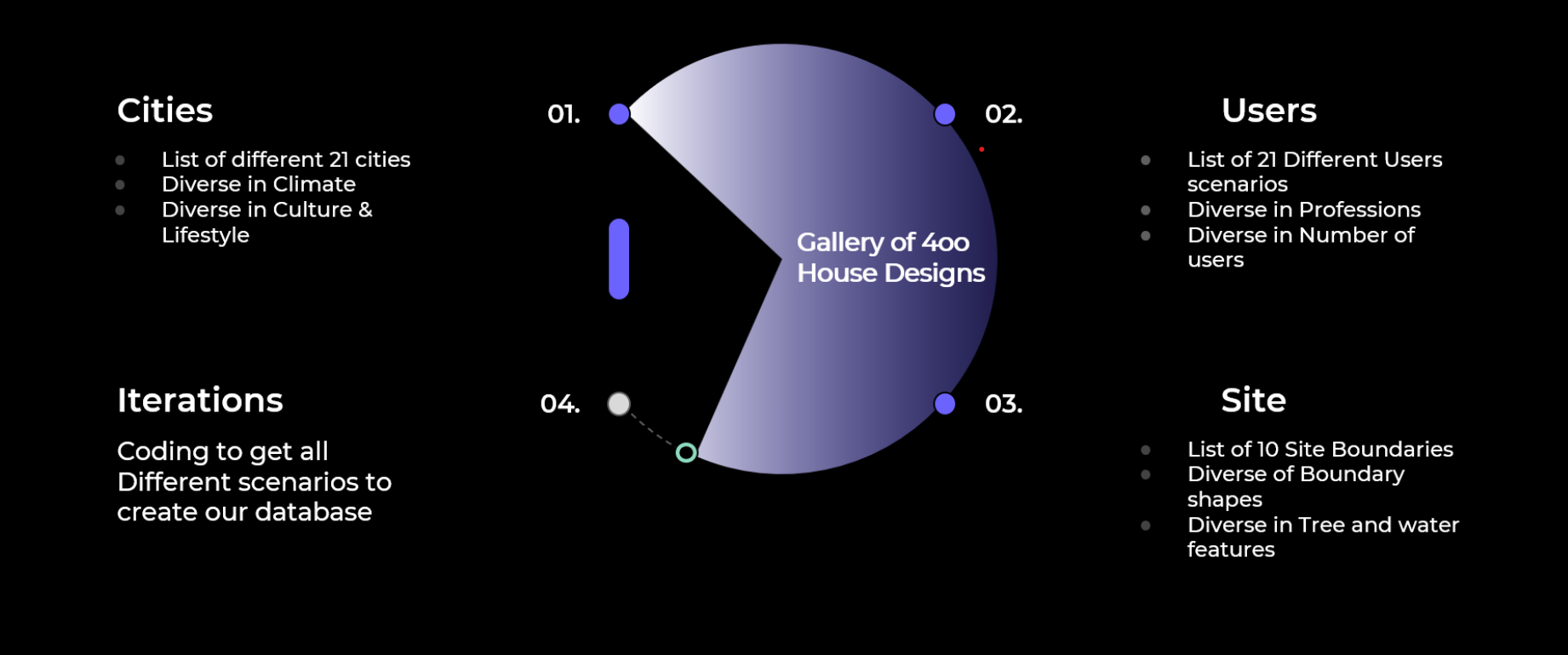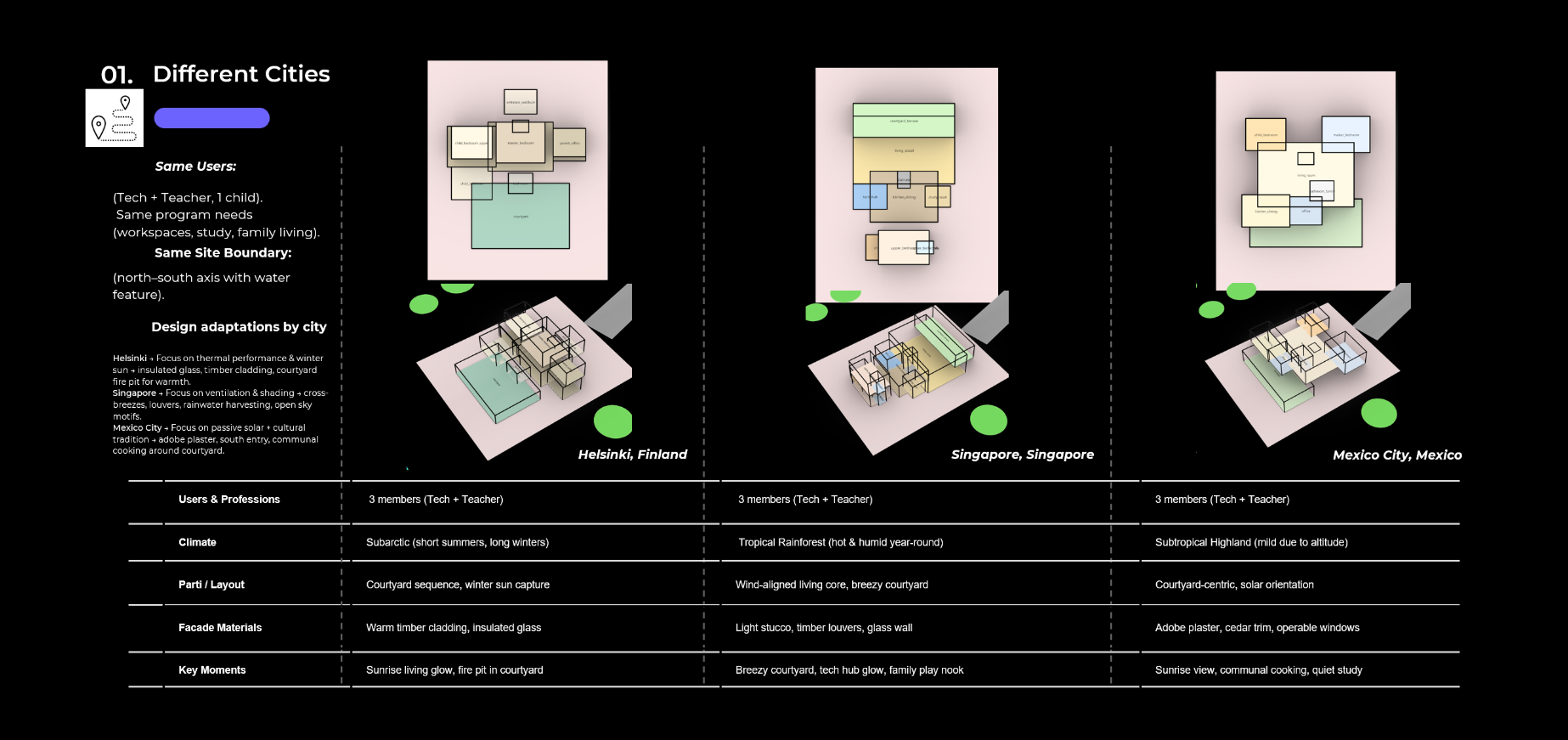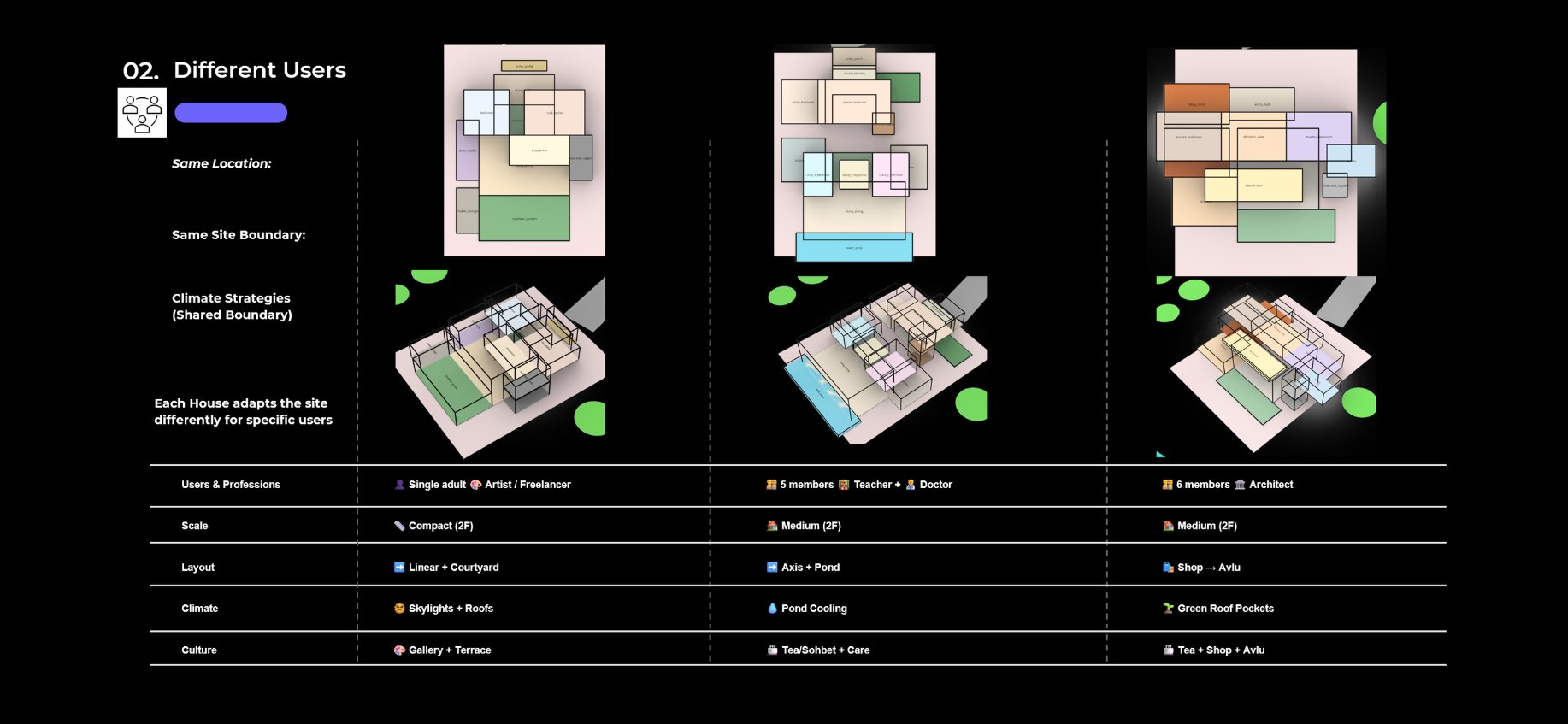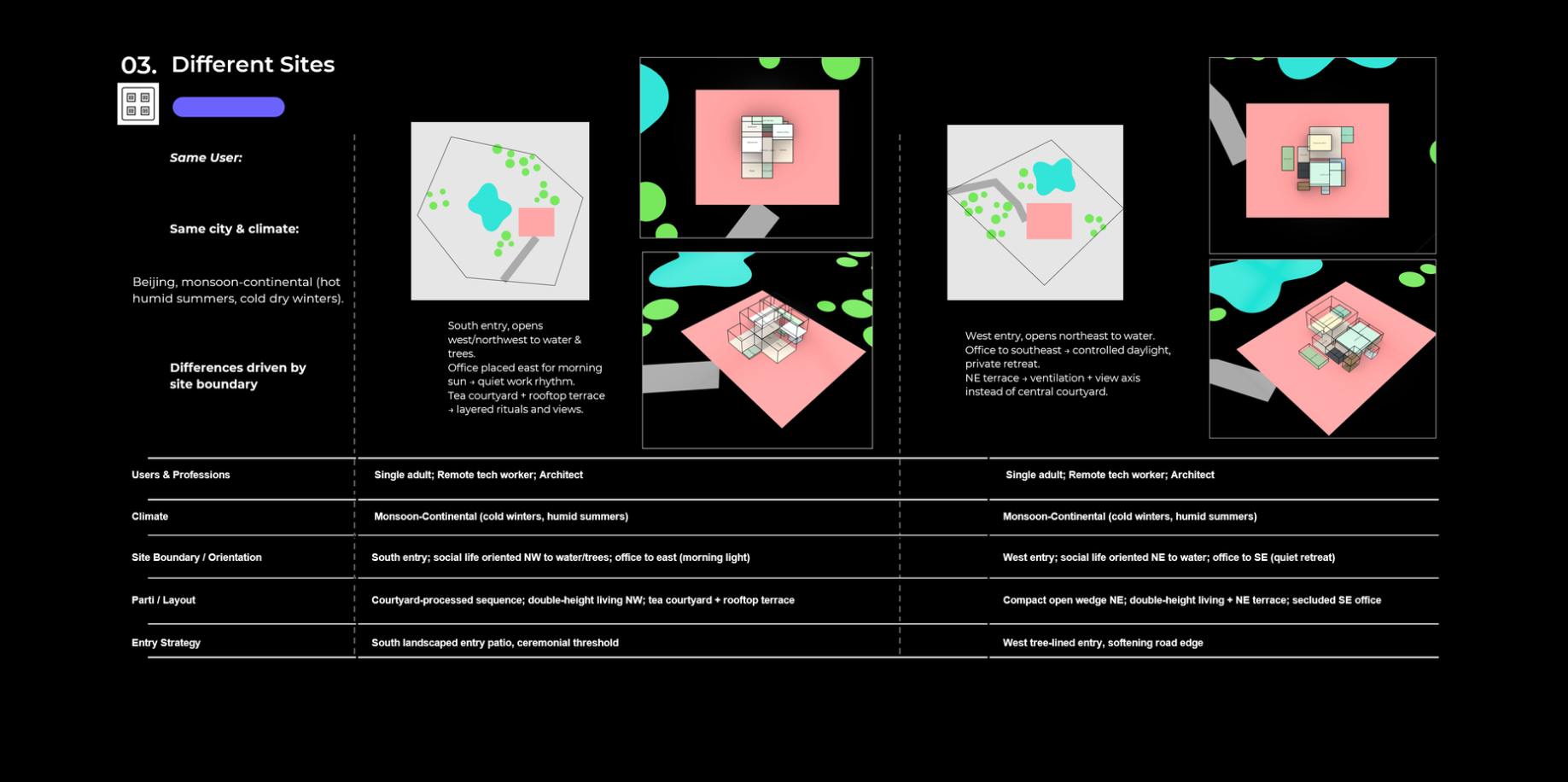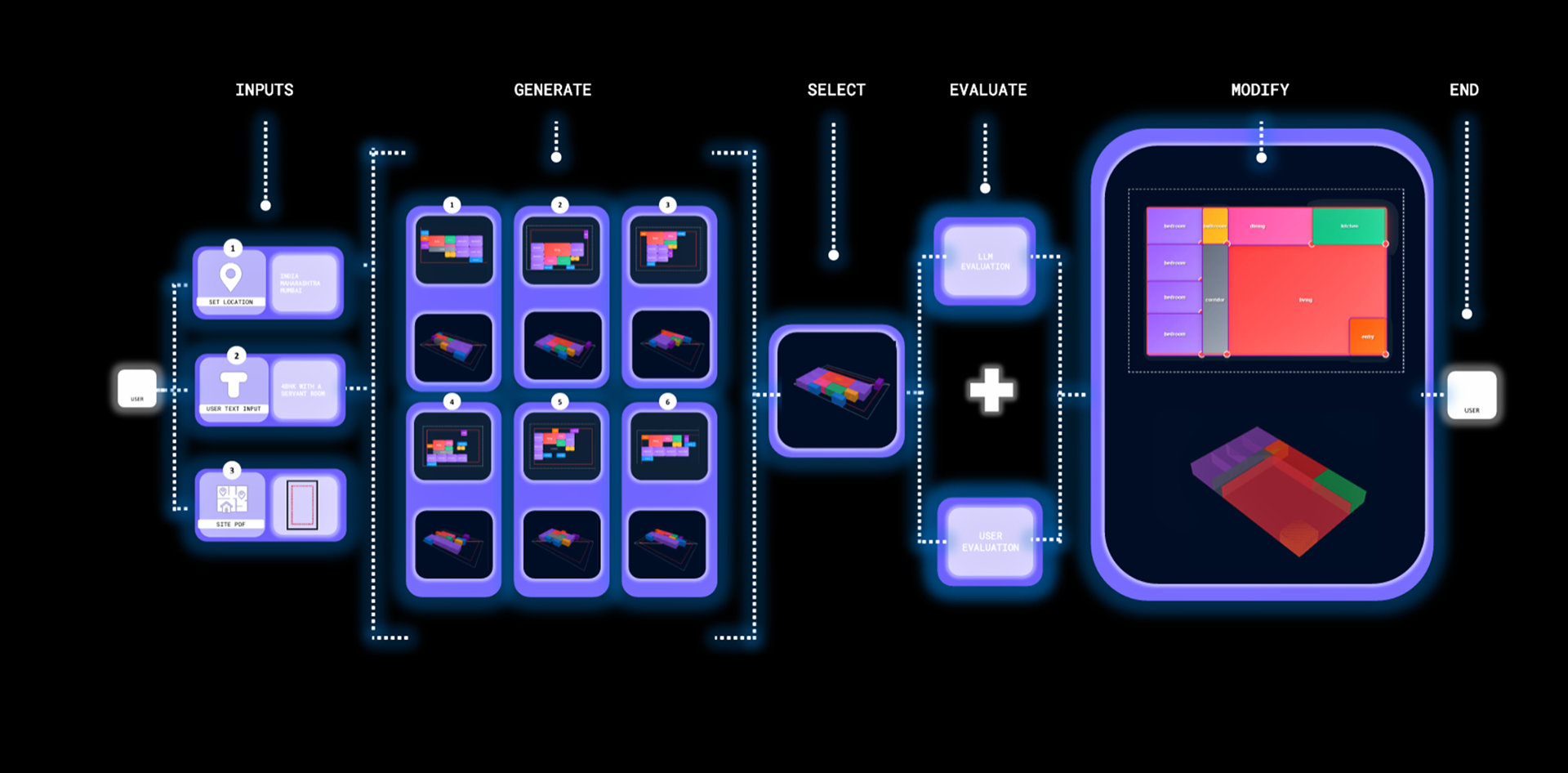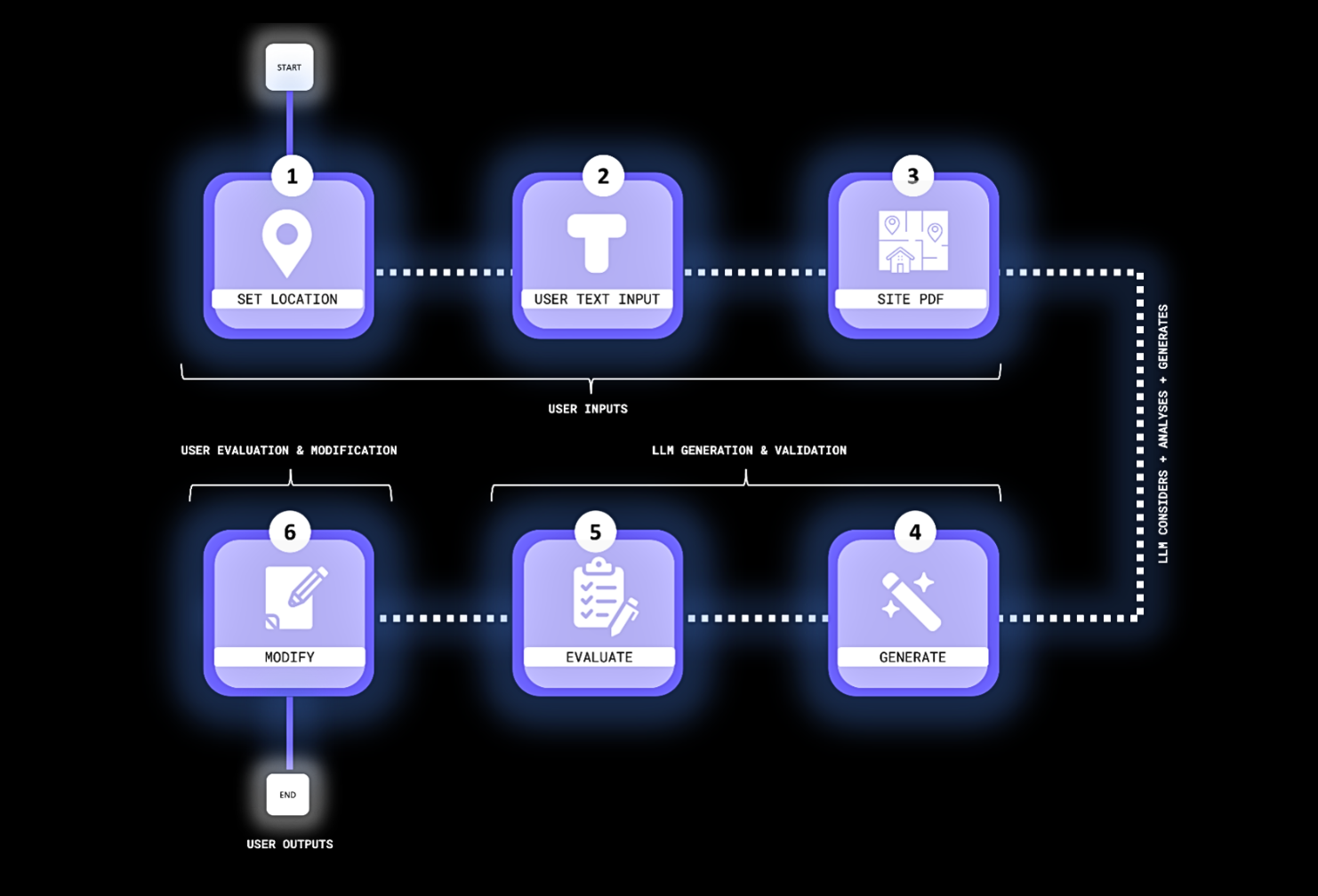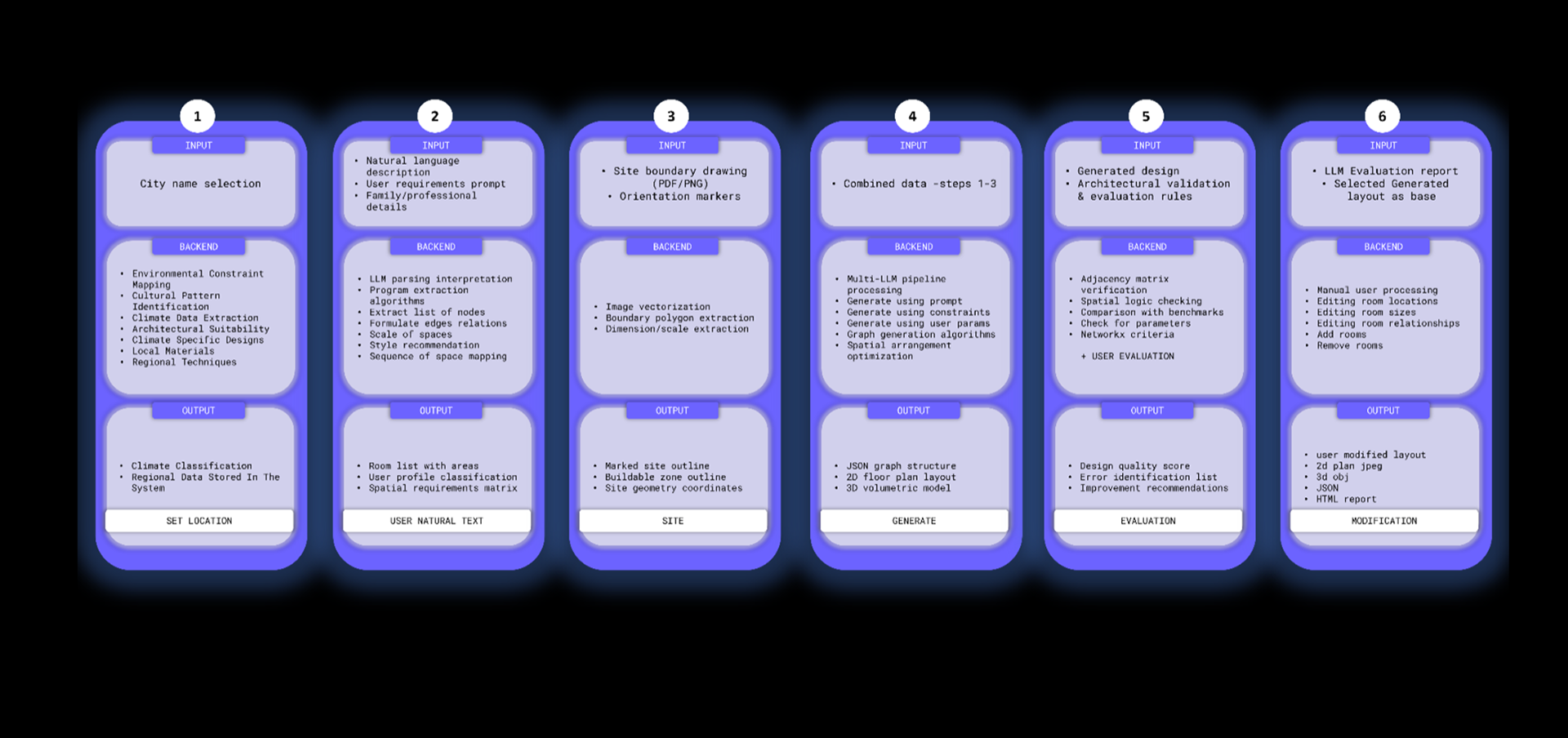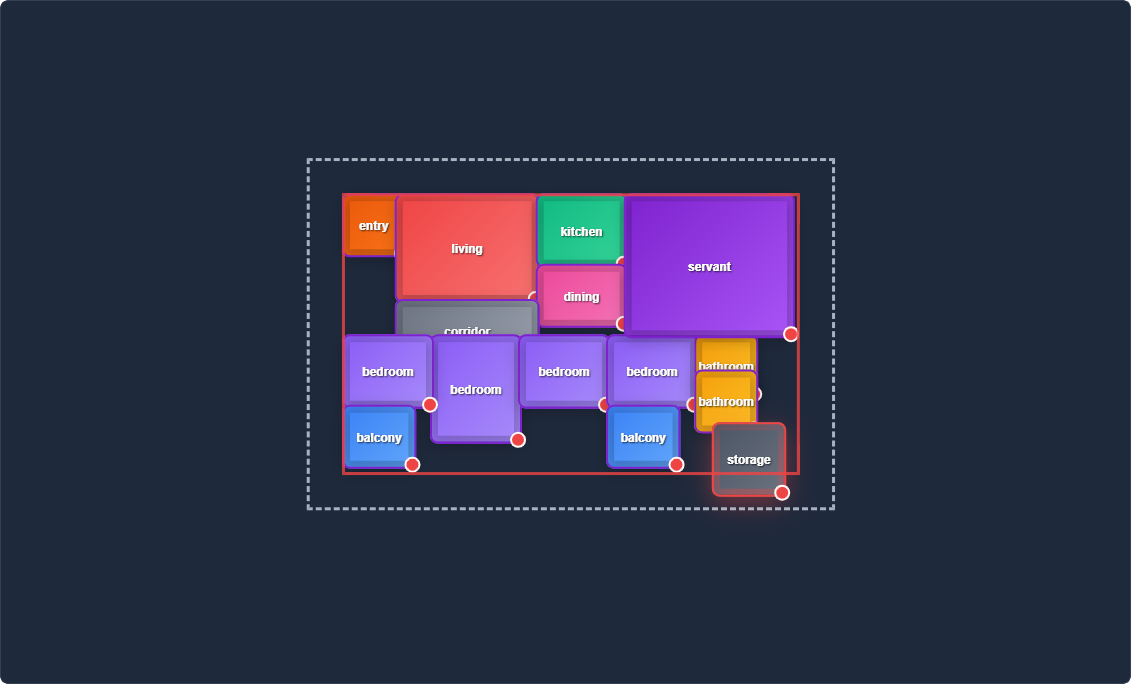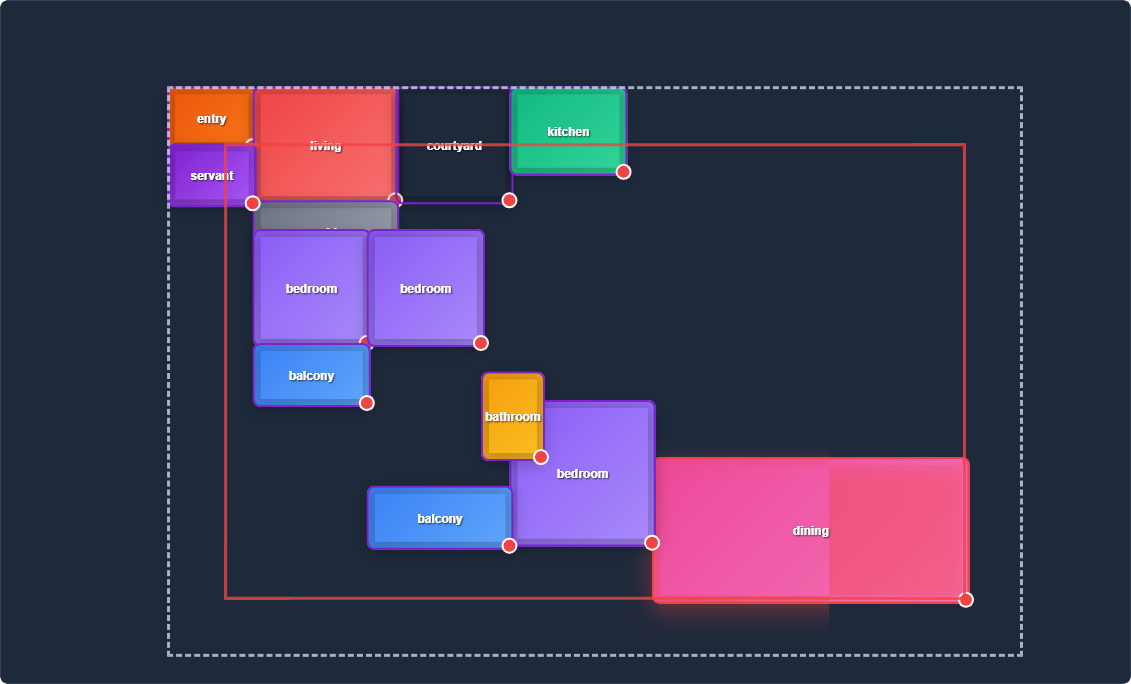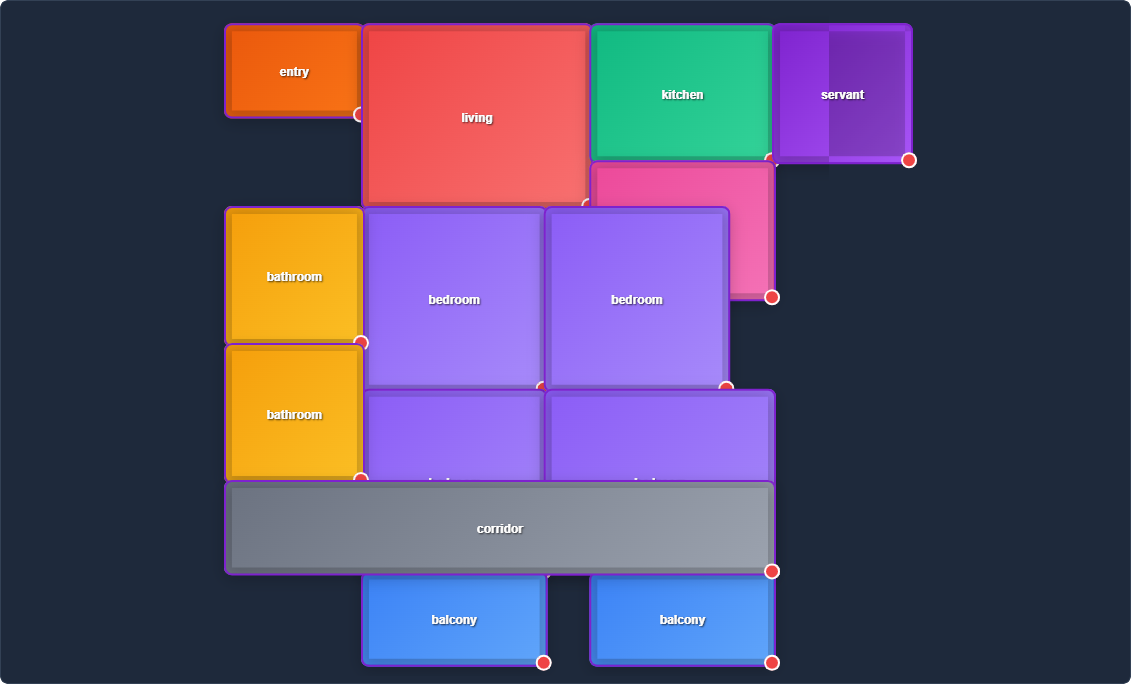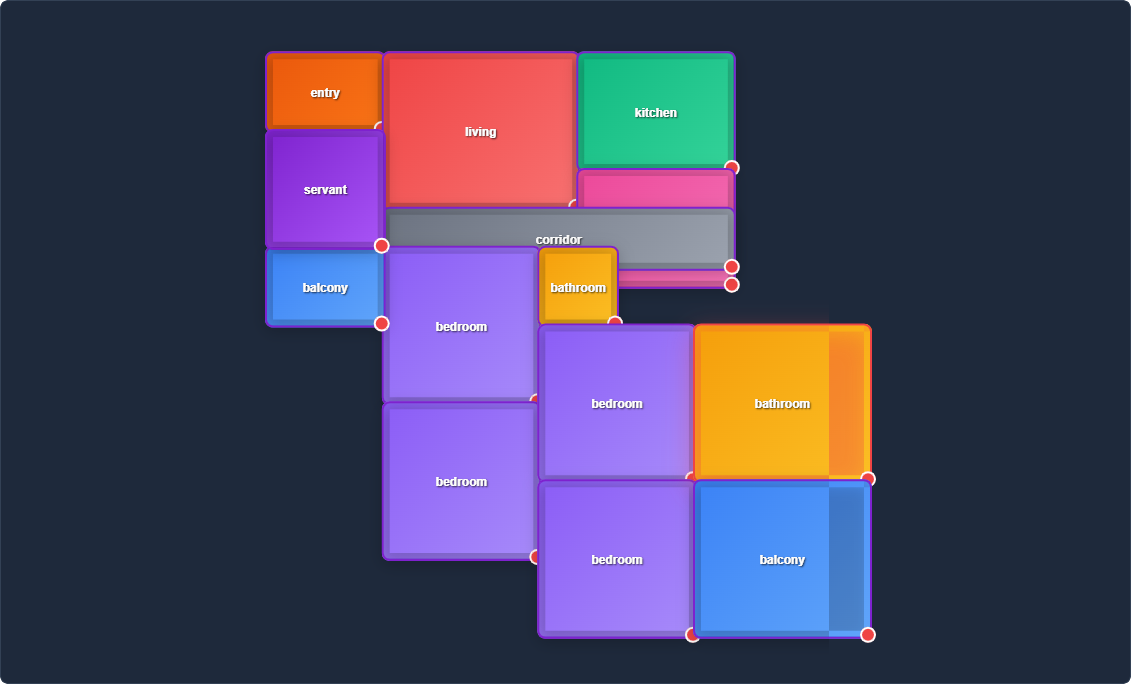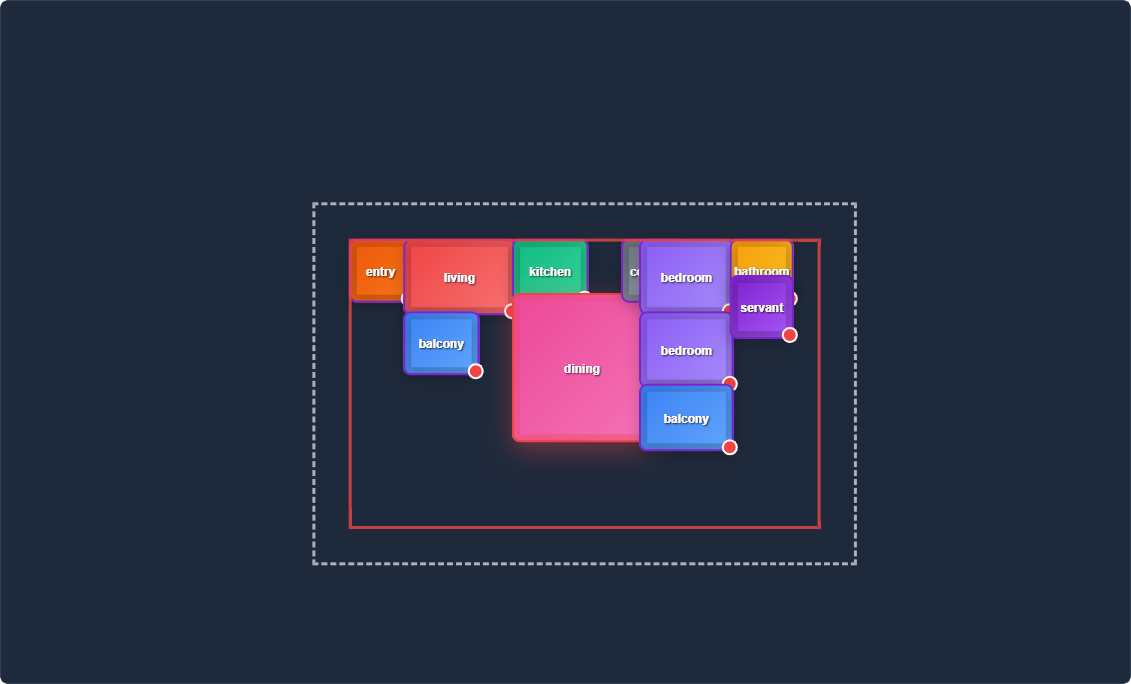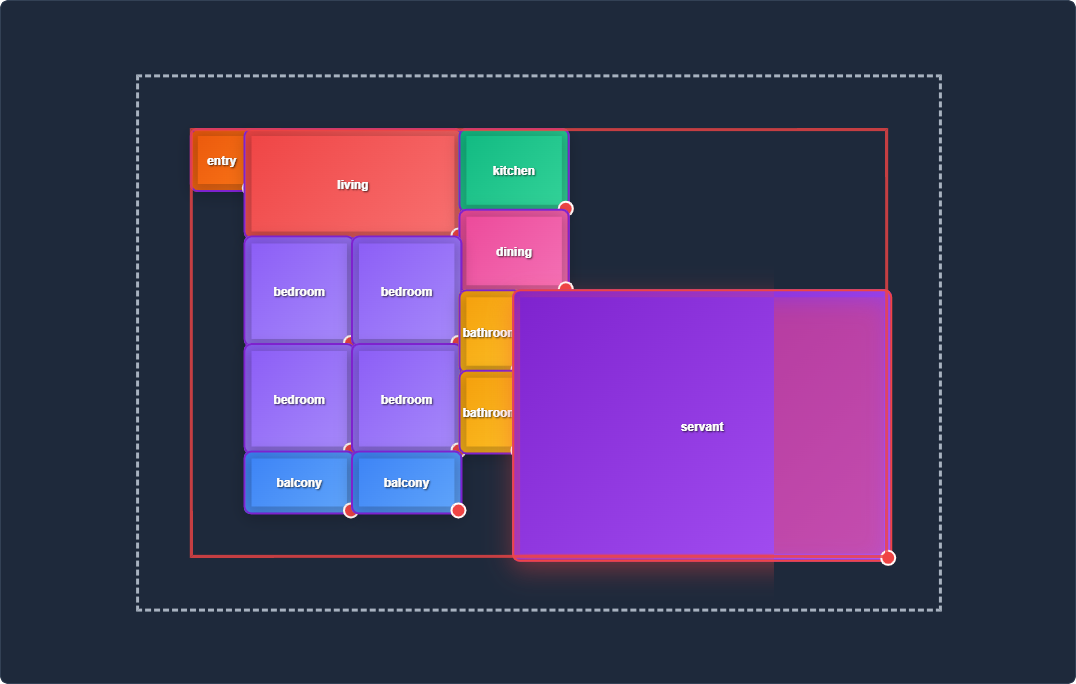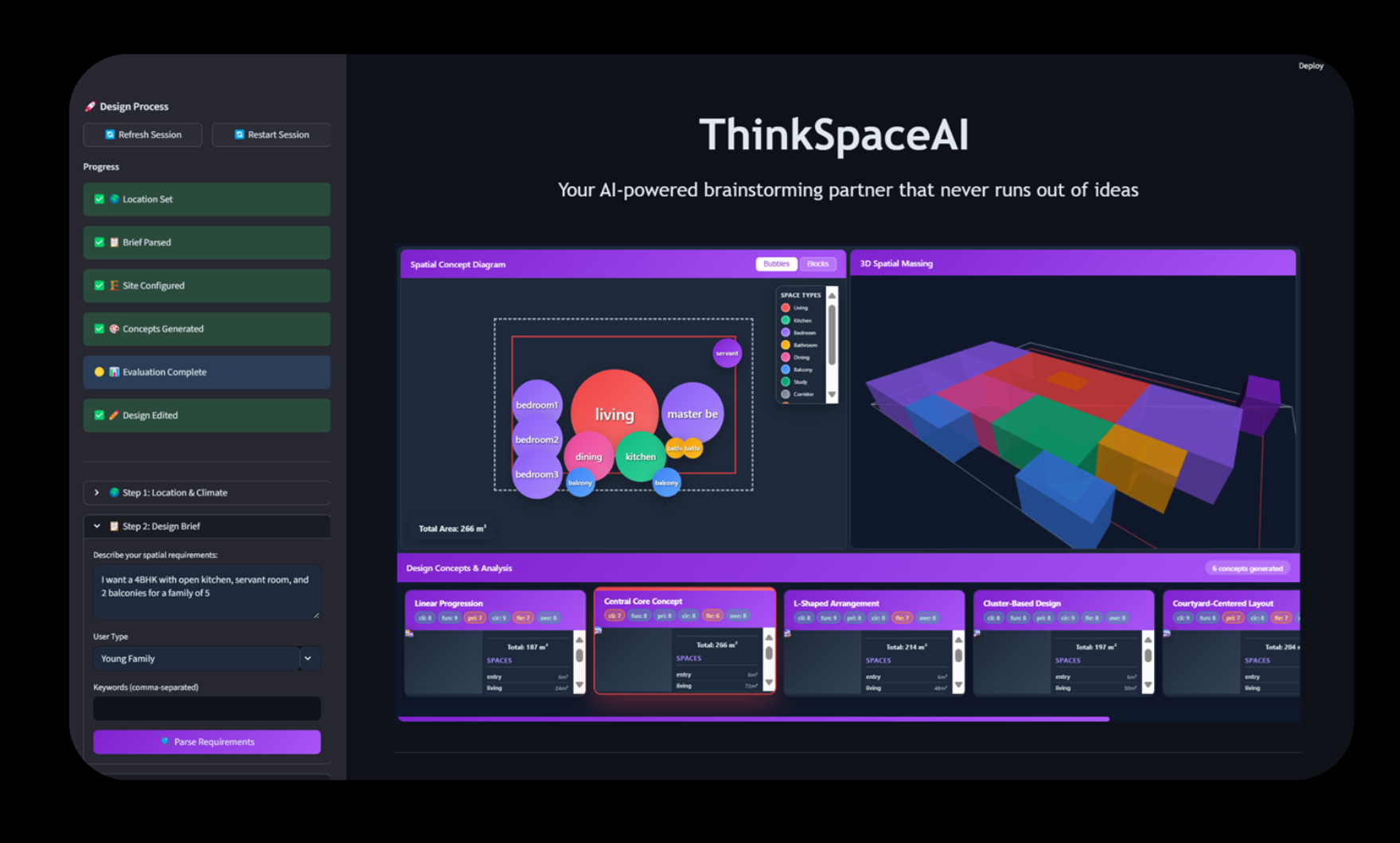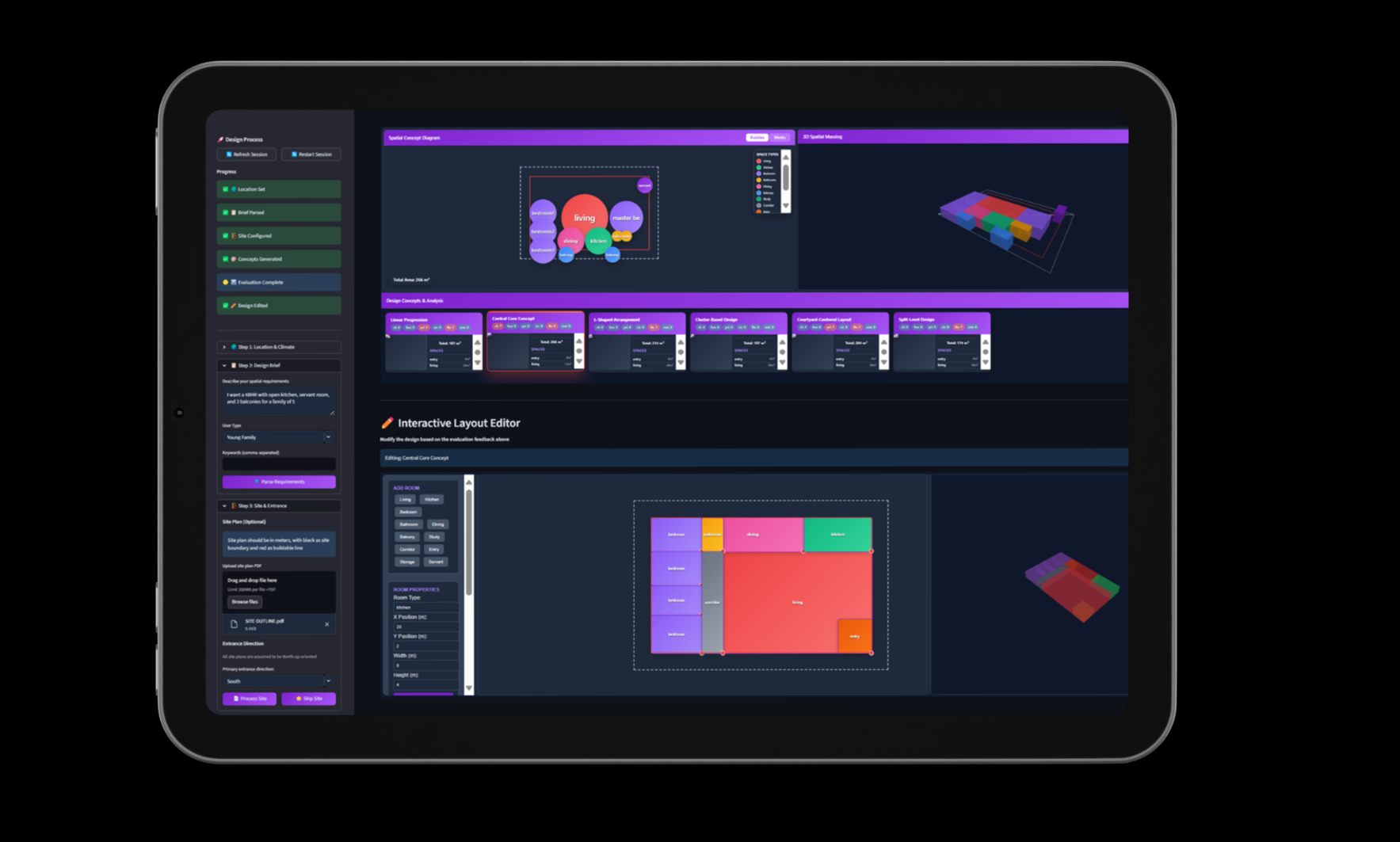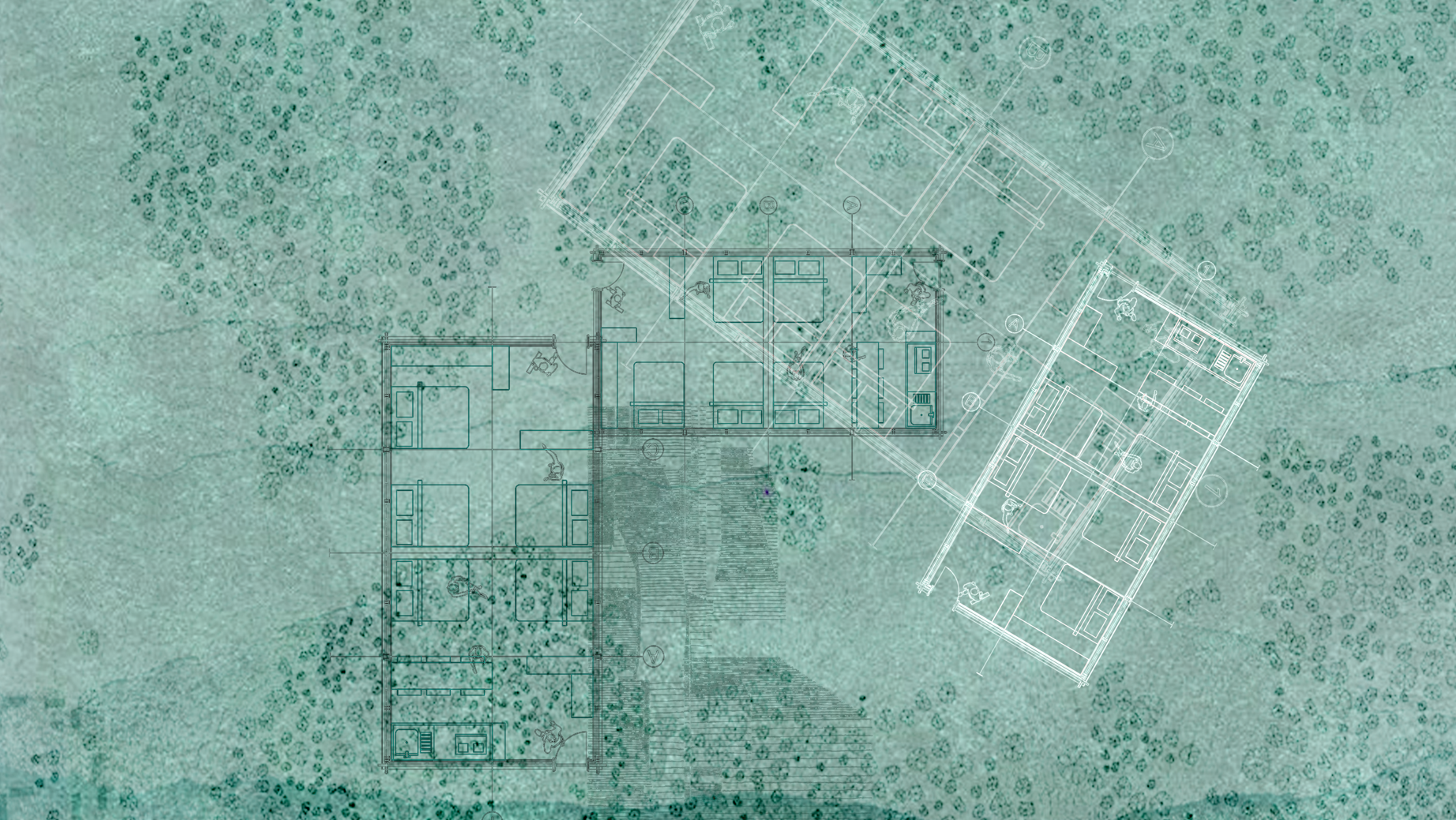

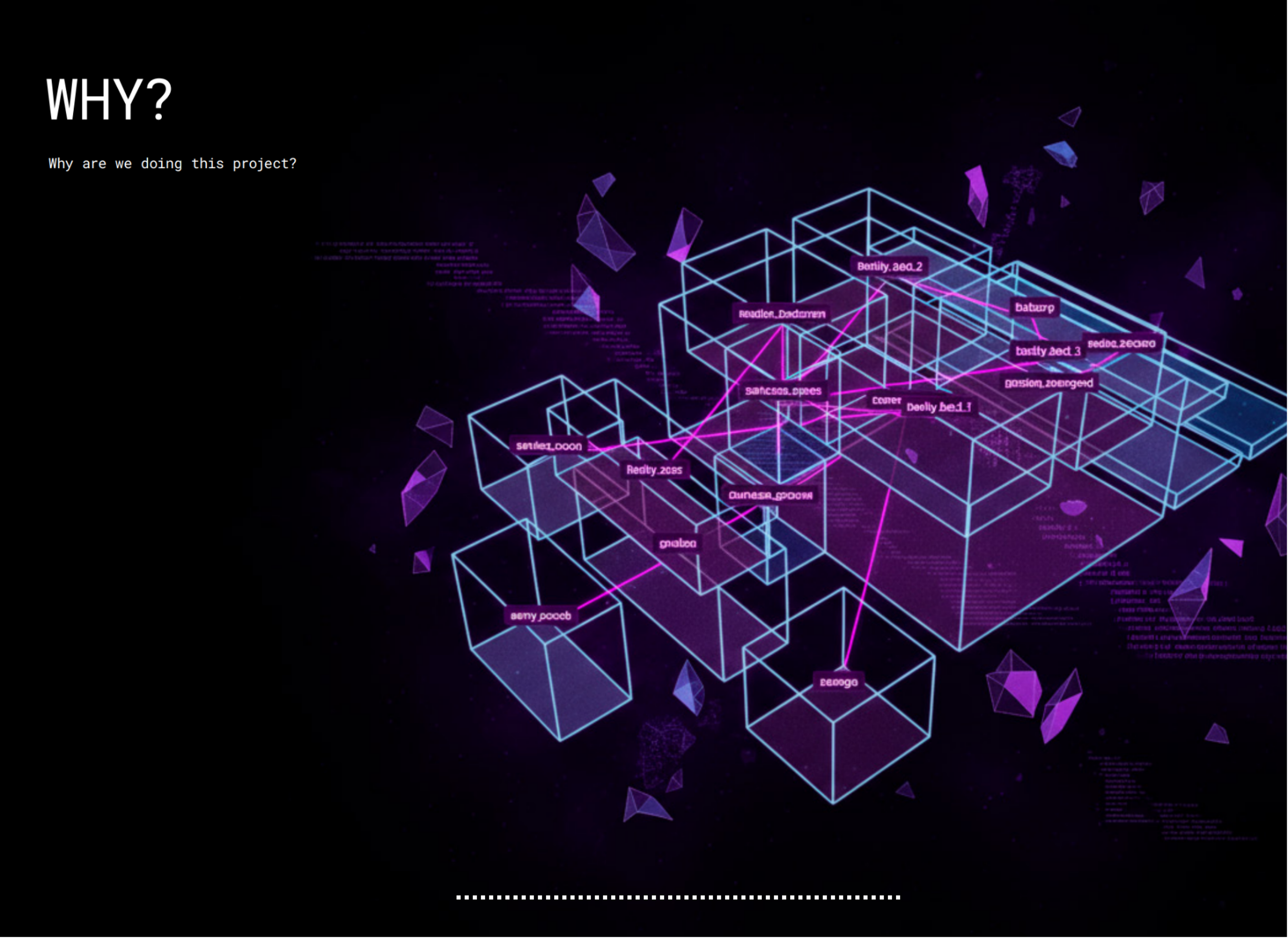
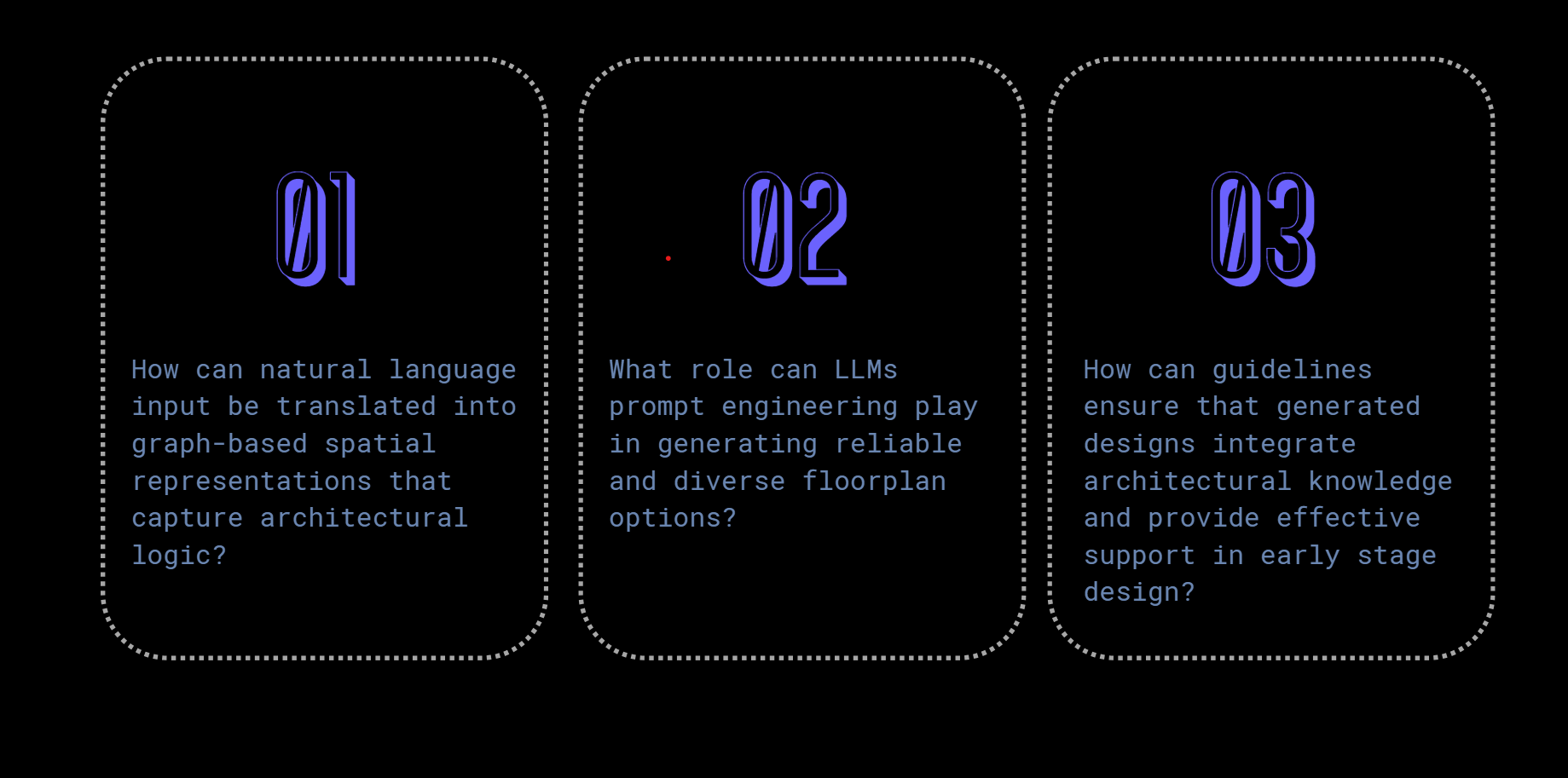
The motivation of this thesis is to explore how natural language can be transformed into structured architectural knowledge for house design. We propose a workflow where user prompts are translated into graph-based spatial representations, which are then converted into floorplans enriched with architectural data. By testing large language models (LLMs) and prompt strategies, this work aims to establish guidelines that bridge free-form input with structured design logic, offering architects meaningful options in the early stages of
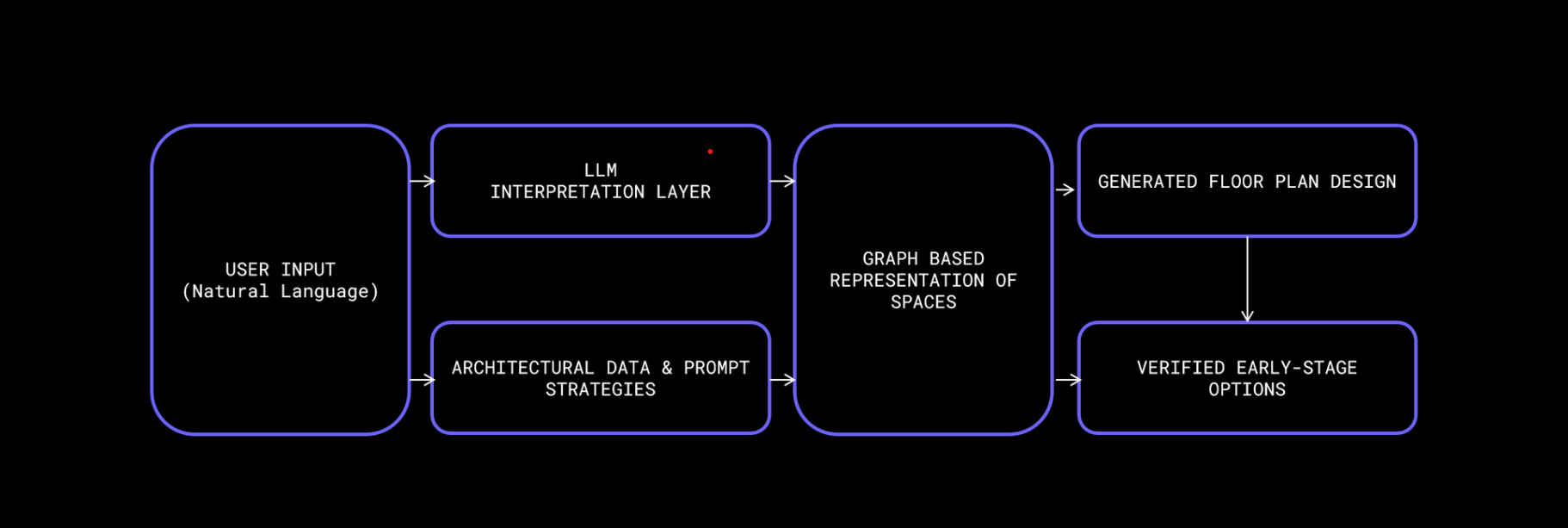
Early-stage house design is hard to formalize, and current tools don’t understand unstructured inputs. LLMs could bridge natural language and spatial logic, but no workflow exists to convert prompts into graph-based layouts. This missing link prevents LLMs from supporting conceptual design.
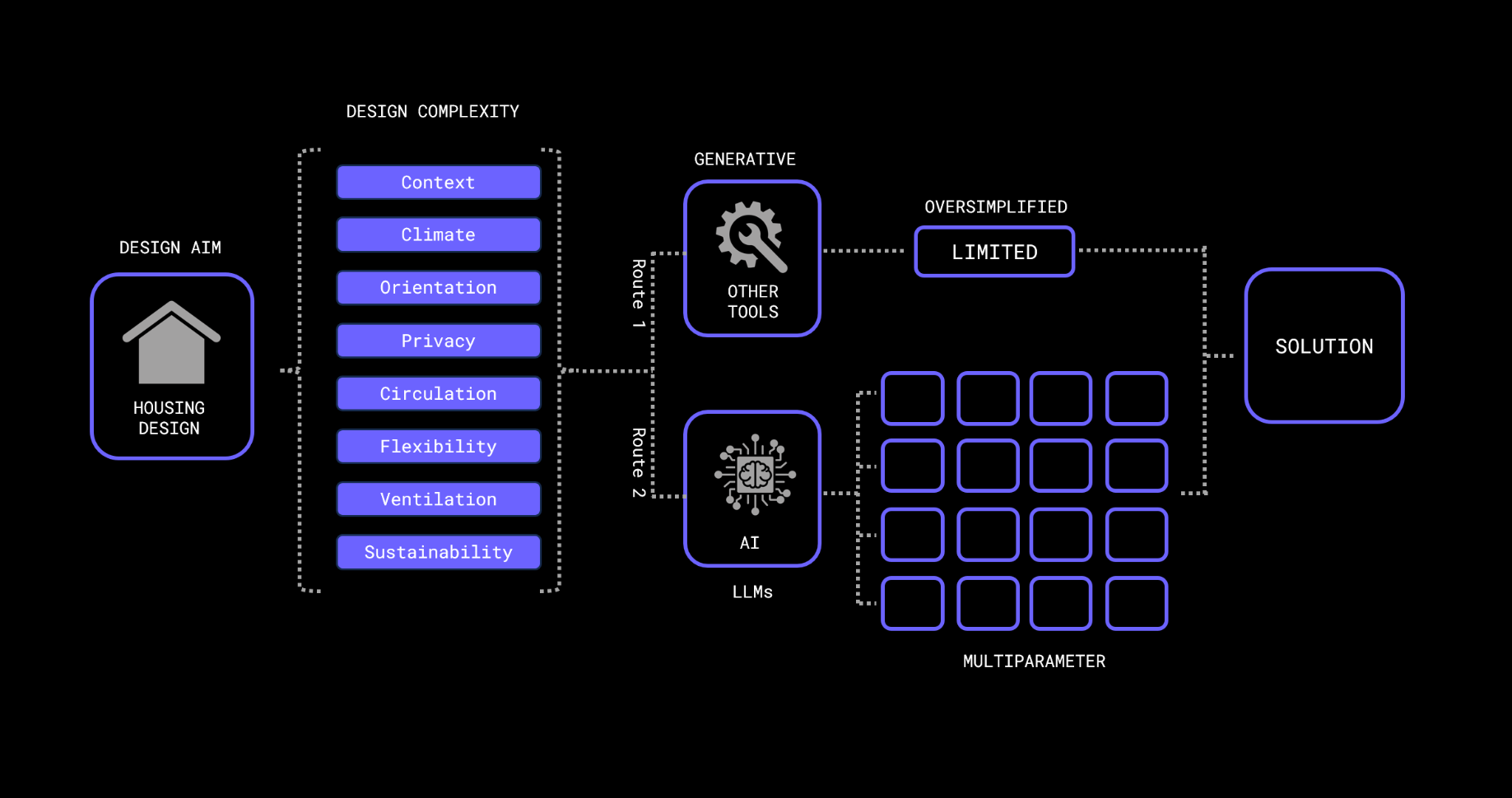
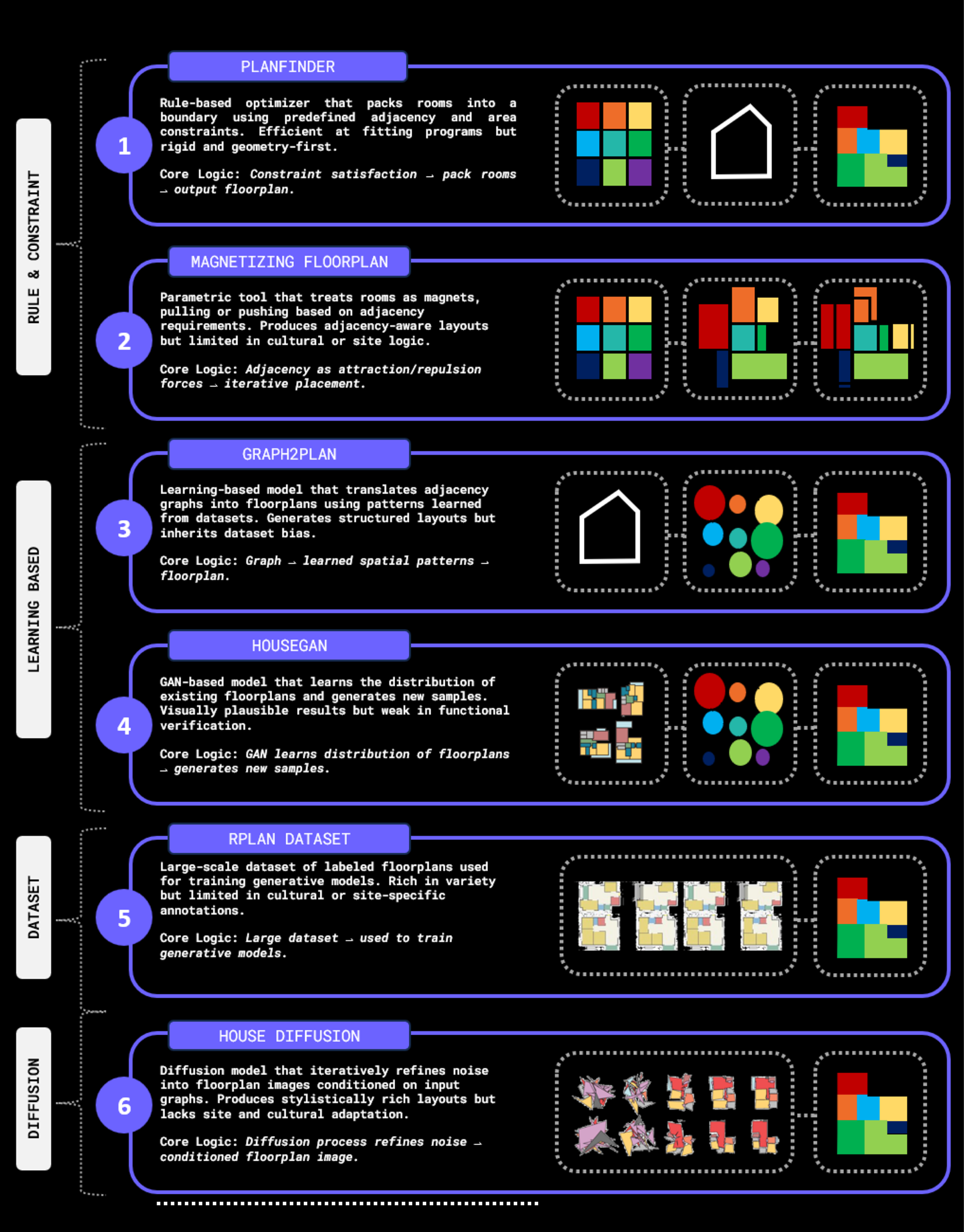
Computational tools have long promised to augment architectural practice by accelerating design exploration and automating repetitive tasks. Early-stage housing design, however, poses unique challenges: it requires balancing user needs, site-specific constraints, and cultural expectations, all while maintaining architectural coherence.