What is loneliness?
Loneliness is a phenomenon where one experiences isolation and feeling of being left out.
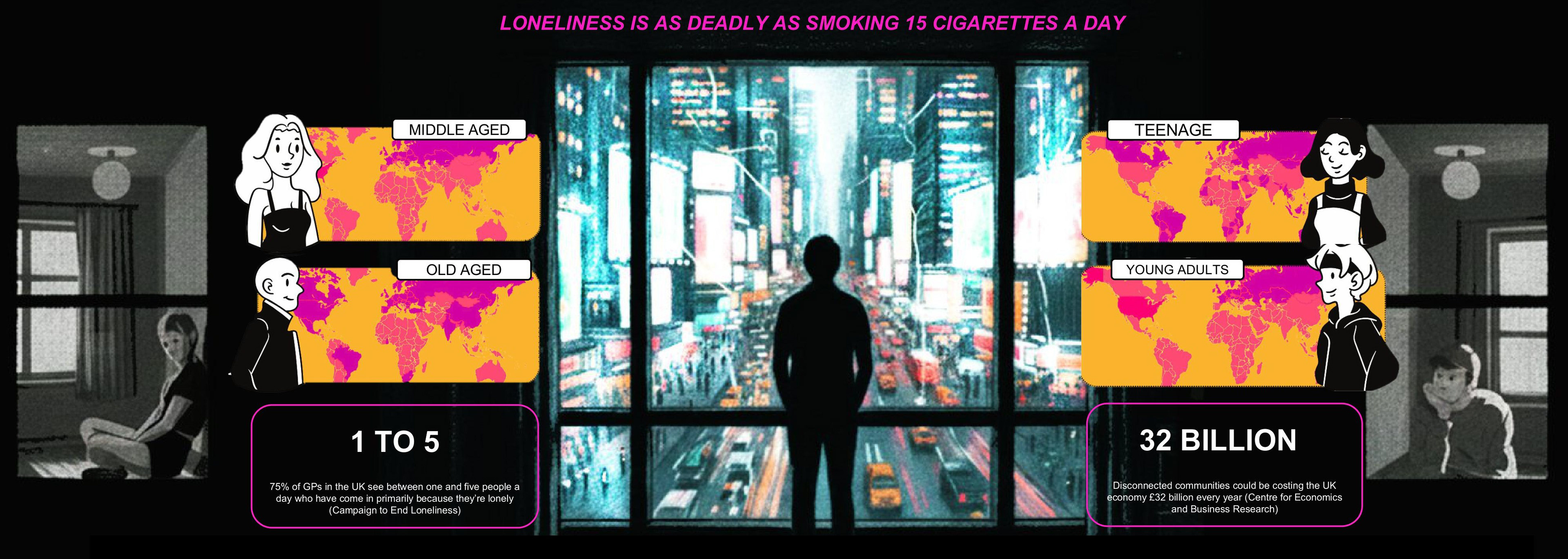
What causes loneliness?
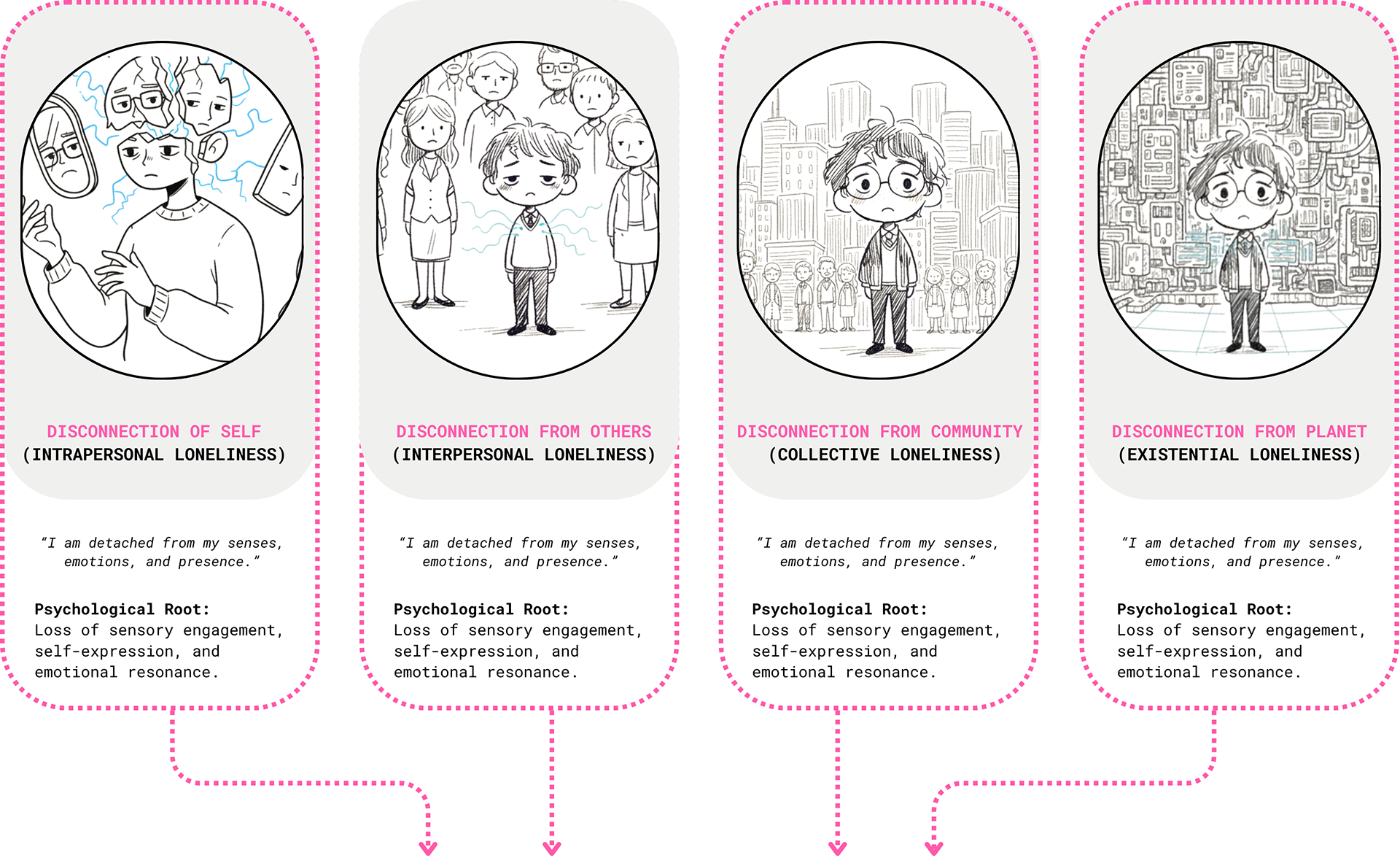
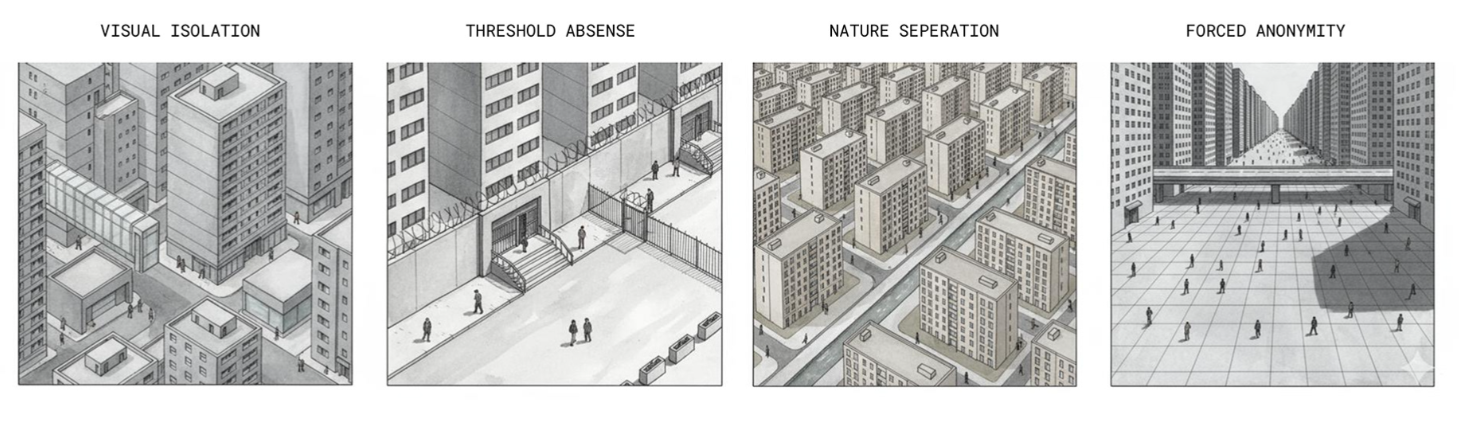
Loneliness is experienced at four levels: Interpersonal, Interpersonal, collective and Existential. Each of which is directly connected to an experience/cause that they experience in the environment. There are a total of four psychological causes of urban loneliness which are mainly: Visual Isolation, Threshold Absence, Nature Separation, Forced Anonymity. Each experienced at different scales.
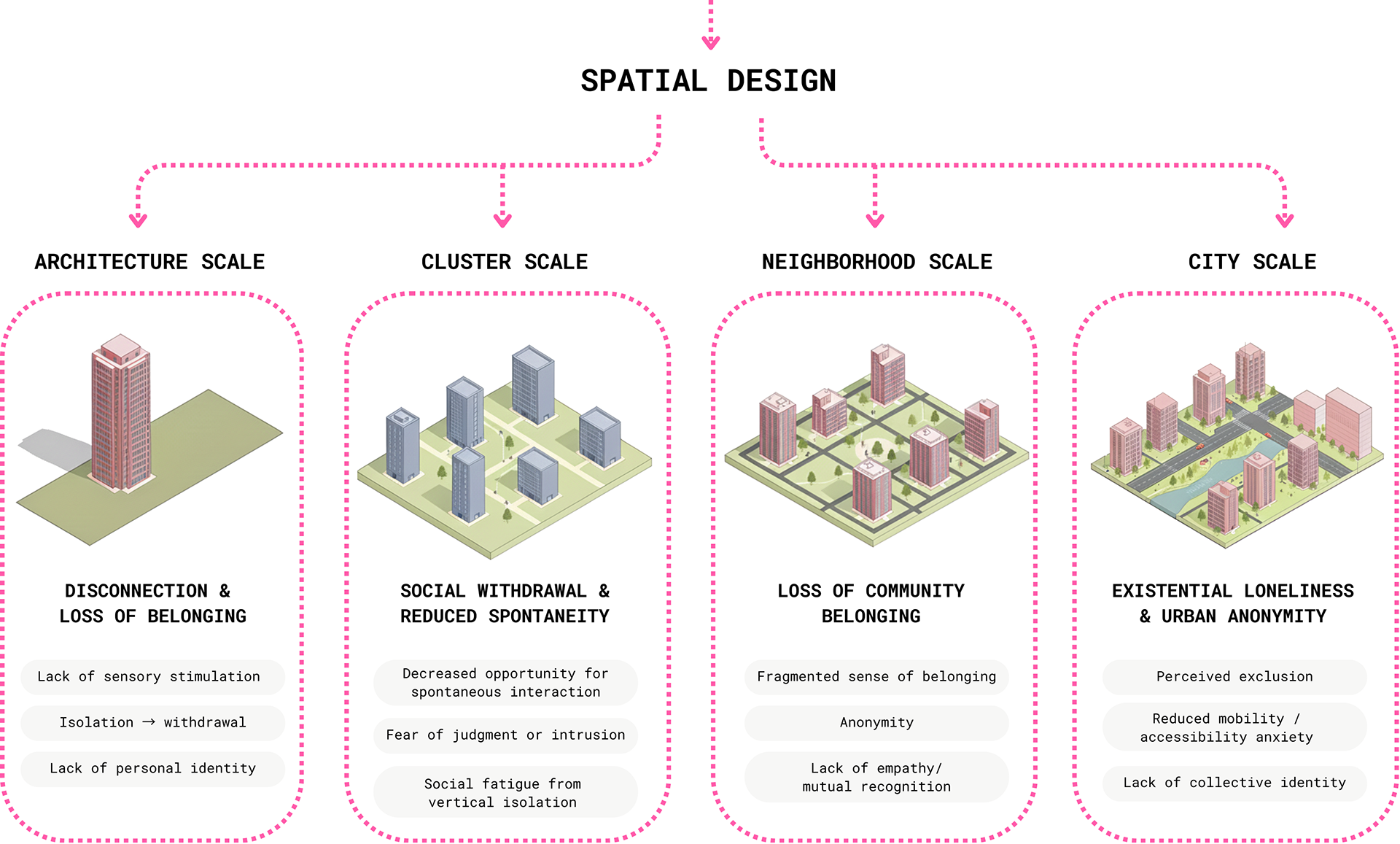
The design is approached through a multiscale lens. With the target of addressing and nullifying the four triggers to the minimum - for which a script is generated that can automate such decisions on all scales.
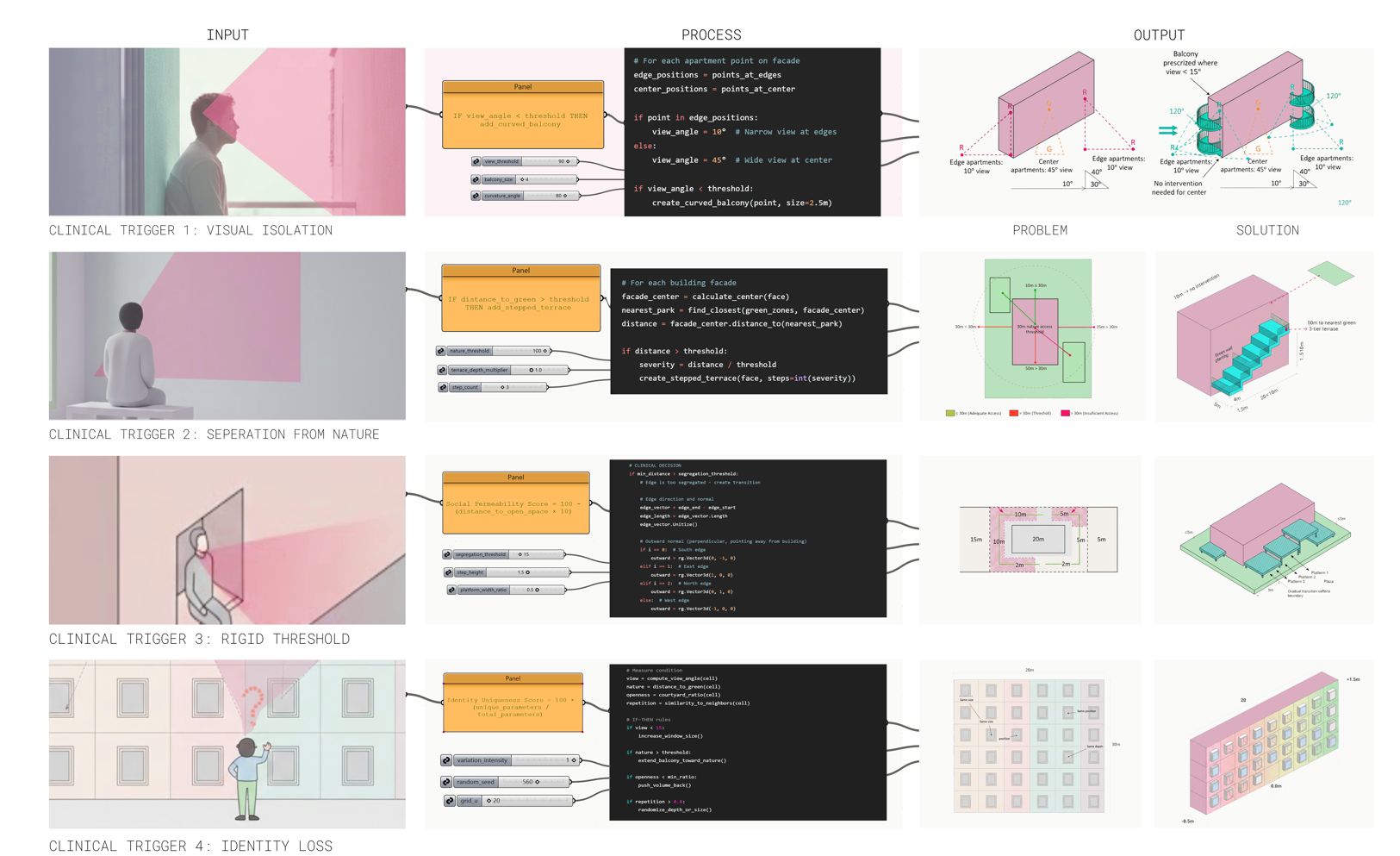
The script variations are created on all four scales, intended to address the triggers. Some of the common denominators for the four triggers are: Building density, Public areas, recreational spaces.
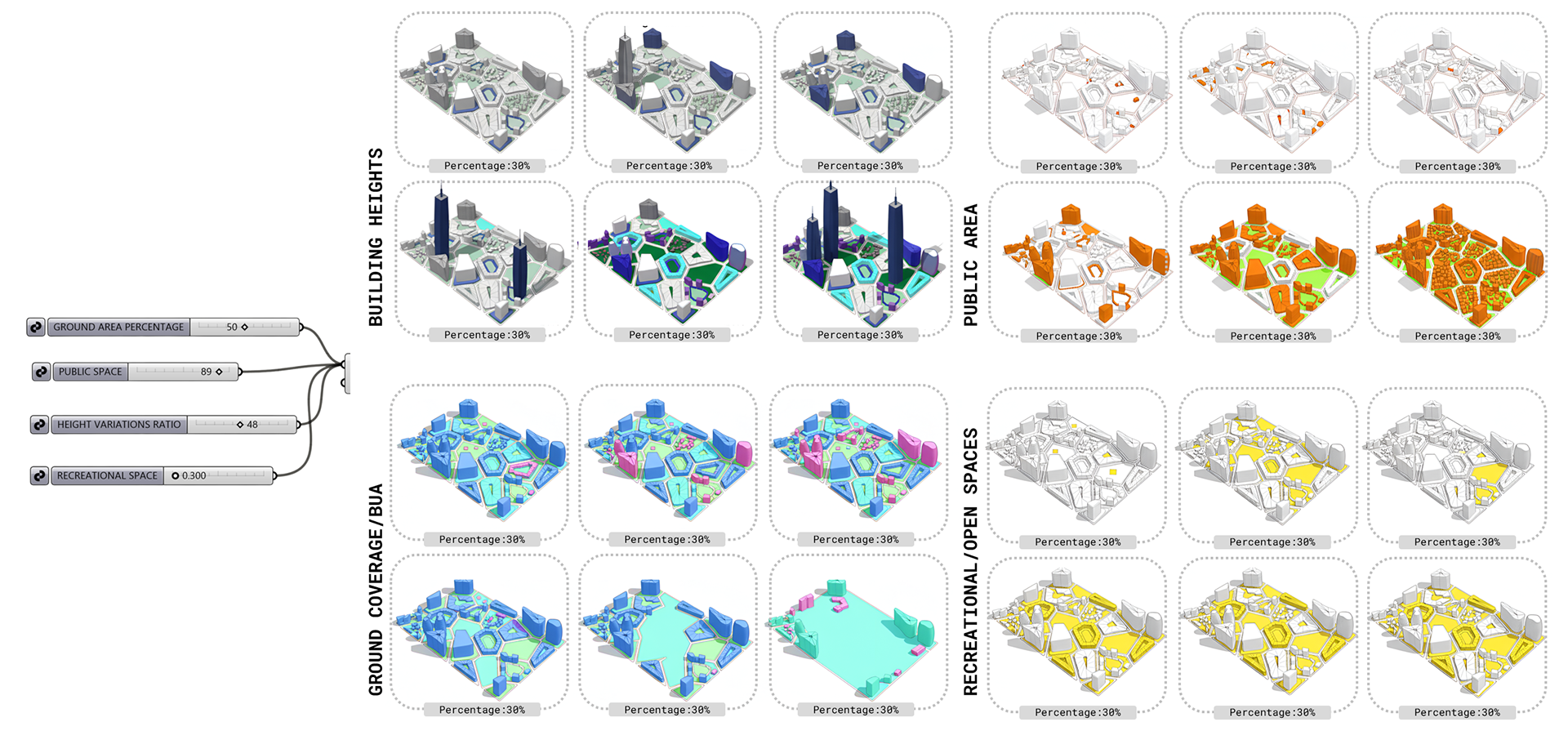
Multi-scalar intervention
Architecture and cluster scale: at each scale there is a trigger out of four is targeted and addressed on both horizontal and vertical alignments. The intervention is done as a prototype - which will be multiplied/applied across different locations.

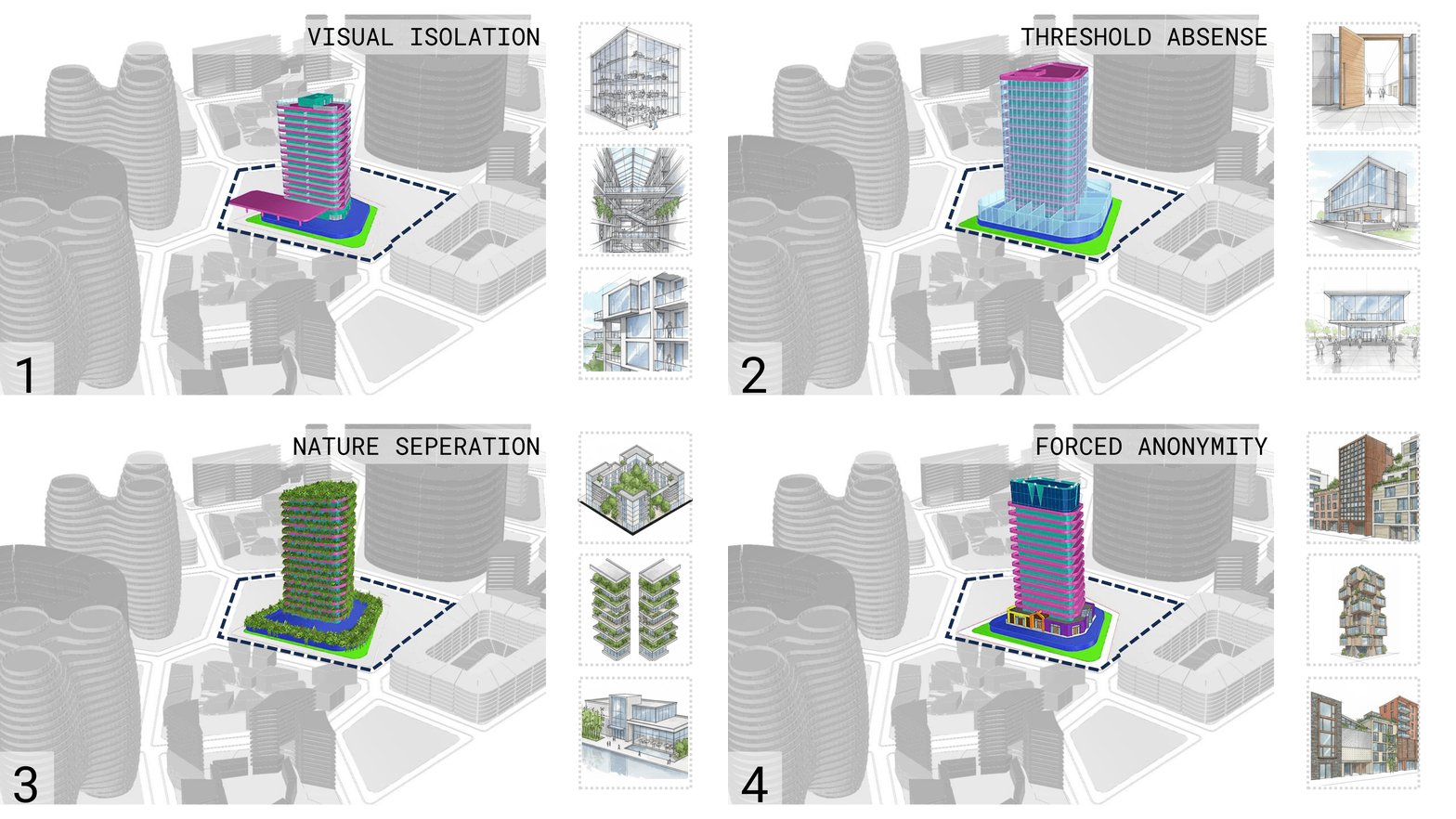
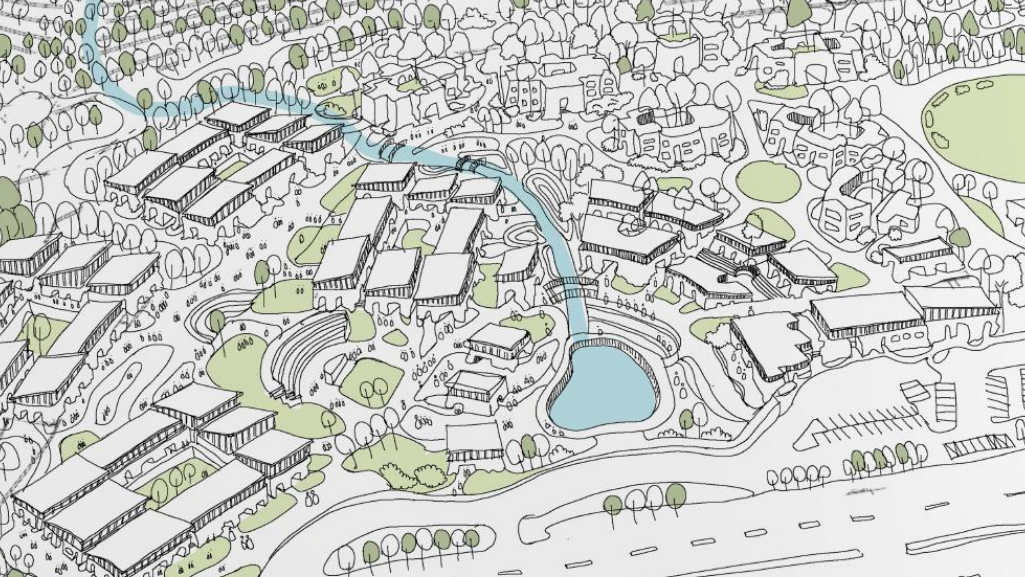
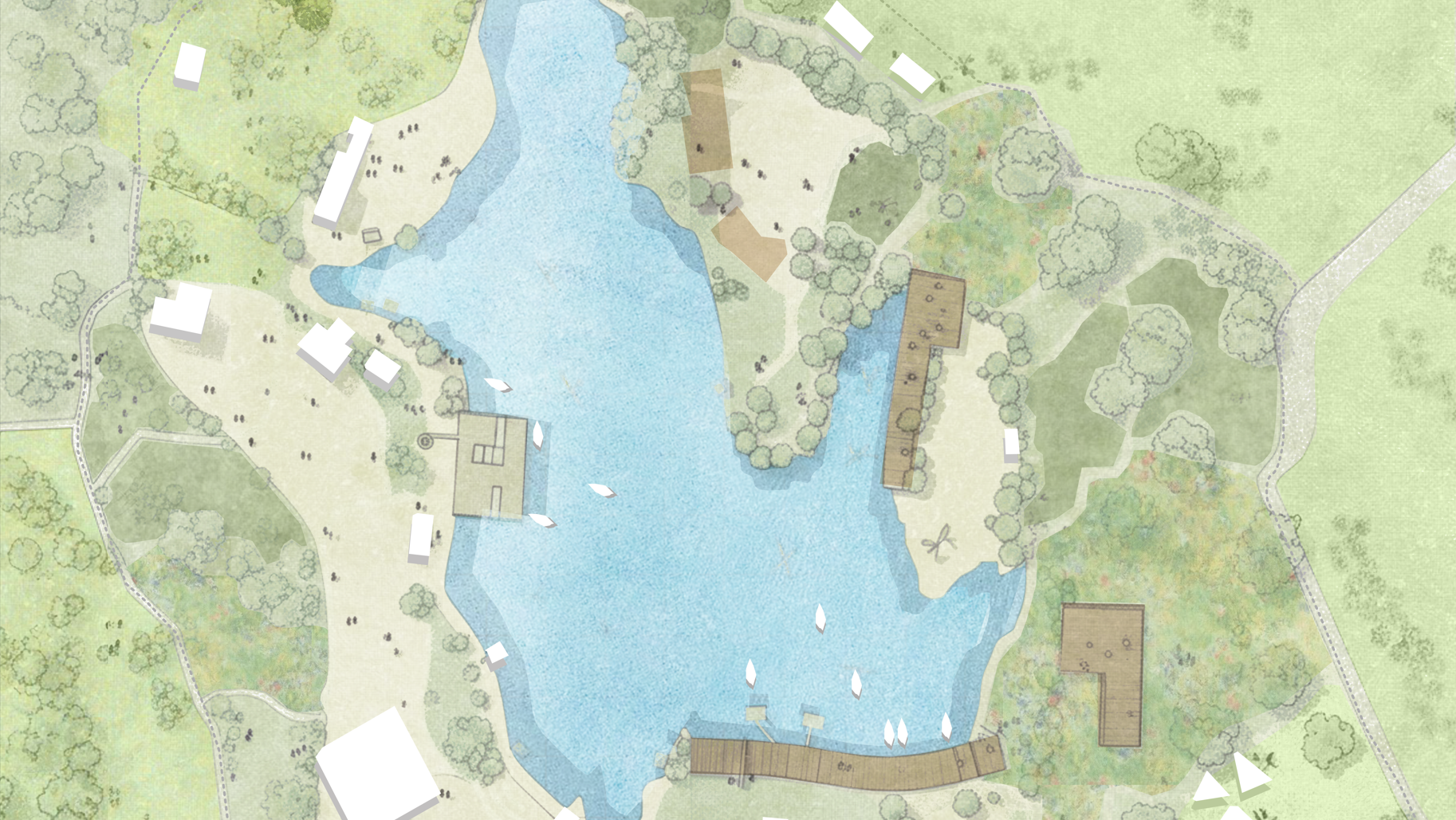
Architecture scale - showing interventions for each trigger with conceptual interventions
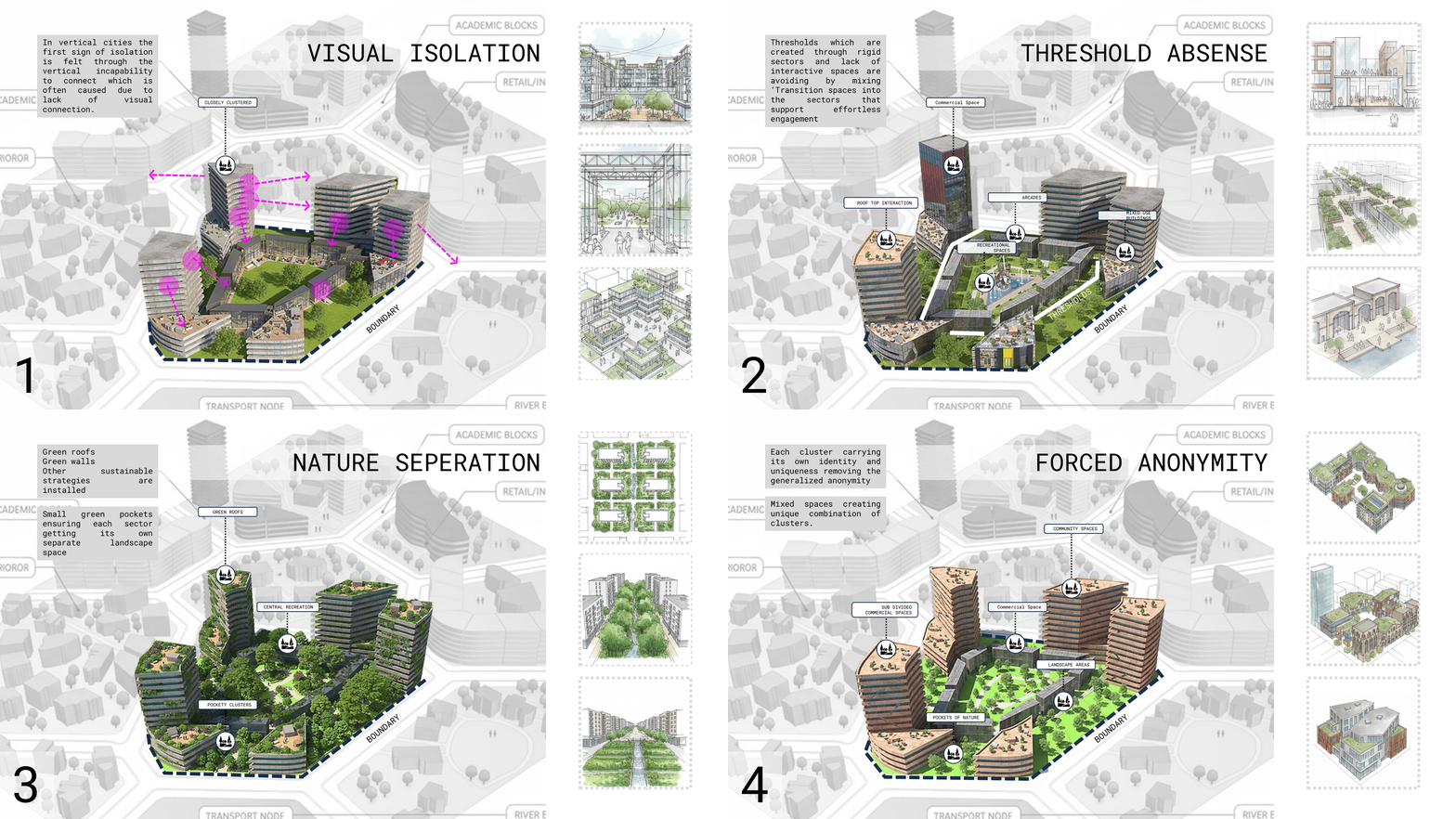
Cluster scale - showing interventions for each trigger with conceptual interventions.
Neighborhood and Section scale: at each scale there is a trigger out of four is targeted and addressed on both horizontal and vertical alignments. The intervention is done as a prototype - which will be multiplied/applied across different locations.
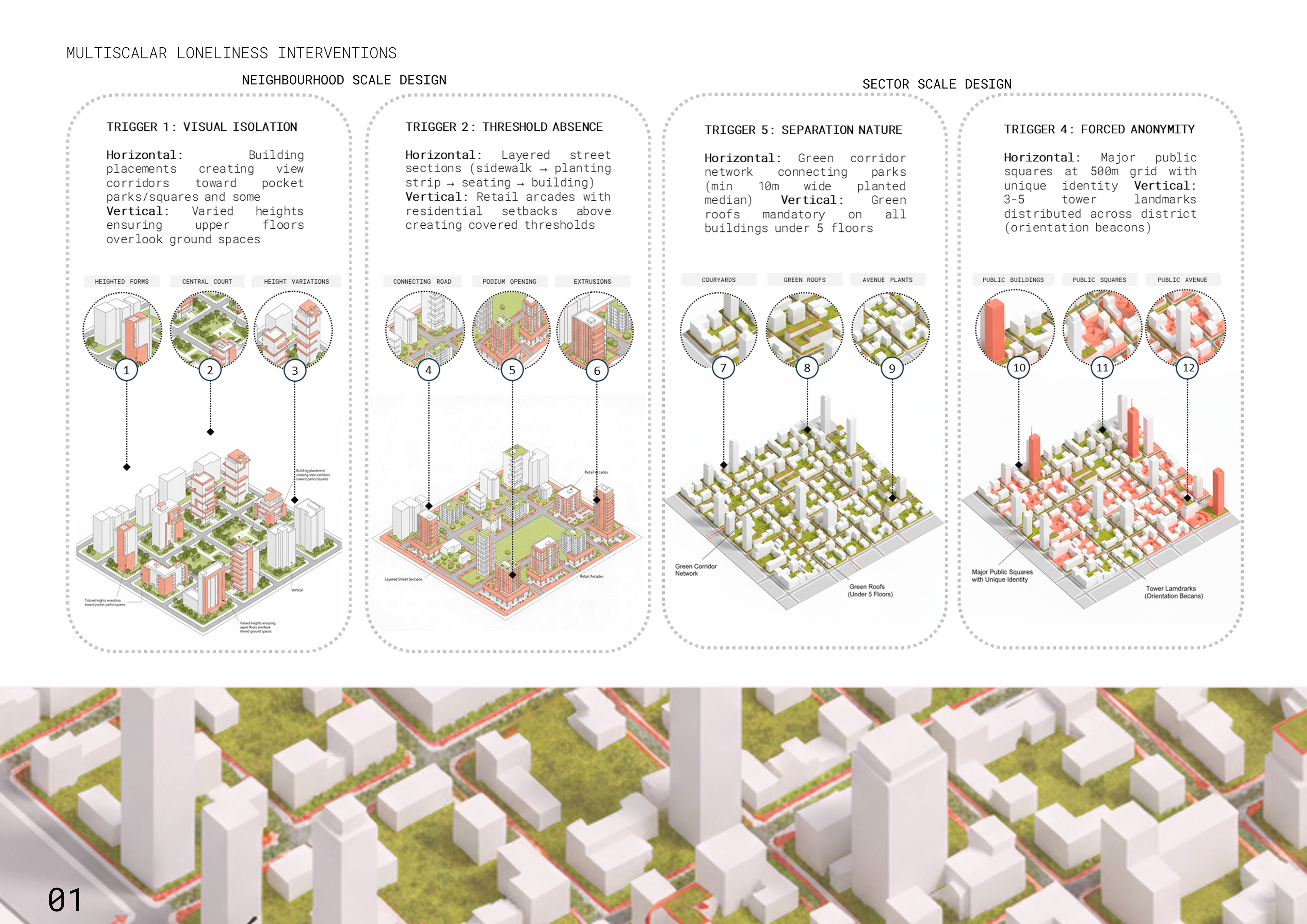
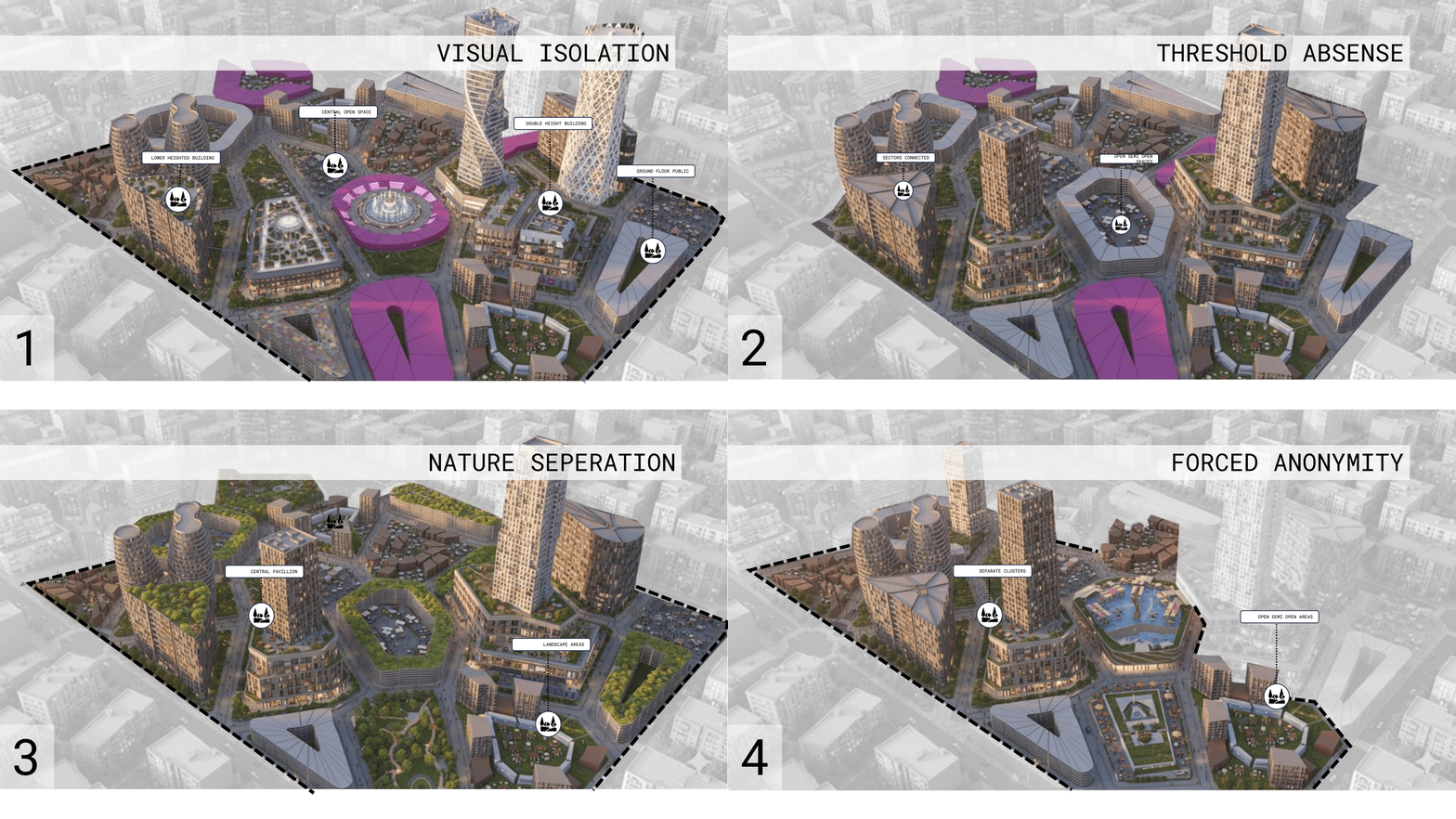
Neighborhood scale - showing interventions for each trigger with conceptual interventions.
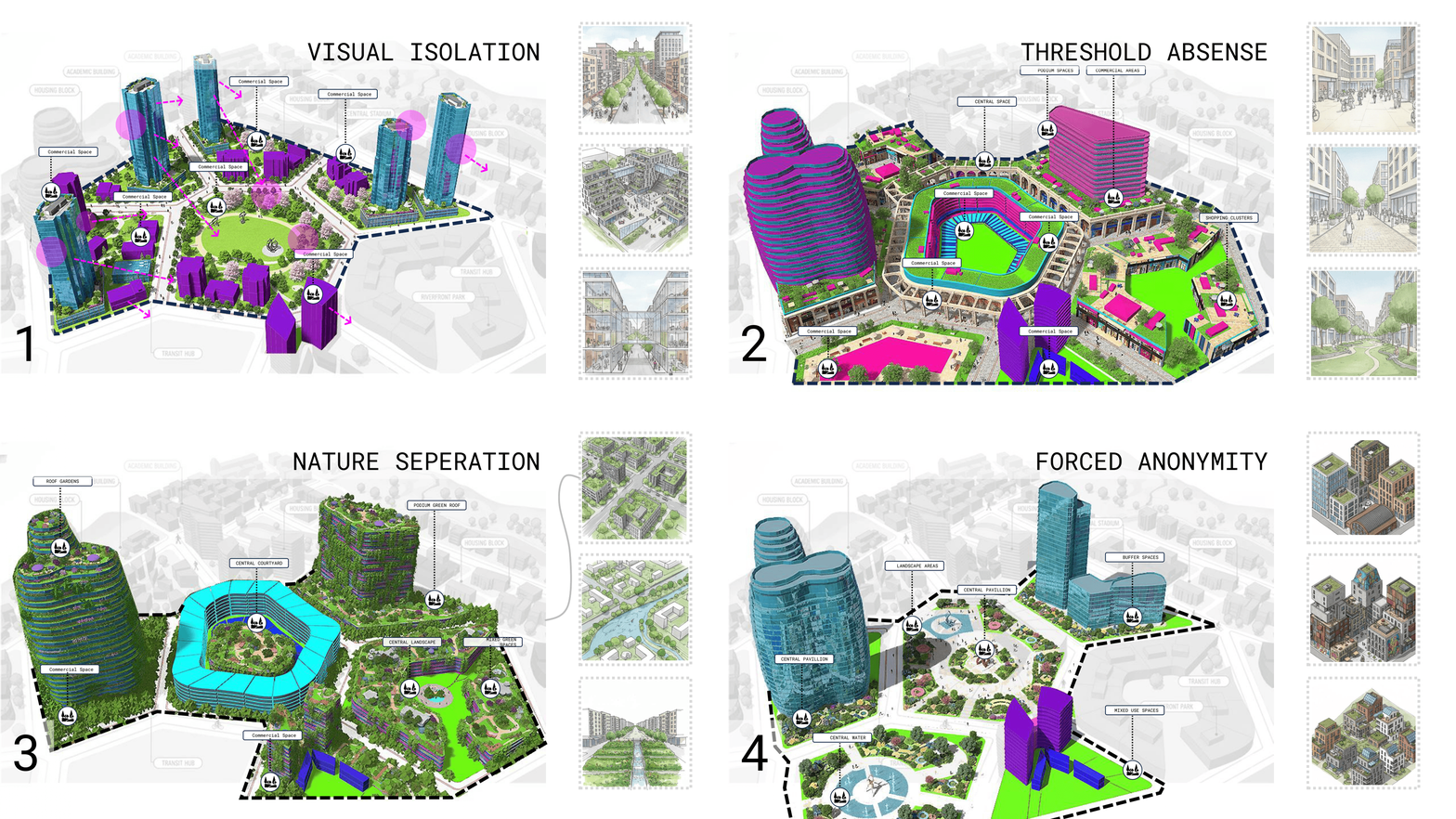
Sector scale - showing interventions for each trigger with conceptual interventions.
Scripting logic
Development of parametric framework that can be replicable in different contexts and scenarios. Built on fundamentals of loneliness triggers.
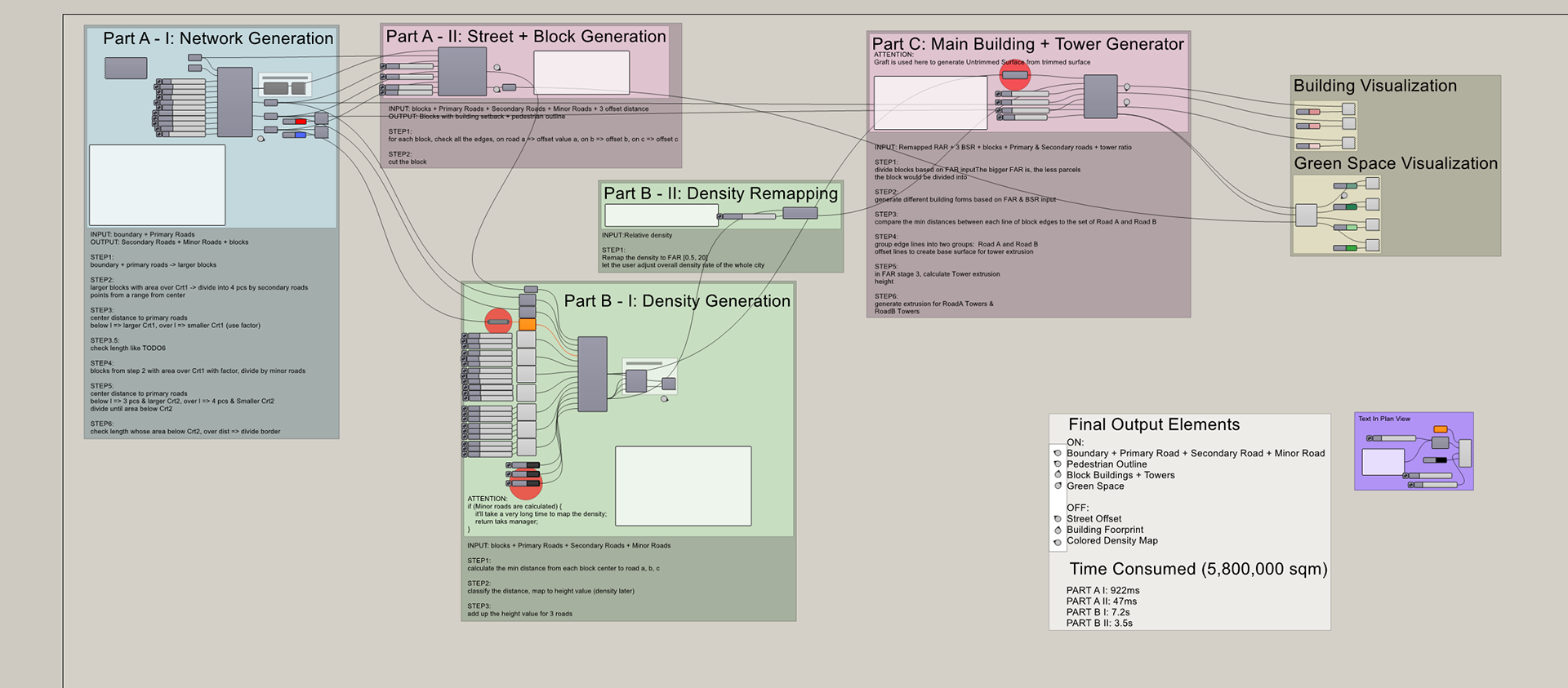
Site plan
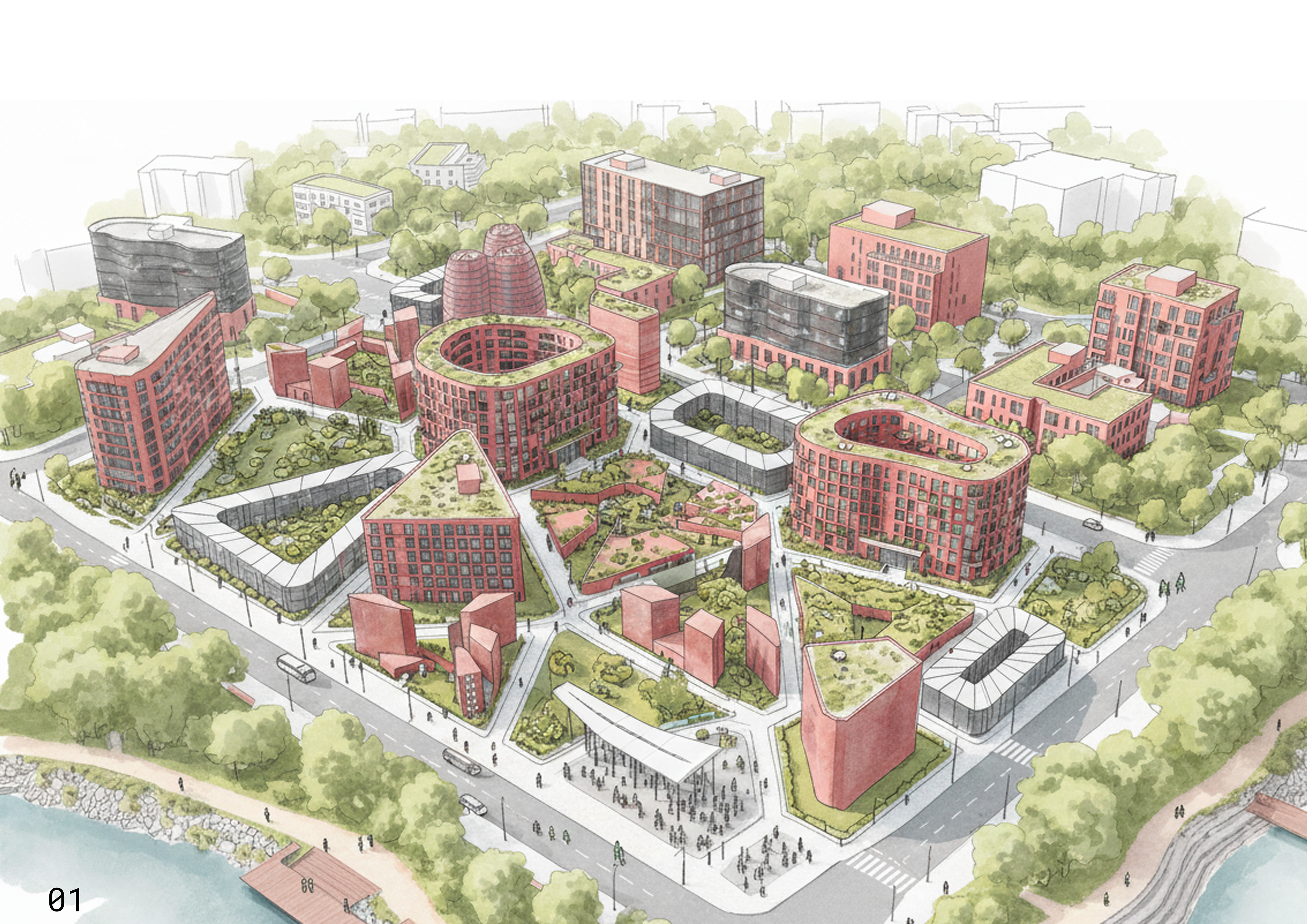
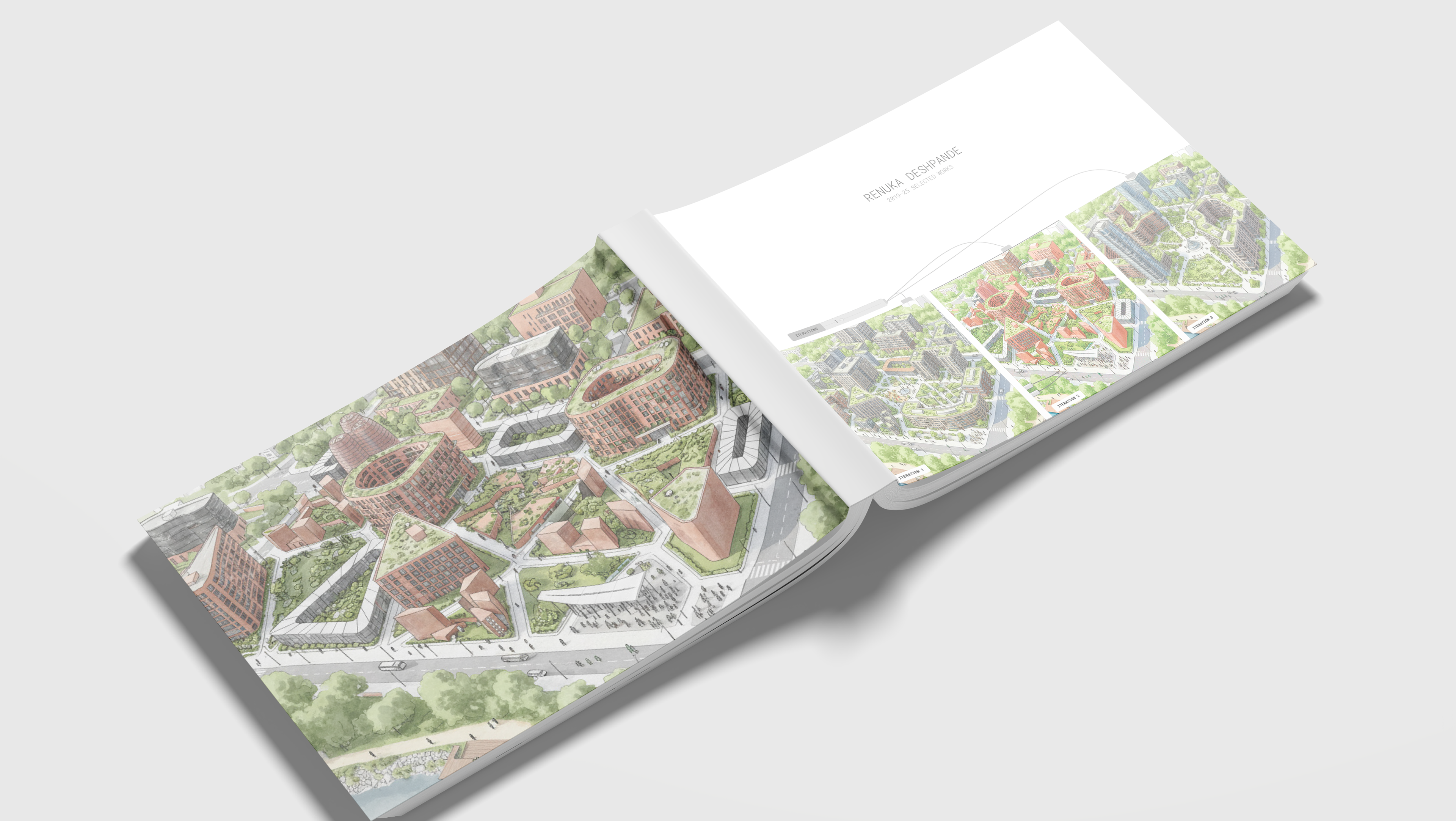
The site plan is generated from a combination script made from architecture > cluster > neighborhood > cluster scale. Formulation is done in combination and co-ordination of patterned growth anchoring around major trigger interventions.
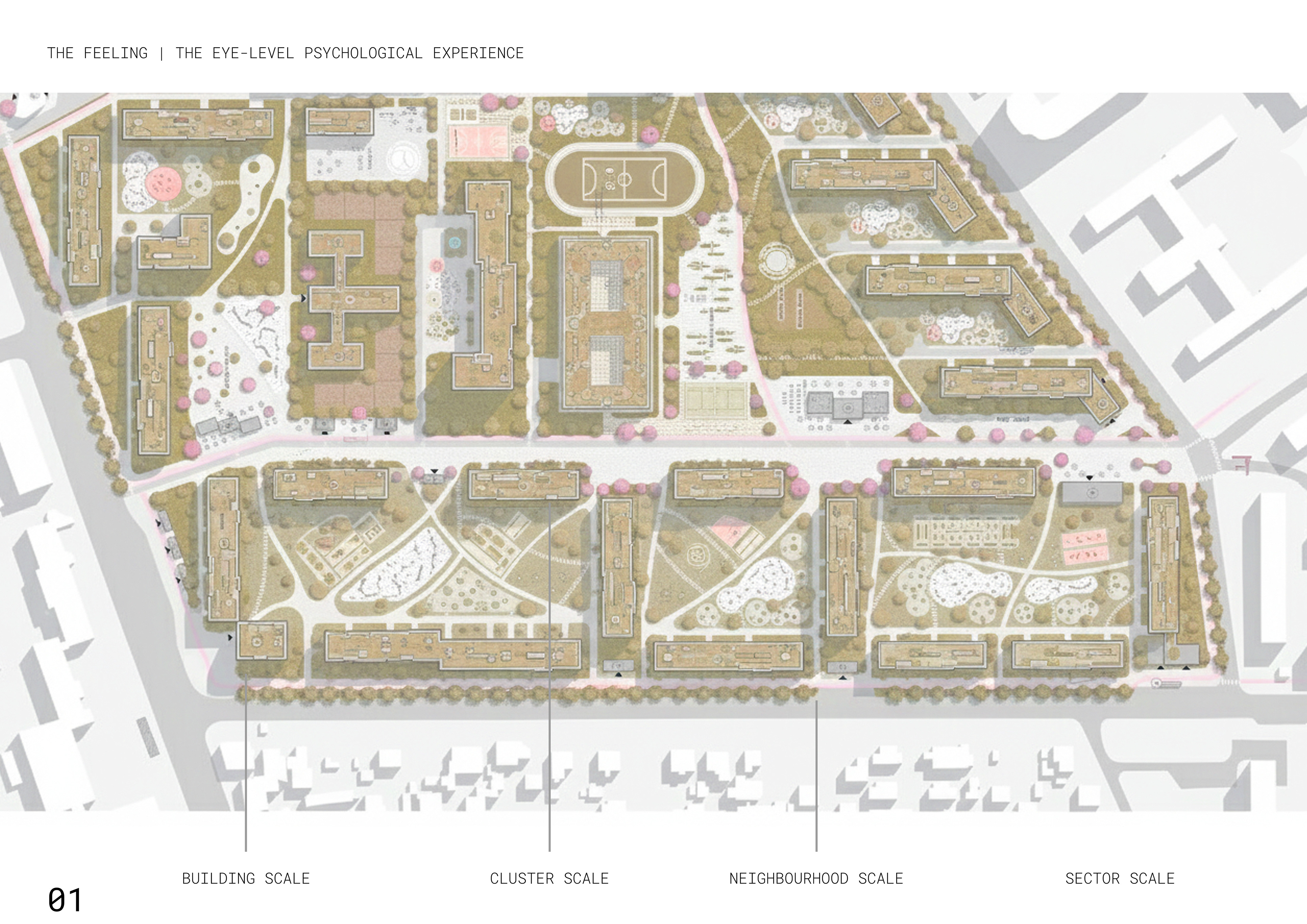
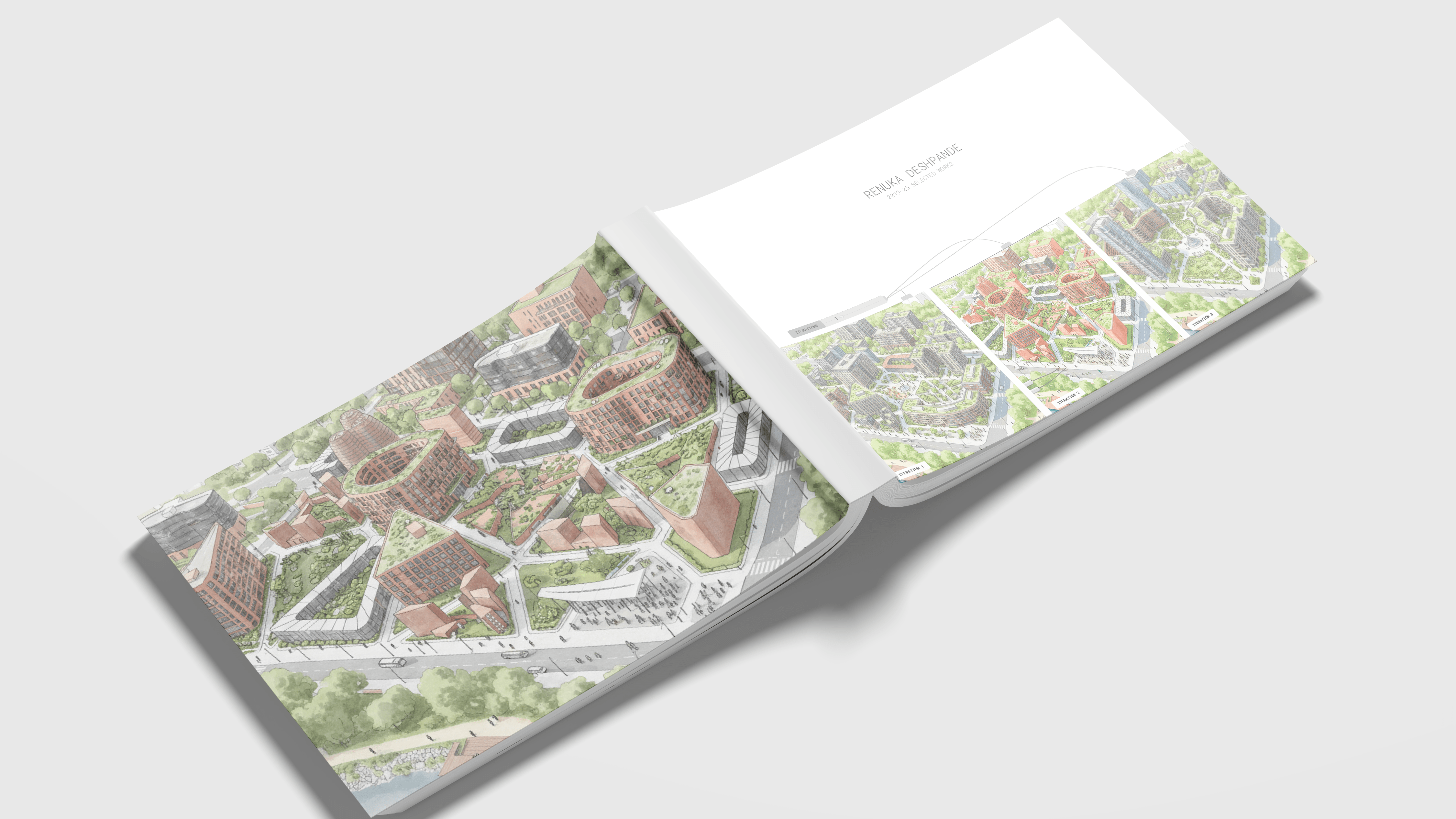
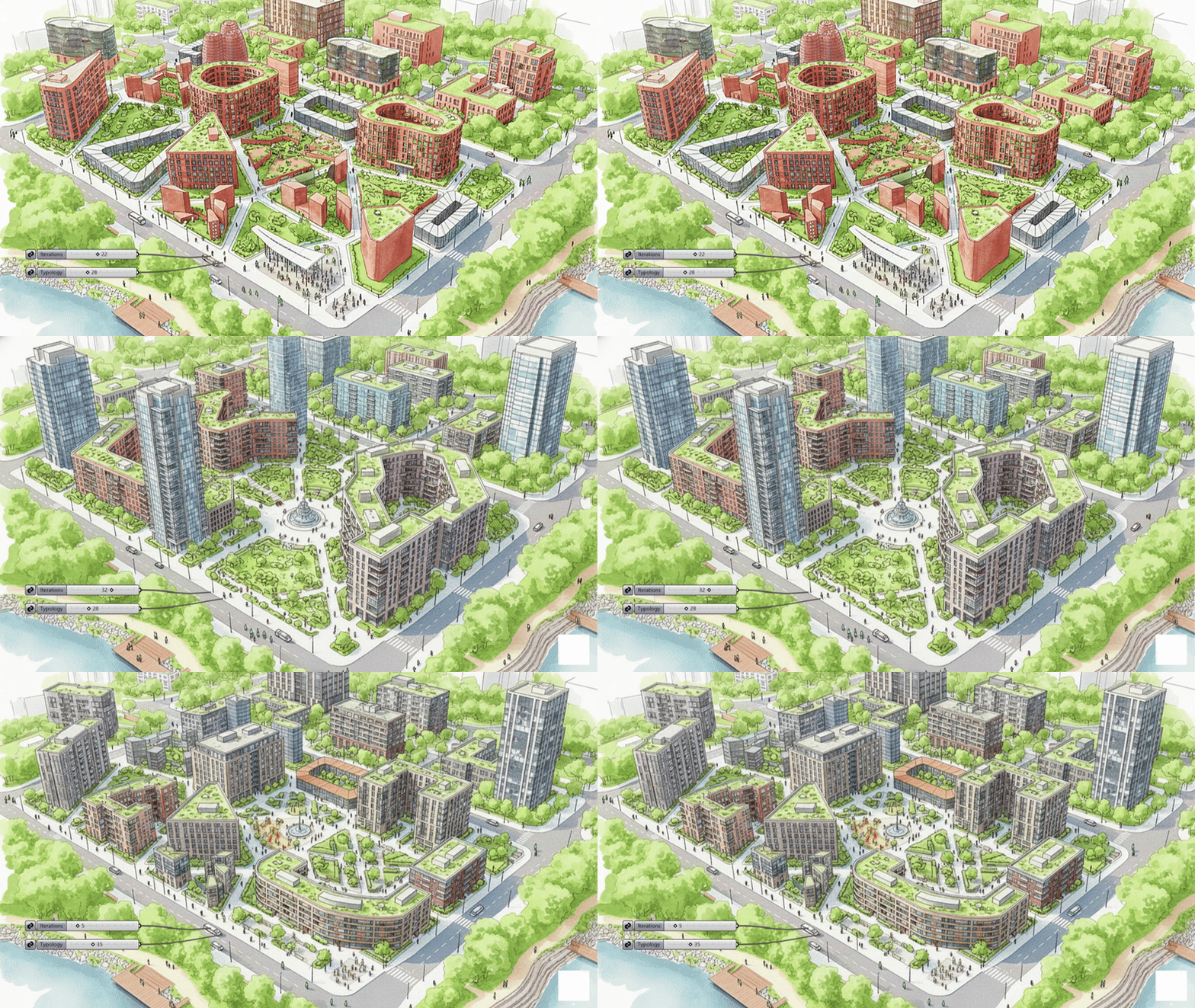
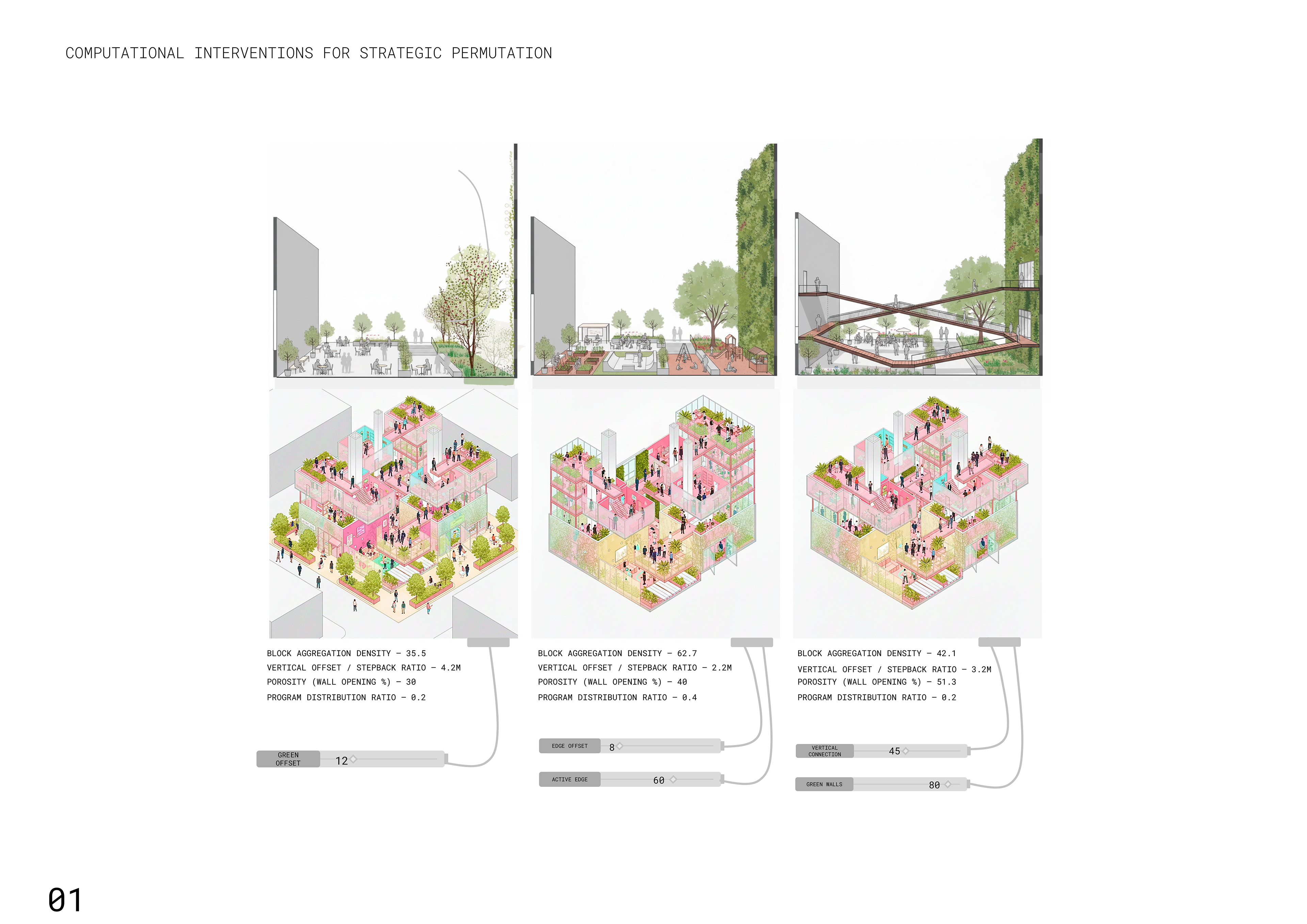
Iterations
Computational logic applied for: Block Aggregation and Urban features.
Impact: Heat Map
The comparative analysis of two different configurations. Red configuration focused on deeply connected clusters which are oriented for 'Accidental Interaction'. While green configuration oriented towards 'Intentional Interaction'.
The analysis concludes that: Accidental interaction is observed to have more interaction intensity than intentional as it reduces casual engagement and forces connection to performance - something people have to make effort to do. Red configuration also addresses all the triggers.
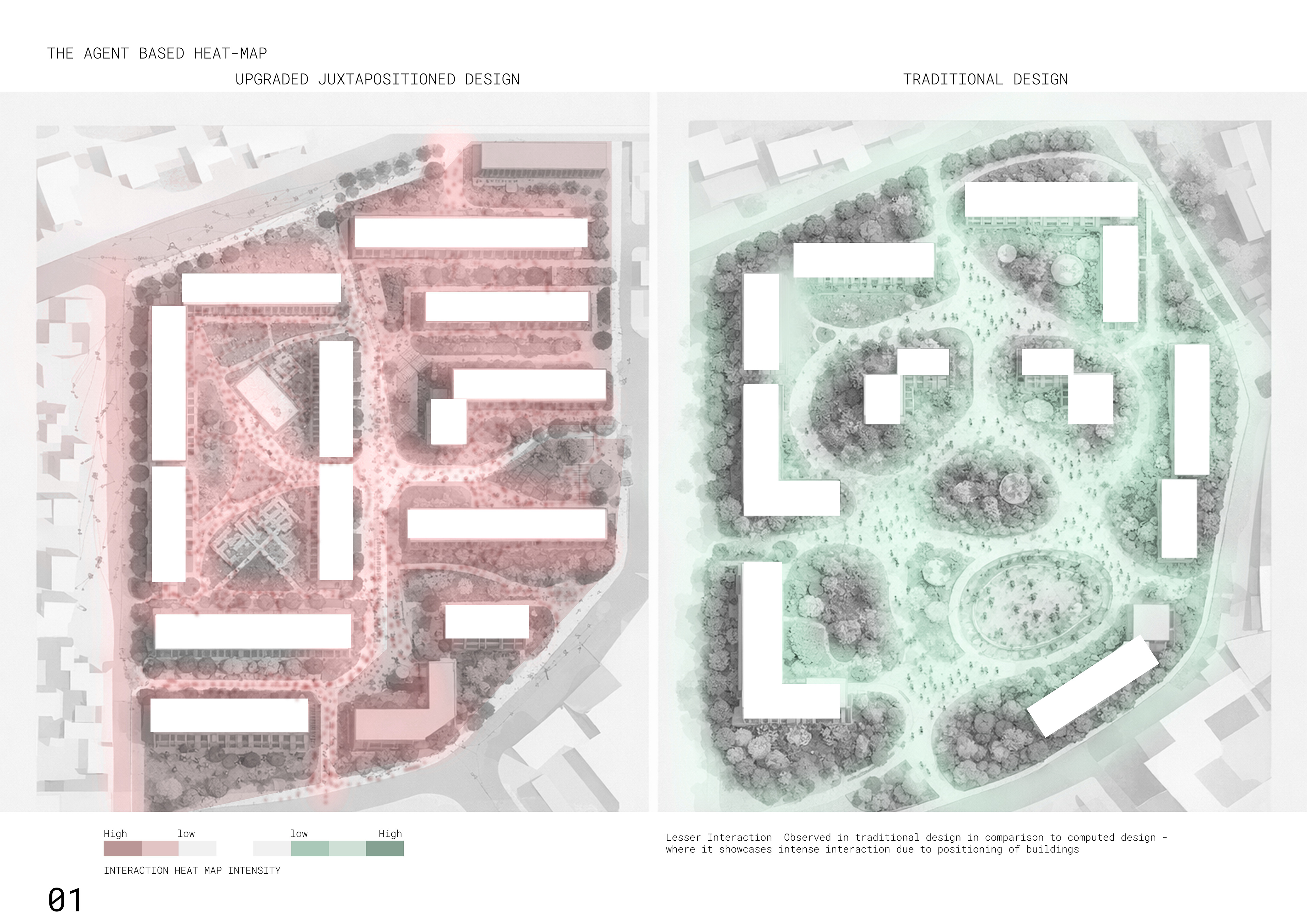
heatmap analysis carried out through MassMotion — crowd simulation + density/heat mapping and DepthmapX