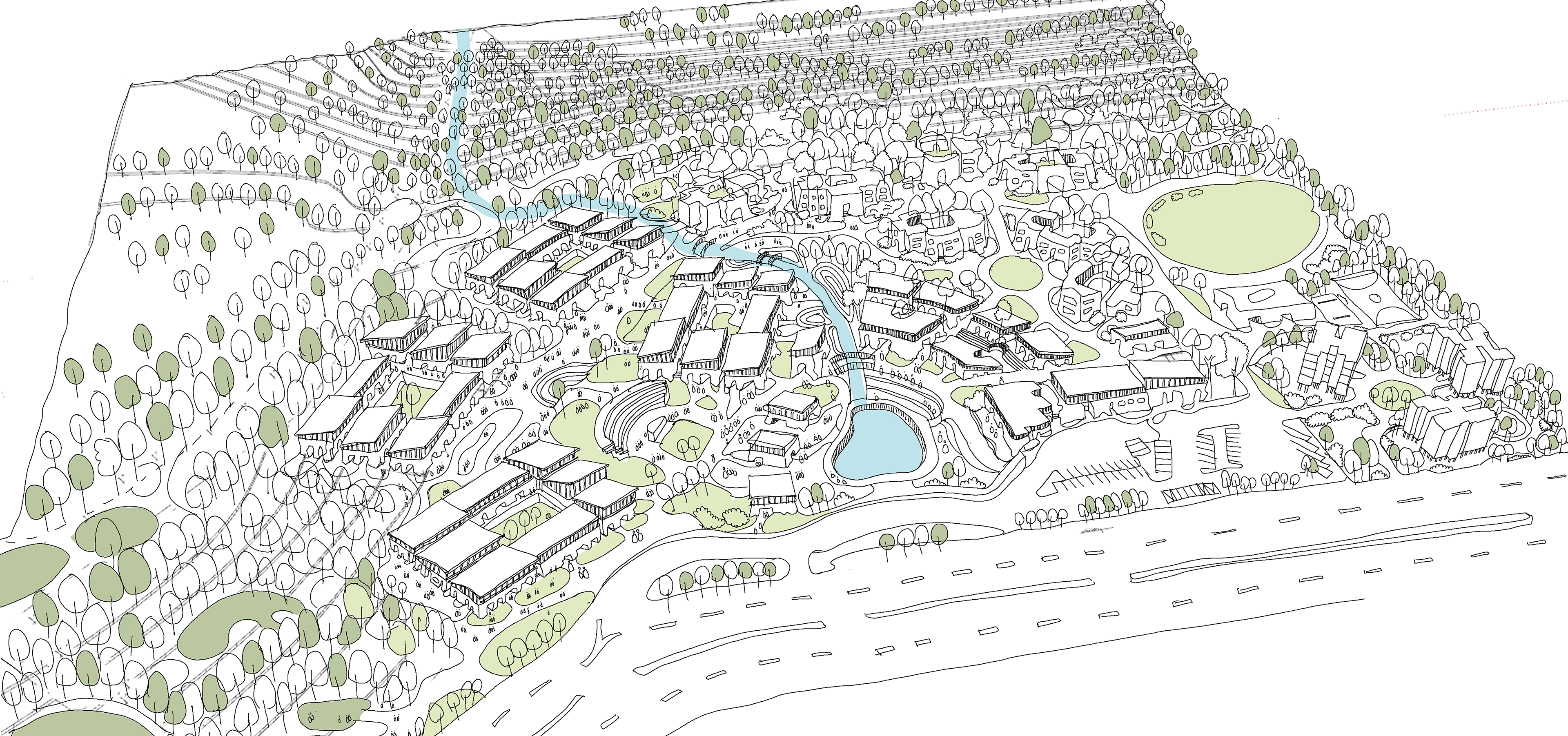
A project aiming to explore an alternative way of learning and education. Where we extend ourselves beyond the conventional. A school that is not built inside walls but where learning pedagogy builds the walls.

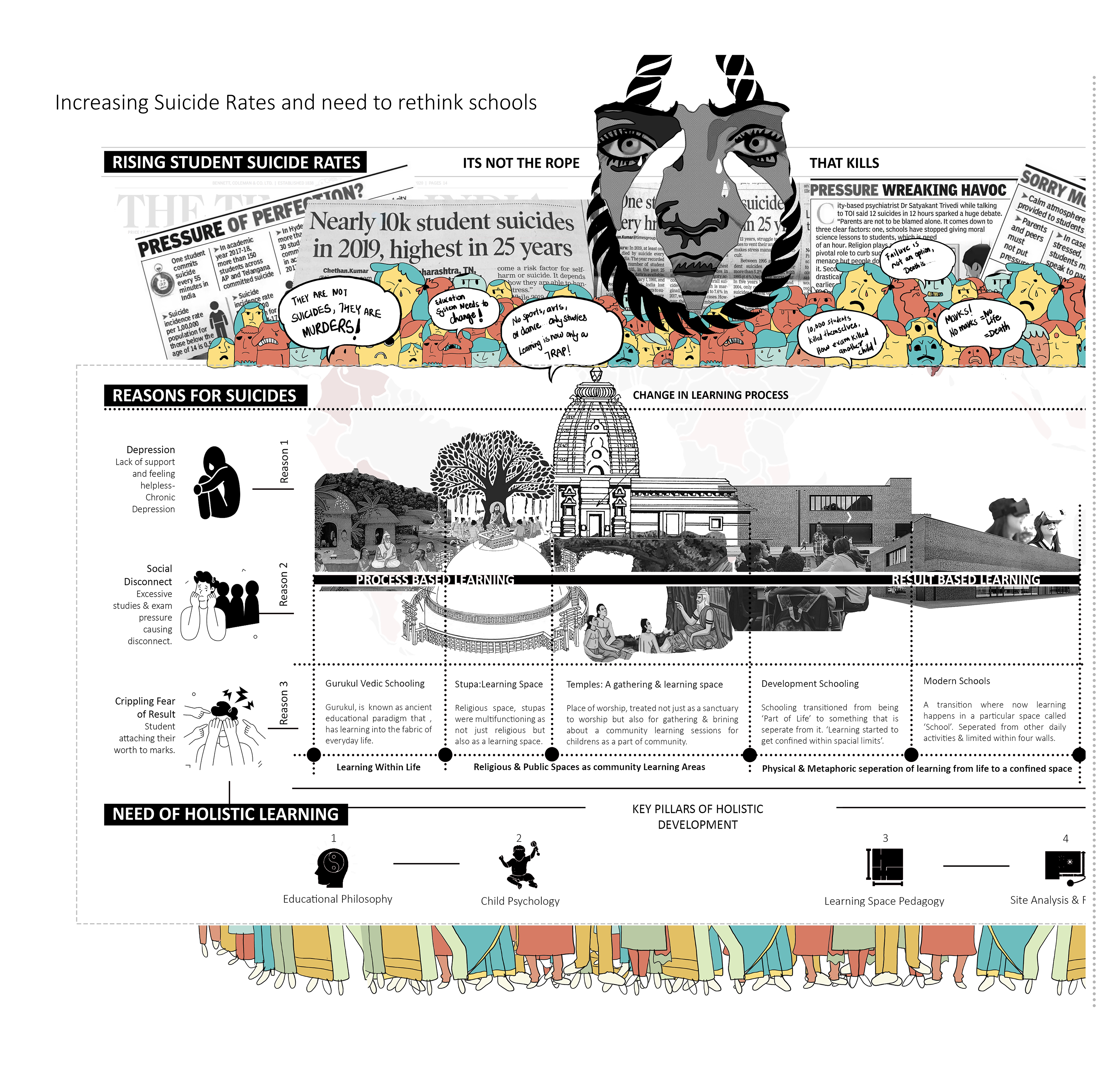
the alarming increase in student suicide rates, identified as reaching a 25-year high with nearly 10,000 student suicides reported in 2019. The core objective is to shift the educational paradigm from the stress-inducing Result-Based Learning model to a supportive, holistic Process-Based Learning model. The ultimate goal is to foster an environment of Holistic Learning that prioritizes student well-being, reduces performance pressure, and cultivates genuine self-worth and social connection.
The current education system is characterized by a "Pressure of Perfection" and a "Crippling Fear of Failure," which is leading to severe mental health crises among students. The primary drivers of the rise in suicides are identified as:
Depression: Stemming from a lack of support, performance pressure, and feelings of helplessness.
Social Disconnect: Caused by excessive studying and subsequent social isolation.
The project proposes a comprehensive re-thinking of education by adopting a holistic framework inspired by traditional models.
Process-Based LearningFocuses on "Learning Within Life," treating religious and public spaces as community learning areas.Gurukul Vedic Schooling, Stupa Learning Space, Temples (gathering & learning space).
Result-Based LearningFocuses on the "confined space" of schooling, separating learning from daily life.Development Schooling, Modern Schools.
Key Pillars of Holistic Development: The transformation will be guided by four foundational pillars to redesign the educational experience:
- Educational Philosophy
- Child Psychology
- Learning Space Pedagogy
- Site Analysis
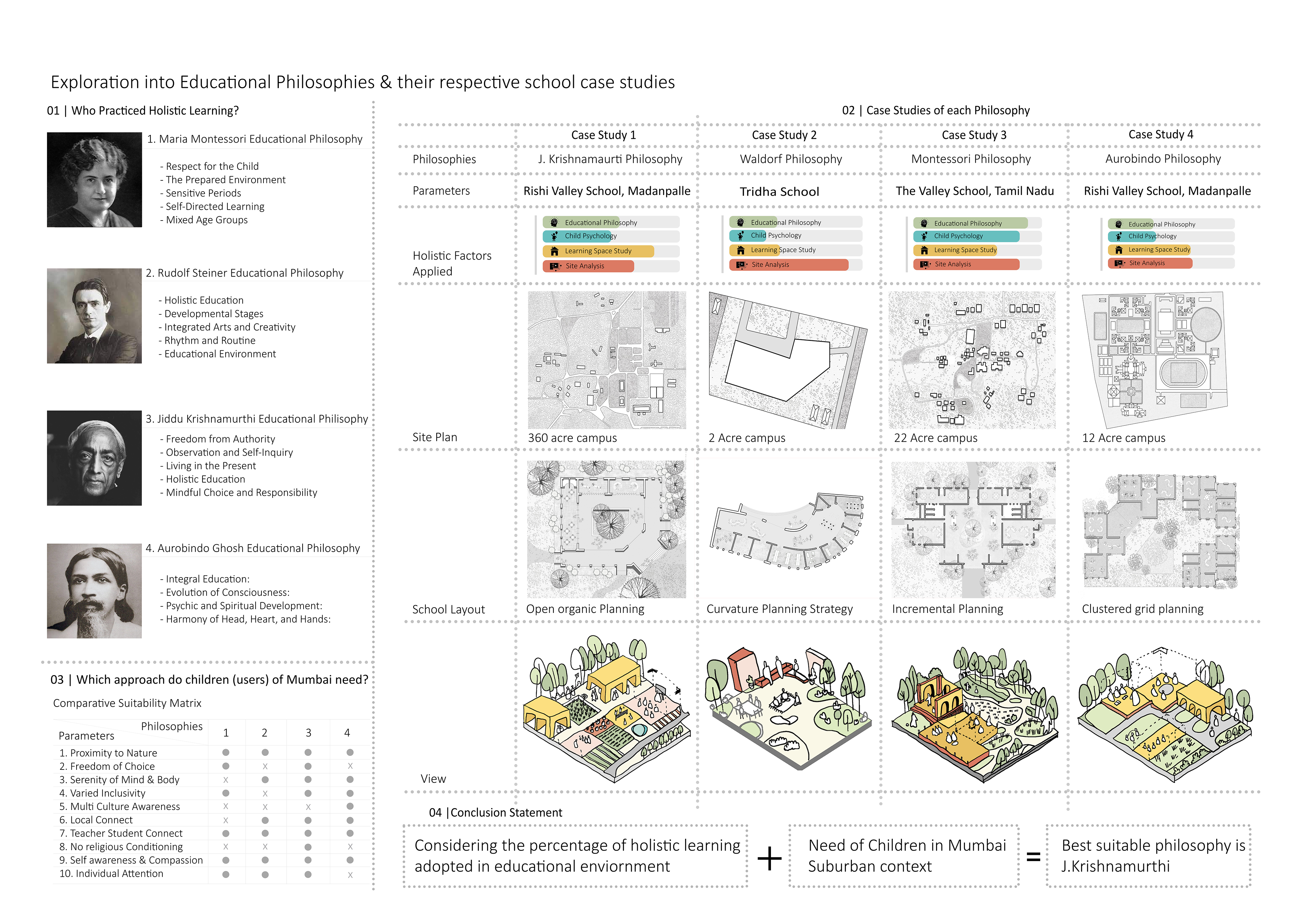
A critical analysis of four prominent educational philosophies—Maria Montessori, Rudolf Steiner, Jiddu Krishnamurti, and Aurobindo Ghosh—all of which advocate for some form of holistic learning, moving beyond the traditional, result-oriented model. The study explores the specific tenets of each philosophy, such as Montessori's focus on the Prepared Environment and Sensitive Periods, Steiner's emphasis on developmental stages and art integration, Krishnamurti's core idea of Freedom from Authority and Self-Inquiry, and Aurobindo's concept of Integral Education and Spiritual Development. To ground these theories in reality, four corresponding case studies of schools—ranging from the vast 360-acre Rishi Valley School (J. Krishnamurti) to the compact 2-acre Tridha School (Waldorf)—are analyzed based on their Site Plan and School Layout, such as the open organic planning versus the clustered grid planning.
The study then uses a Comparative Suitability Matrix to evaluate how well each philosophy aligns with ten crucial needs of children in the Mumbai Suburban context, including Proximity to Nature, Freedom of Choice, and Self Awareness & Compassion. The final conclusion, derived by combining the percentage of holistic learning adopted in the environment with the specific needs of Mumbai's suburban children, strongly suggests that the J. Krishnamurti Educational Philosophy is the most suitable approach.
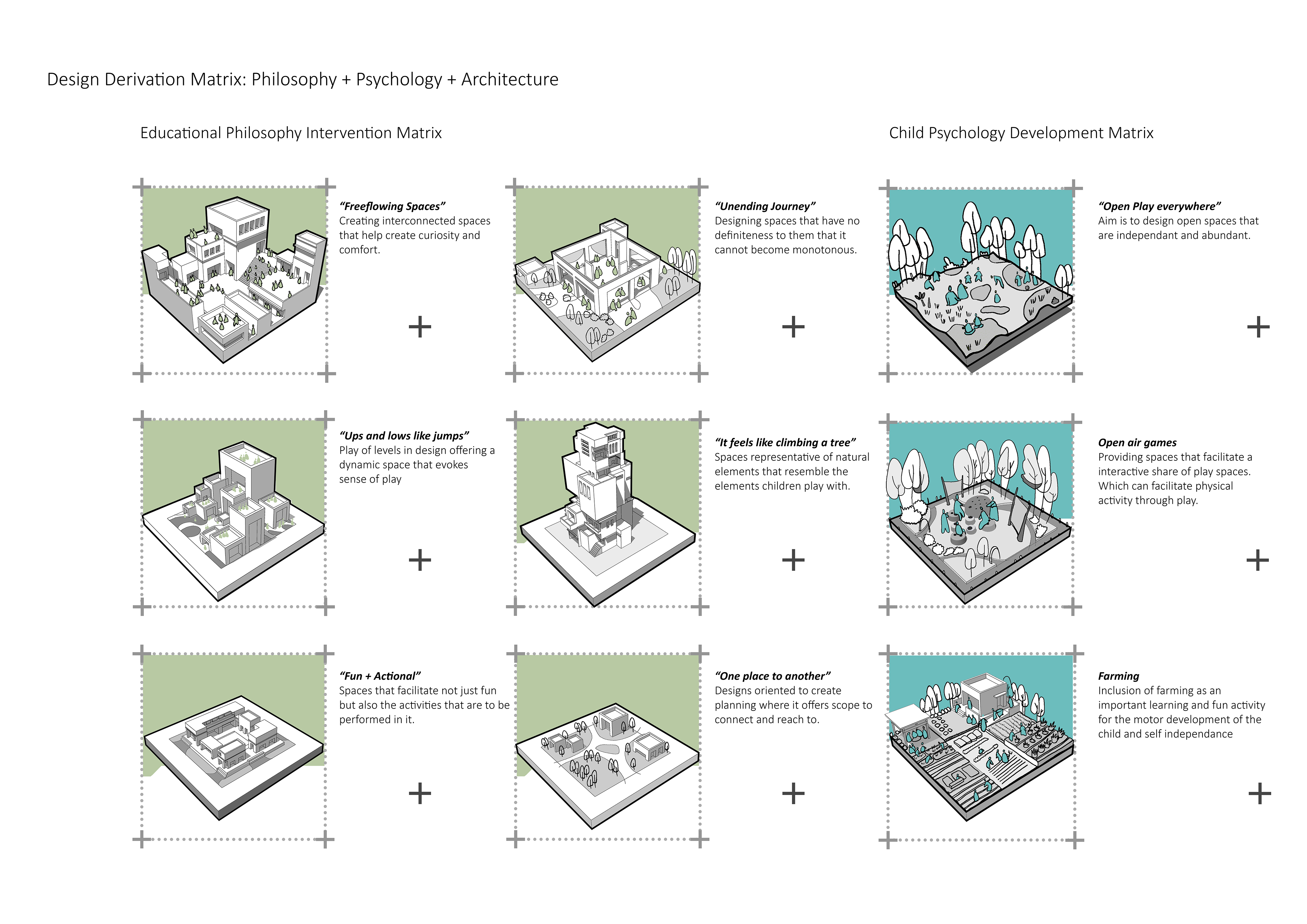
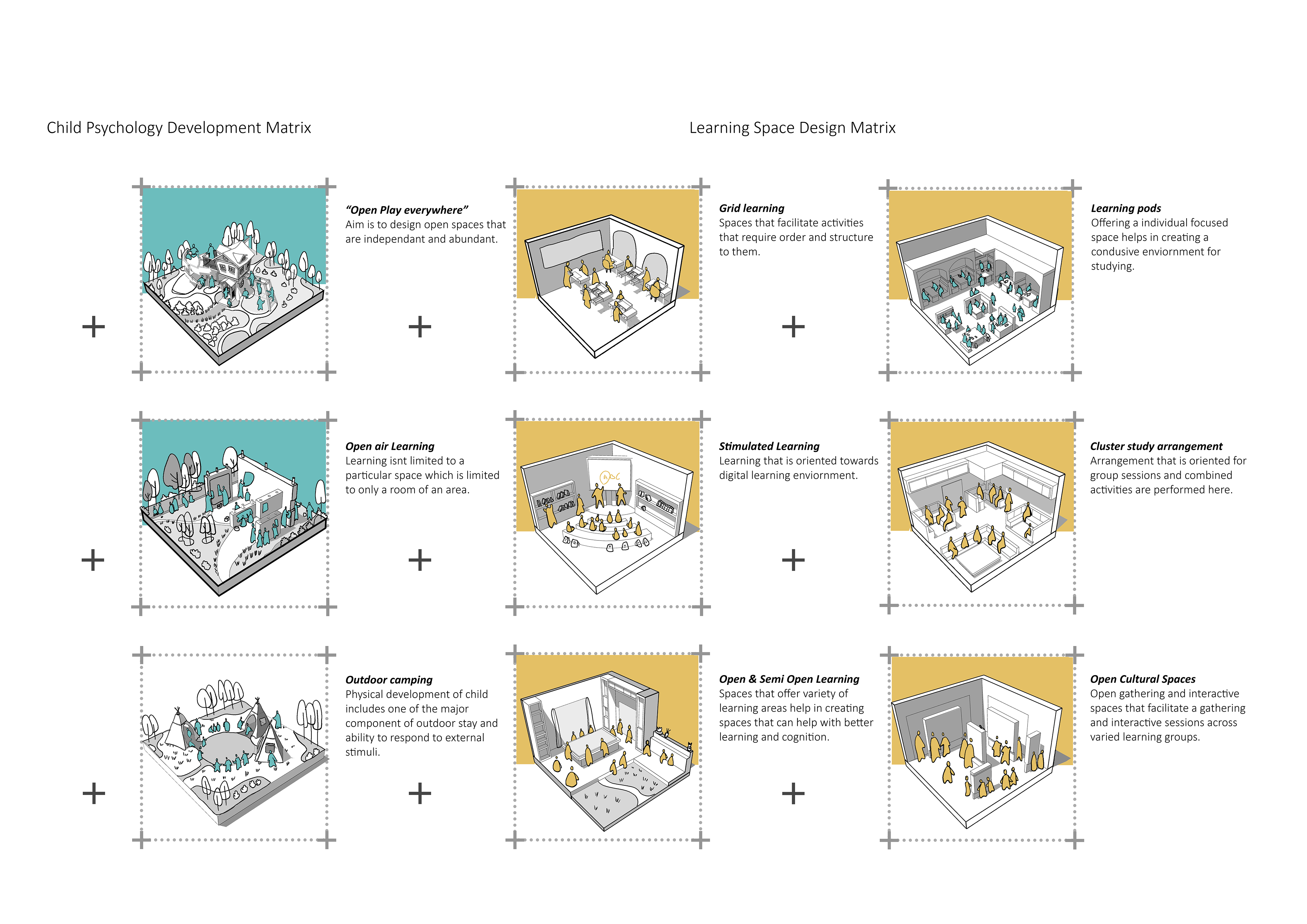
Our research moves beyond theory to the practical application of educational philosophies through architectural and psychological interventions, captured in our Design Derivation Matrix: Philosophy + Psychology + Architecture. This matrix serves as a blueprint for creating learning environments that actively support holistic child development.
Child Psychology Development: These interventions are designed to nurture the child's mind and body. Modules like "Open Air Gyms" promote physical activity and shareable spaces. Crucially, the "Blink the Climbing a Tree" element integrates nature and climbing elements for development. Furthermore, the "Homely" approach prioritizes fun and full activity to foster the overall development of the child.
Learning Space Design: This section focuses on the spatial organization and layout of the campus. Strategies range from the structured "Grid Learning" for organized study to "Cluster Grid Arrangement" for efficient activity performance. We also emphasize "Open & Semi-Open Learning" spaces to foster better learning interaction, as well as "Mindful Learning" to promote a conducive sensory environment. The goal is to ensure the Learning Pod—the individual space for a user—is perfectly integrated into a broader, supportive spatial arrangement.
Educational Philosophy Intervention: This area translates core philosophical concepts into physical spaces. For instance, a "Rethinking Spaces" module aims to create comfort and curiosity, while a "Go Run and Jump" module introduces dynamic spaces that enable freedom of play. The design choices directly reflect whether the space allows for "Free Play in activities" or provides a "place for activities that are to be performed in it".
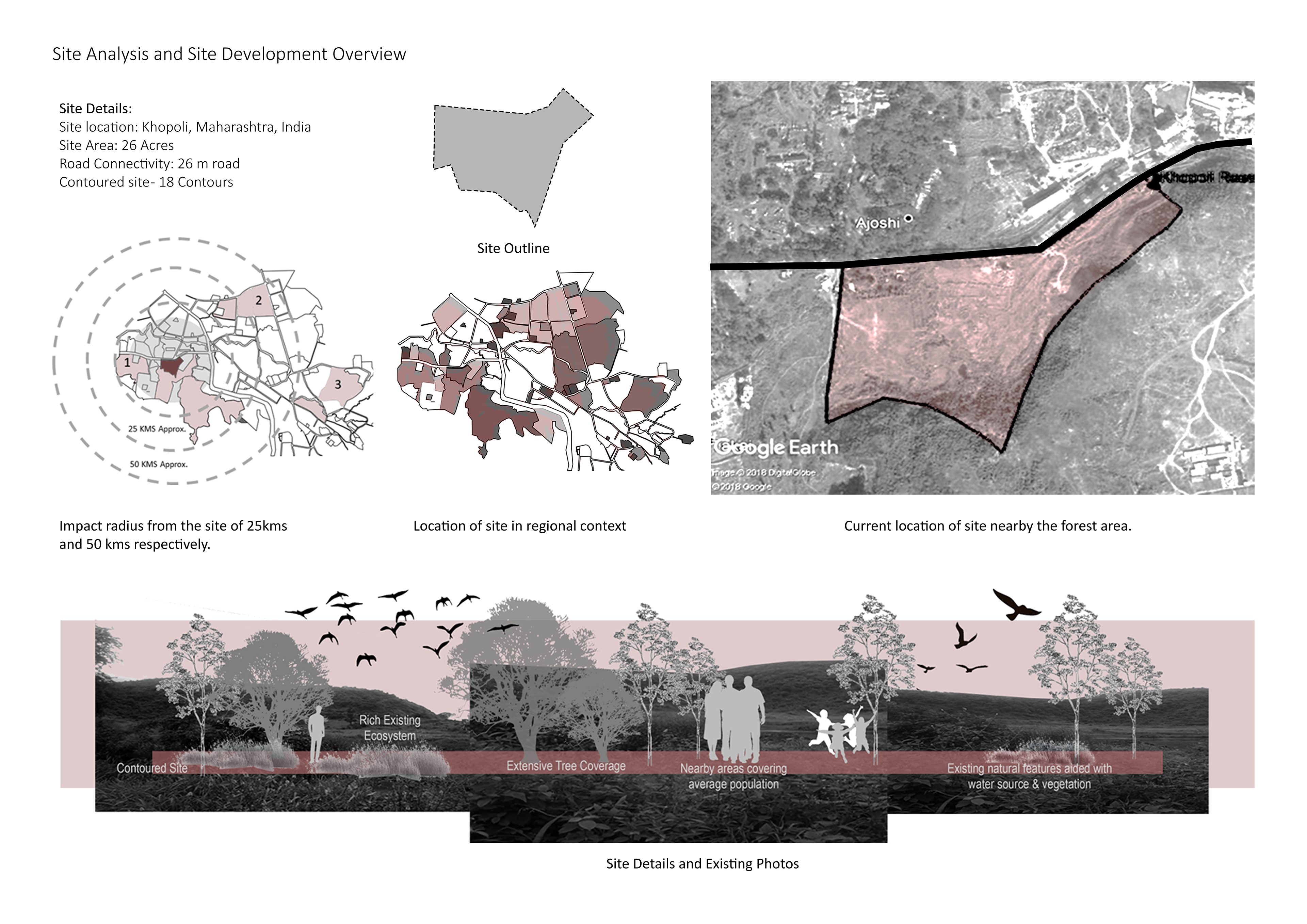
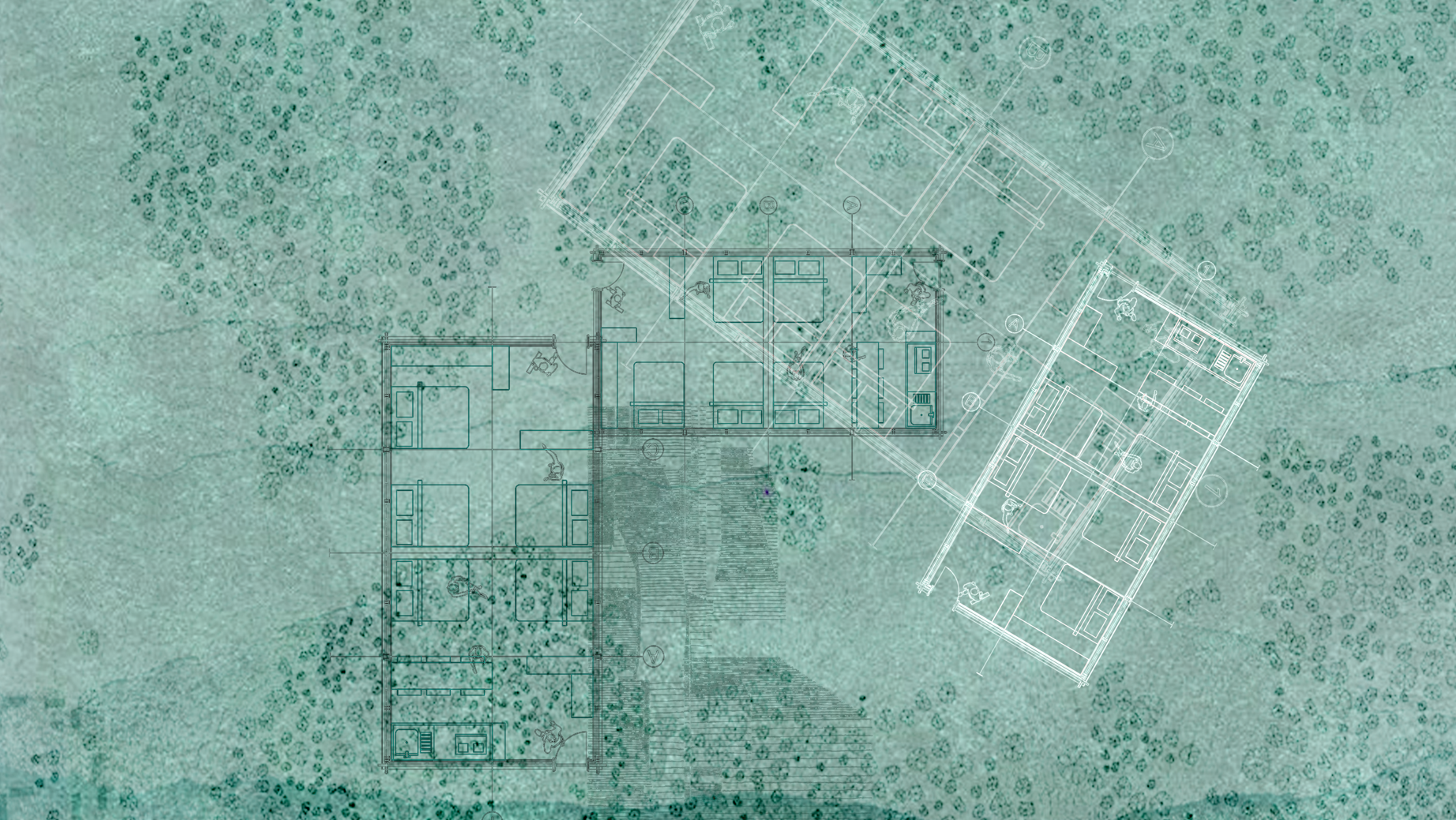
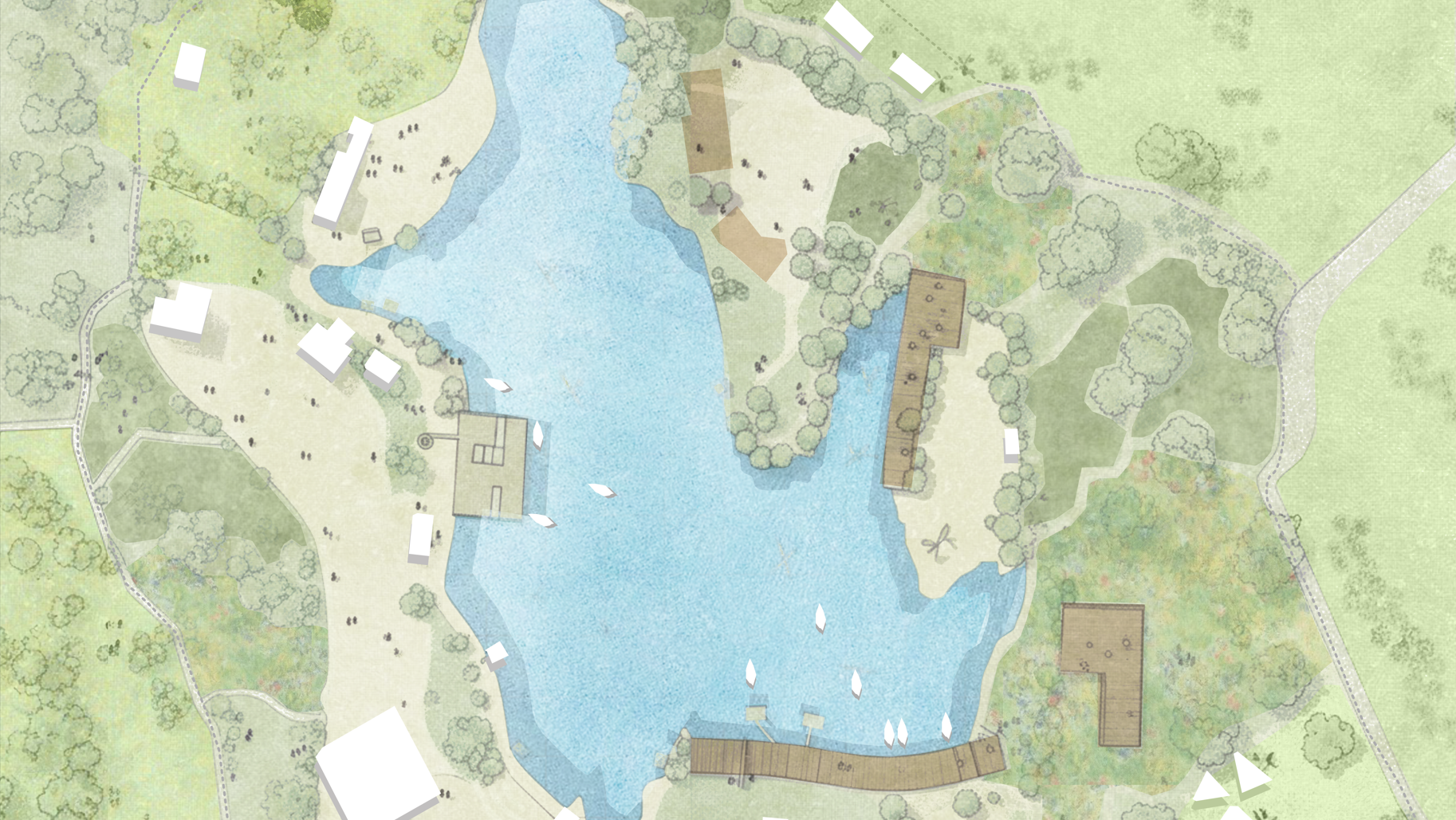
A heavily contoured site with connection of forest area right in its context.
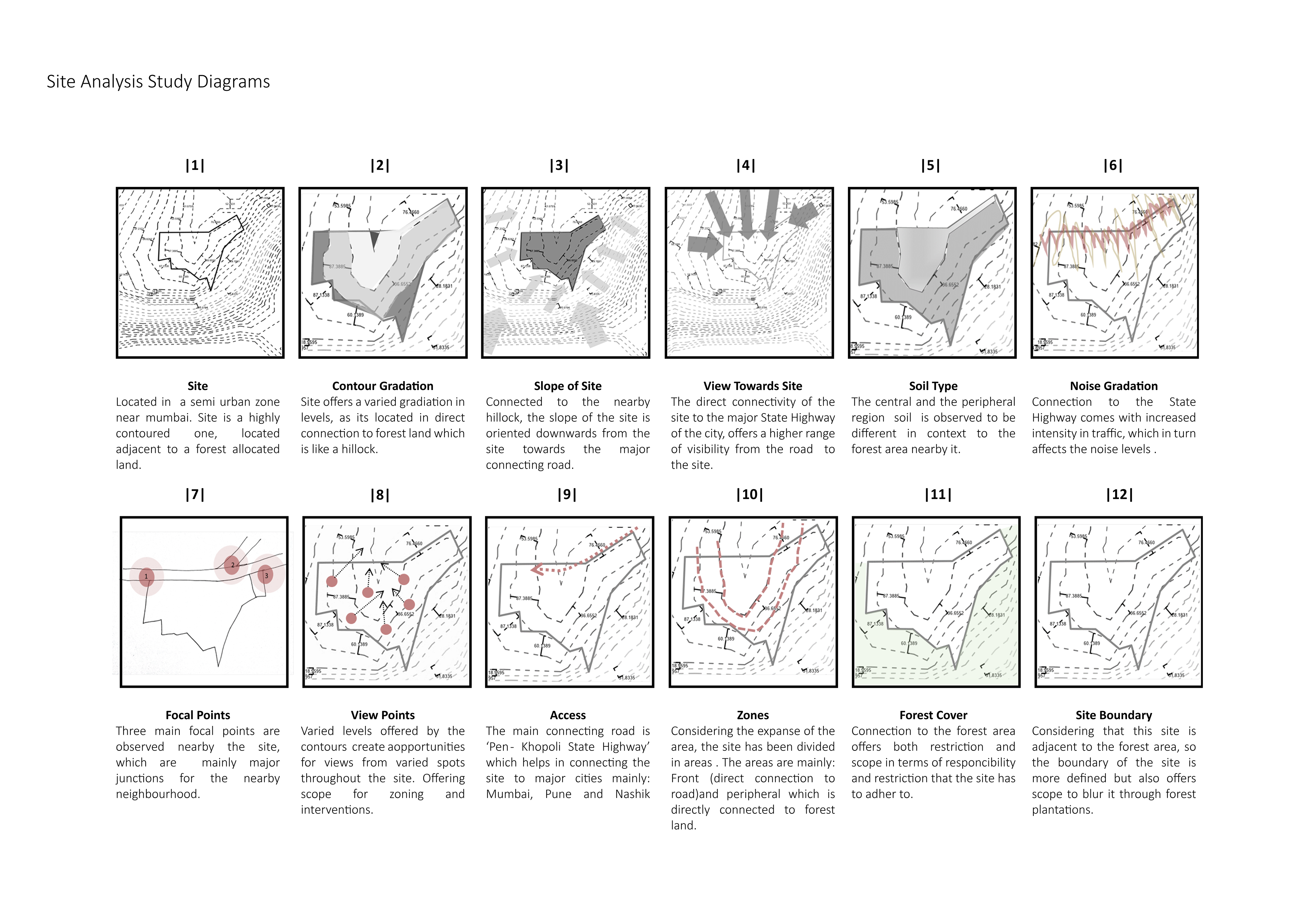
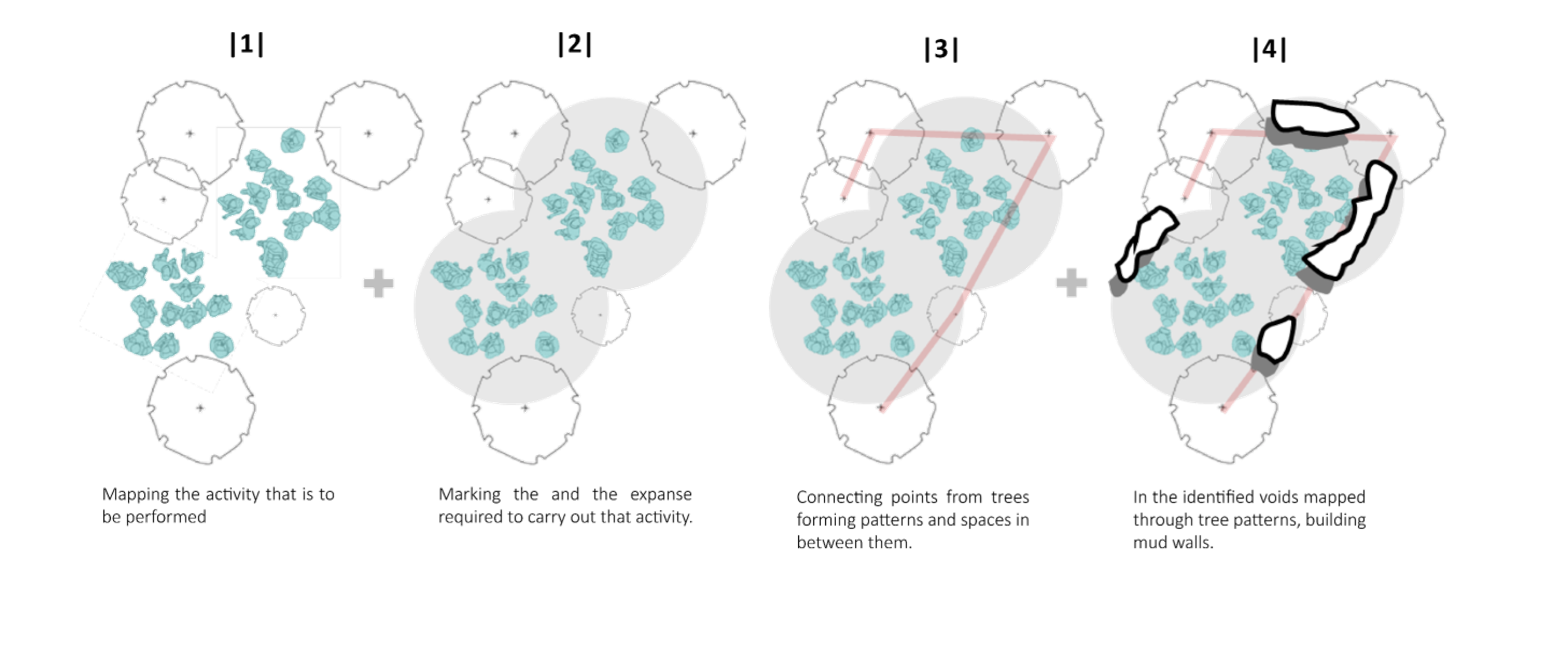
The approach used for creating this school is born out of its context. The activity and the context define the boundary than the boundary defining the school
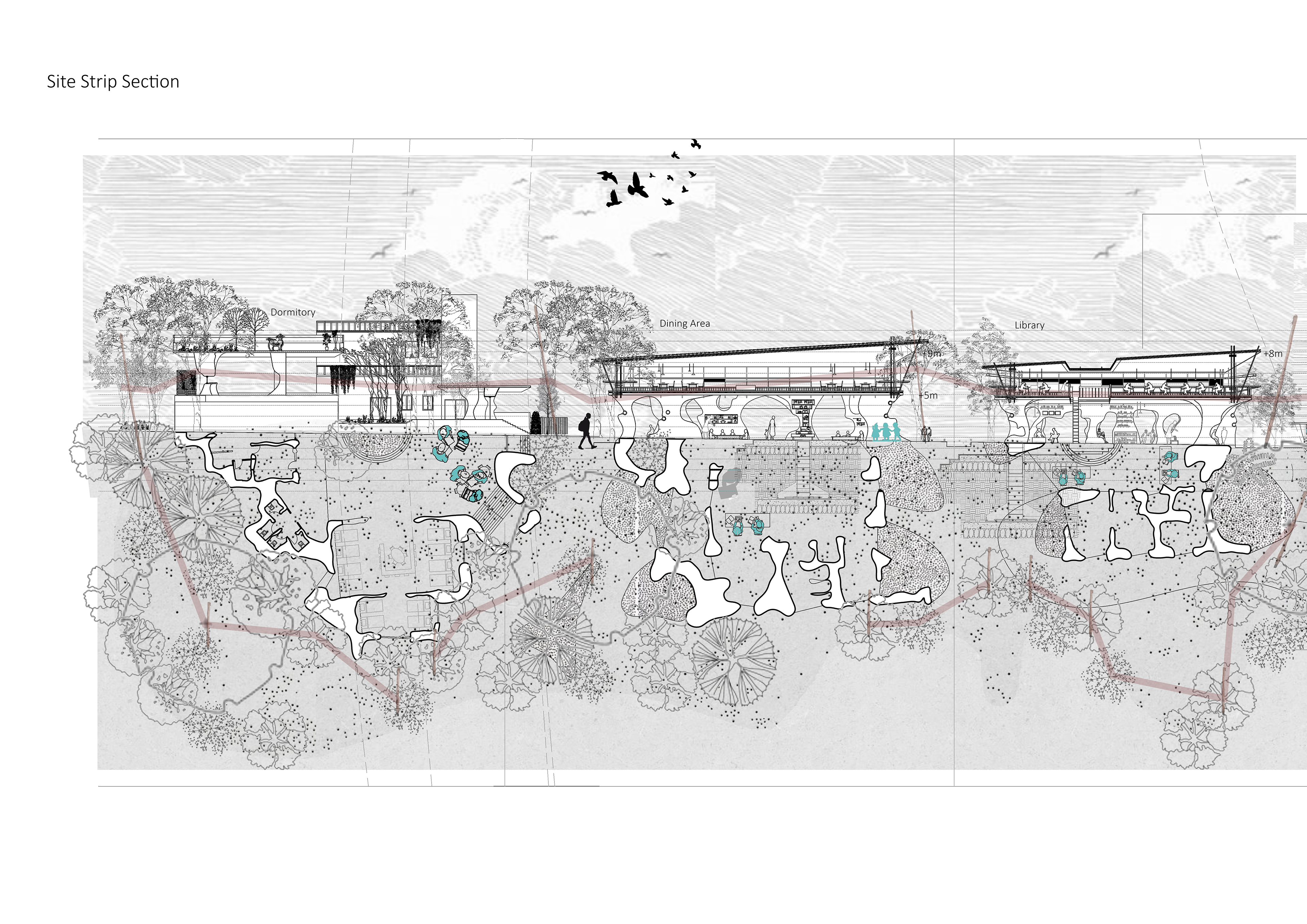
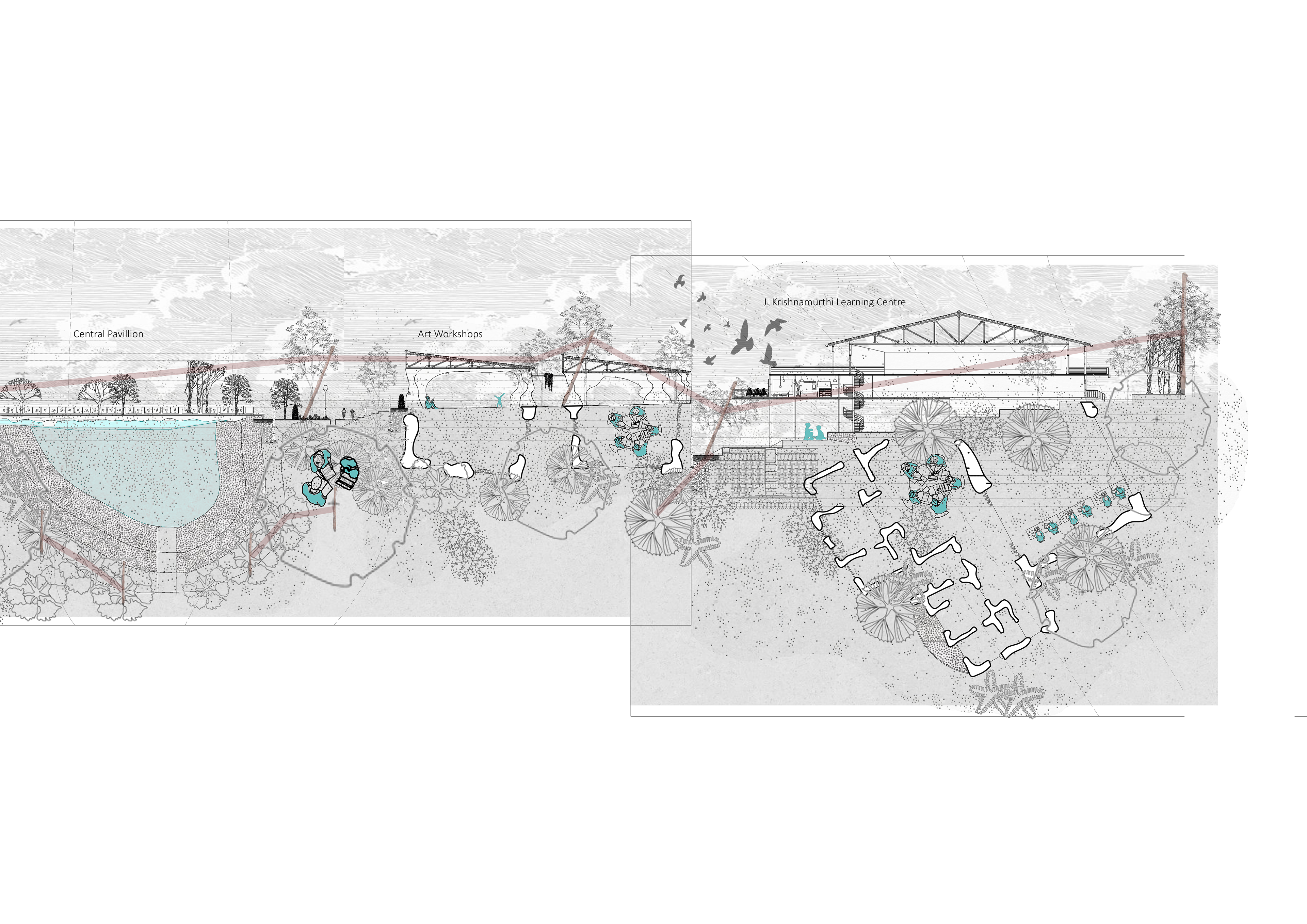
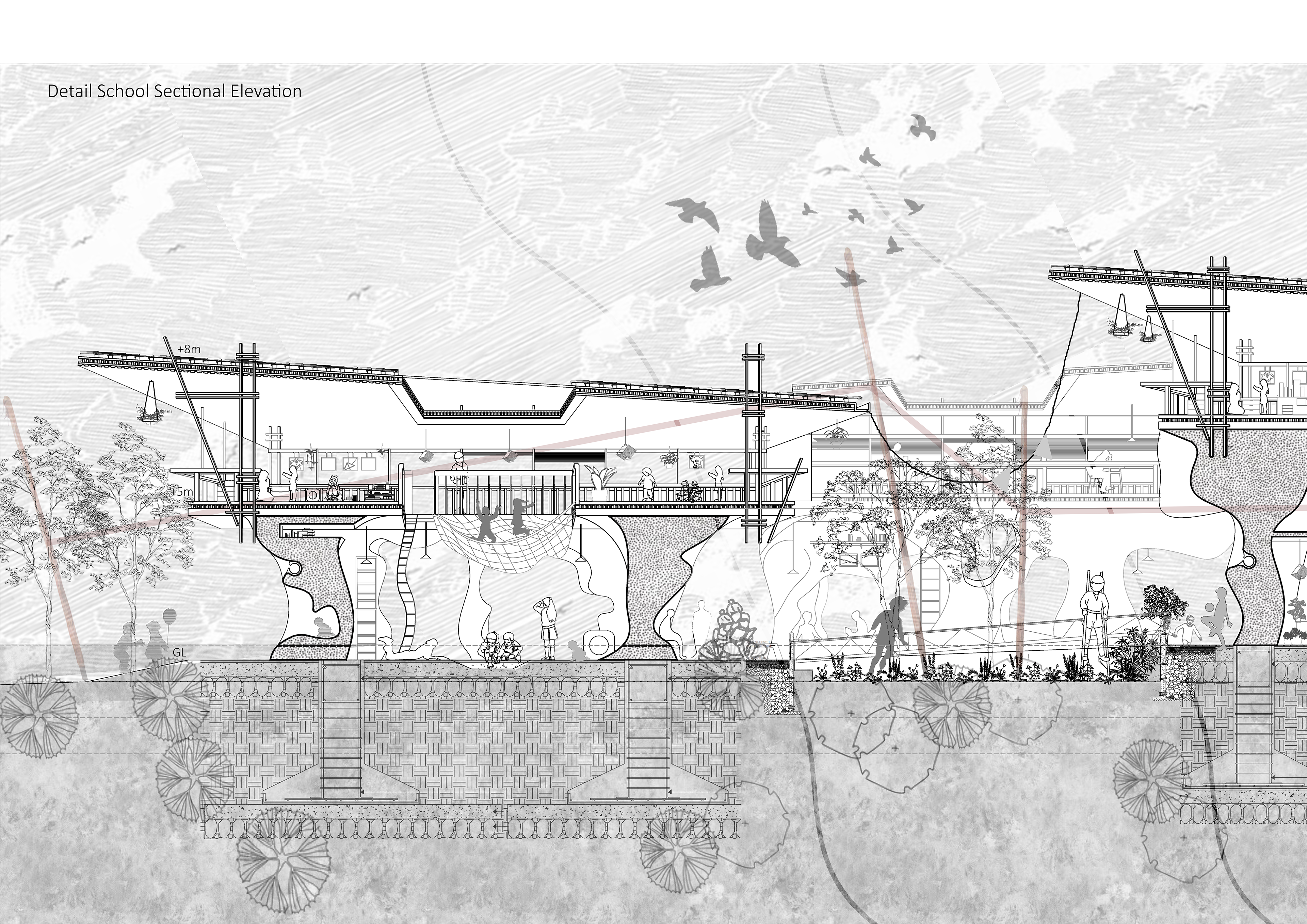
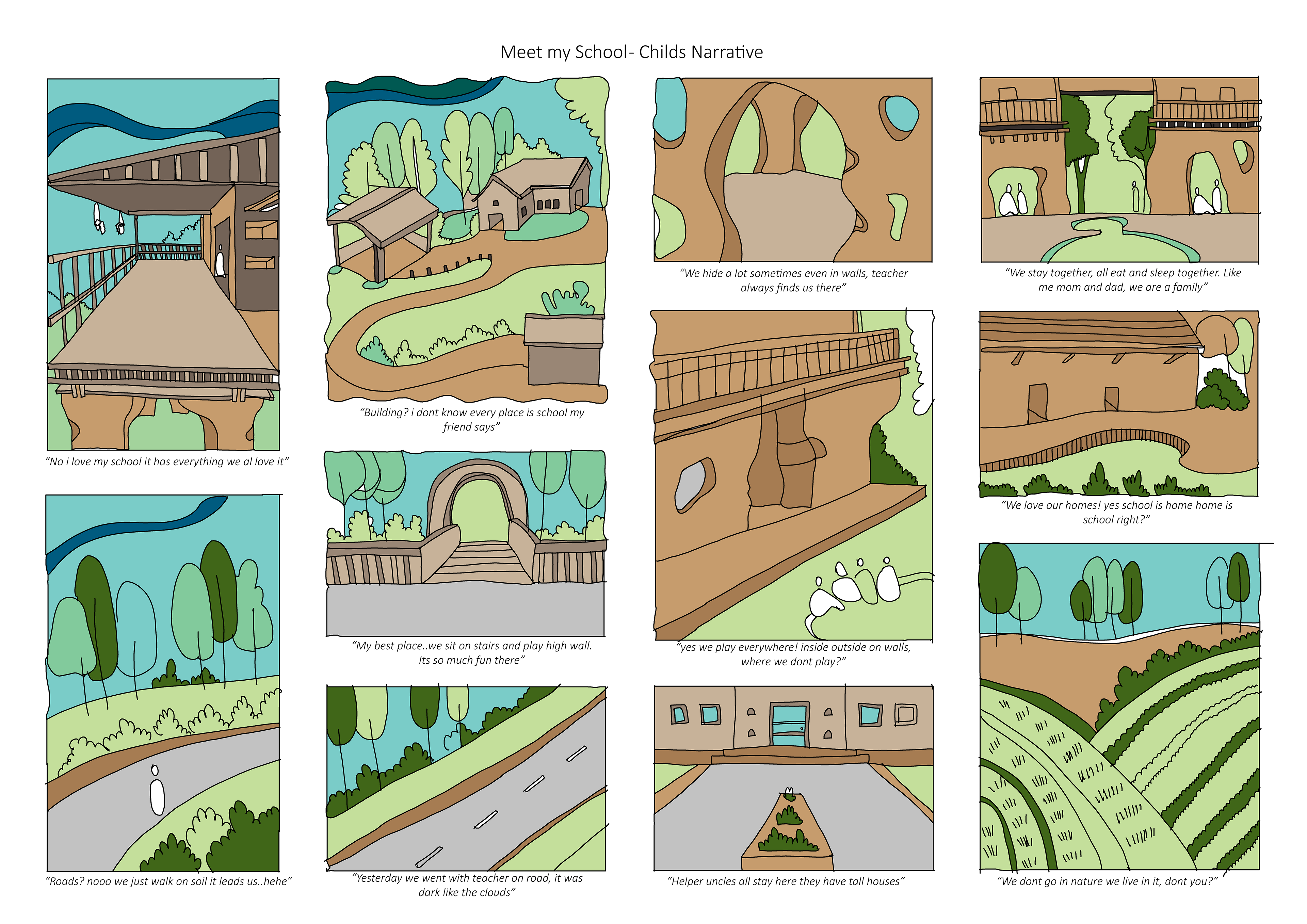
The school spaces from the perspective of a kid